China's Carbon Emissions Fall 3.1% in Third Quarter, Biggest Drop Since Covid
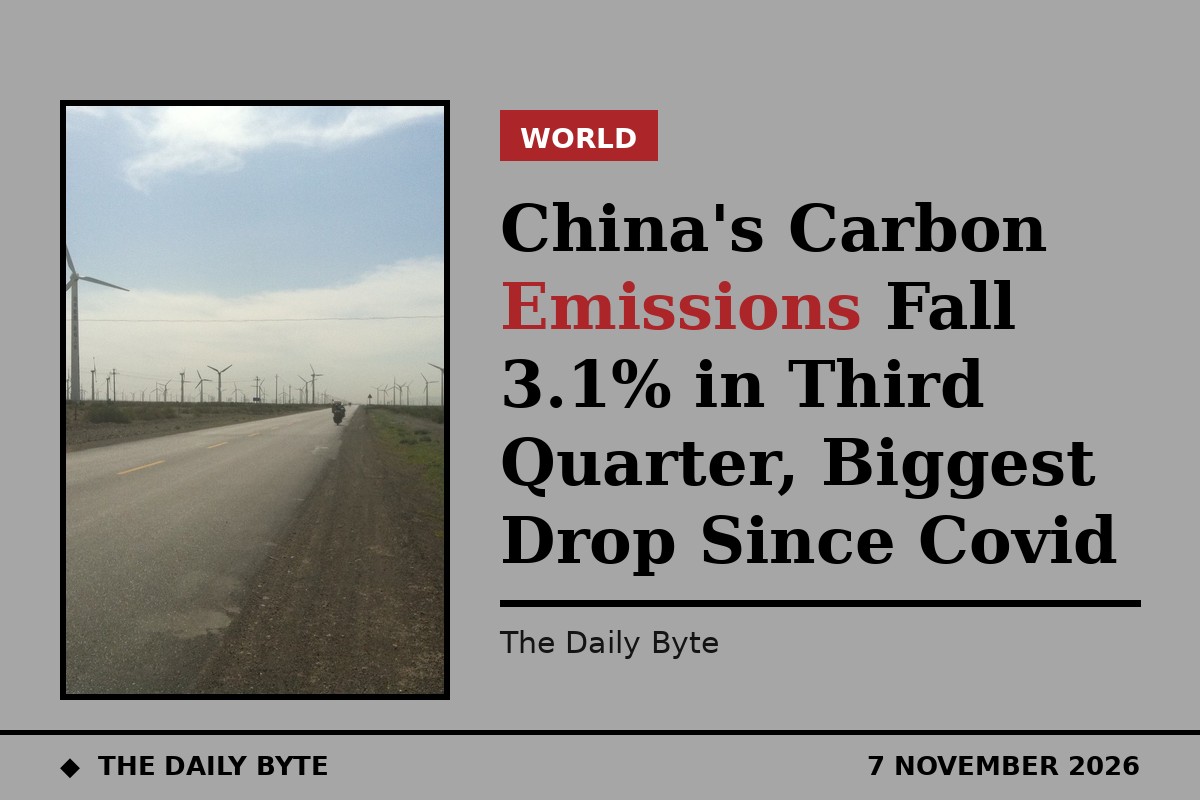
China's carbon dioxide emissions fell 3.1 per cent year on year in the third quarter of 2026, the biggest quarterly drop since the Covid-19 pandemic, as the world's largest emitter used less fossil fuel.
What drove the fall
The figures come from the Helsinki-based Centre for Research on Energy and Clean Air, in an analysis for the UK-based Carbon Brief. Oil use fell 4 per cent during the quarter as the crisis in the Strait of Hormuz curbed energy shipments, while transport oil use dropped 9 per cent as drivers switched to electric cars and taxis. Coal use fell about 3 per cent as mild weather cut demand and wind and solar plants wasted less power. Cement and steel emissions also fell as construction volumes contracted.
A trend now over two years old
The decline extends a flat-or-falling trend that began in March 2024 and has now lasted more than two years. Emissions have fallen by 0.5 per cent in the first nine months of the year, suggesting the downward trend could hold for the full year. New-energy vehicles made up 67 per cent of new passenger car sales, underlining how fast electrification is reshaping fuel demand.
Temporary or structural?
Analysts caution that it is too early to call the fall a permanent turning point. The Hormuz crisis has accelerated a shift that was already under way, but cheaper oil could bring some consumption back, according to CREA lead analyst Lauri Myllyvirta. China still accounts for about 32 per cent of global fossil carbon dioxide emissions, compared with roughly 13 per cent for the United States. Beijing has pledged carbon neutrality by 2060; the outlook now depends on the balance between rising energy demand, clean-energy growth and the response to slower growth.