China gold imports via Hong Kong jump in September
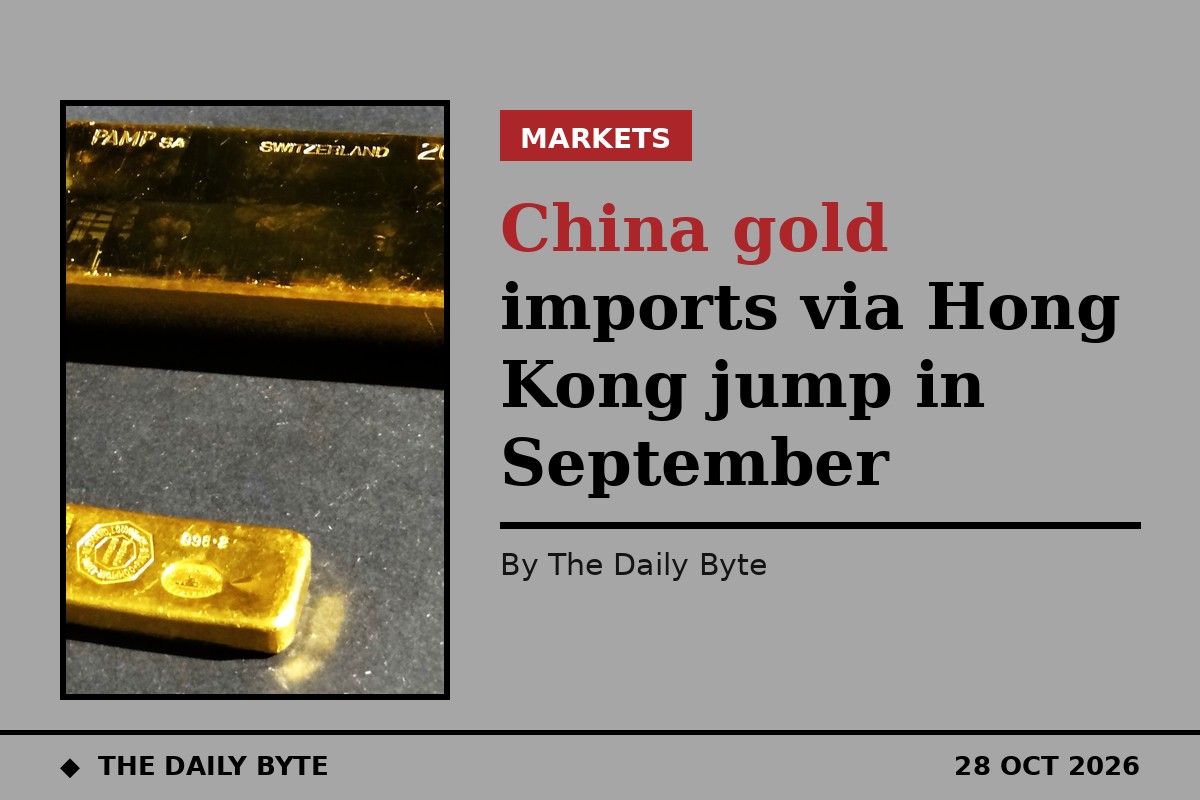
China's net gold imports through Hong Kong rose sharply in September, even as the metal's price fell, according to data from the Hong Kong Census and Statistics Department released on Wednesday, 28 October. Net imports reached 74.987 metric tonnes, up more than 28 per cent from 58.491 tonnes in August, while total shipments rose to 94.096 tonnes from 77.137 tonnes. Both sources agree on those figures, and Finimize describes the September level as a five-month high.
Restocking before Golden Week
One explanation offered by market analysts is seasonal restocking ahead of China's Golden Week holiday, when jewellery and gift buying typically pick up. Rhona O'Connell of StoneX, quoted in the Finimize summary, pointed to that pattern as a likely driver of the jump. The Hong Kong route is only one channel into the mainland — gold also enters through centres such as Shanghai and Beijing — so the figures should not be read as China's total imports, but they are a widely watched gauge of physical demand from the world's largest gold consumer.
Official buying adds a second layer
The timing is striking because spot gold fell 6.6 per cent in September, according to Finimize, as traders priced in a greater chance of another United States rate rise in December. Gold pays no interest, so higher expected rates usually weigh on it, and futures-market selling can move the price quickly. Physical buying, by contrast, moves more slowly and can absorb metal when paper-market sellers dominate, softening the fall rather than reversing it outright.
Separate official figures show China's central bank extending its gold-buying run to a 23rd consecutive month, adding to the picture of persistent demand alongside household and jewellery purchases. That combination — a central bank steadily accumulating reserves and consumers restocking before a holiday season — helps explain why a falling price did not coincide with falling physical inflows in September. Whether the strength lasts will depend on festival-season sales, domestic premiums and the path of United States rates, but for one month at least, the physical market and the price market pointed in opposite directions.
Sources: Reuters (via TradingView) and Finimize.