China–Japan Ties Still Frozen a Year After Takaichi's Taiwan Remarks
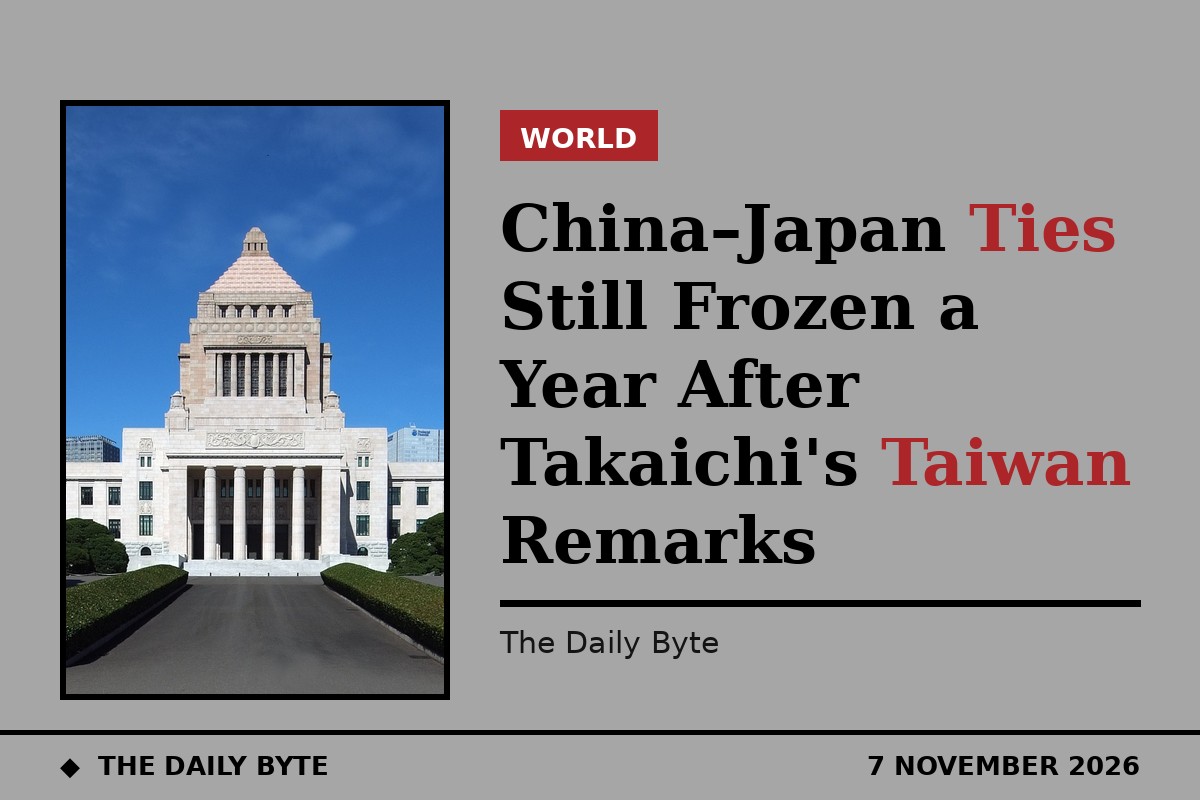
A year has passed since Japanese Prime Minister Sanae Takaichi suggested Japan could intervene militarily in a Taiwan crisis, and relations between Tokyo and Beijing remain frozen. China's foreign ministry used the anniversary on Friday to criticise Tokyo for failing to correct course, while Japan has shown no sign of backing down.
The remark that started it
Takaichi told a budget committee session of the House of Representatives on 7 November last year that a Chinese naval blockade of Taiwan involving the use of force could amount to a "survival-threatening situation" for Japan. Under Japan's 2016 security legislation, such a designation could allow the Self-Defense Forces to deploy in support of an ally. Beijing called the remarks a crude interference in its internal affairs and demanded a retraction, which Takaichi has repeatedly refused to give.
A year of pressure
China has kept up pressure on Japan across the economic, diplomatic and security spheres since the remark. Beijing tightened export controls in January on military dual-use items bound for Japan, restricted rare-earth exports used in high-tech equipment, and warned its citizens against travelling to Japan. Chinese coast guard ships have also sailed through disputed waters near the uninhabited islands both countries claim in the East China Sea.
No thaw in sight
Takaichi, who won a landslide victory in February's lower house election, has made no concerted push to ease tensions with China. Foreign ministry spokesperson Guo Jiakun said on Friday that Japan was to blame for the difficulties in bilateral ties. It remains unclear whether the two leaders will meet at the Asia-Pacific Economic Cooperation summit in Shenzhen on 18 November.