China Trade Surplus Passes $1 Trillion in October
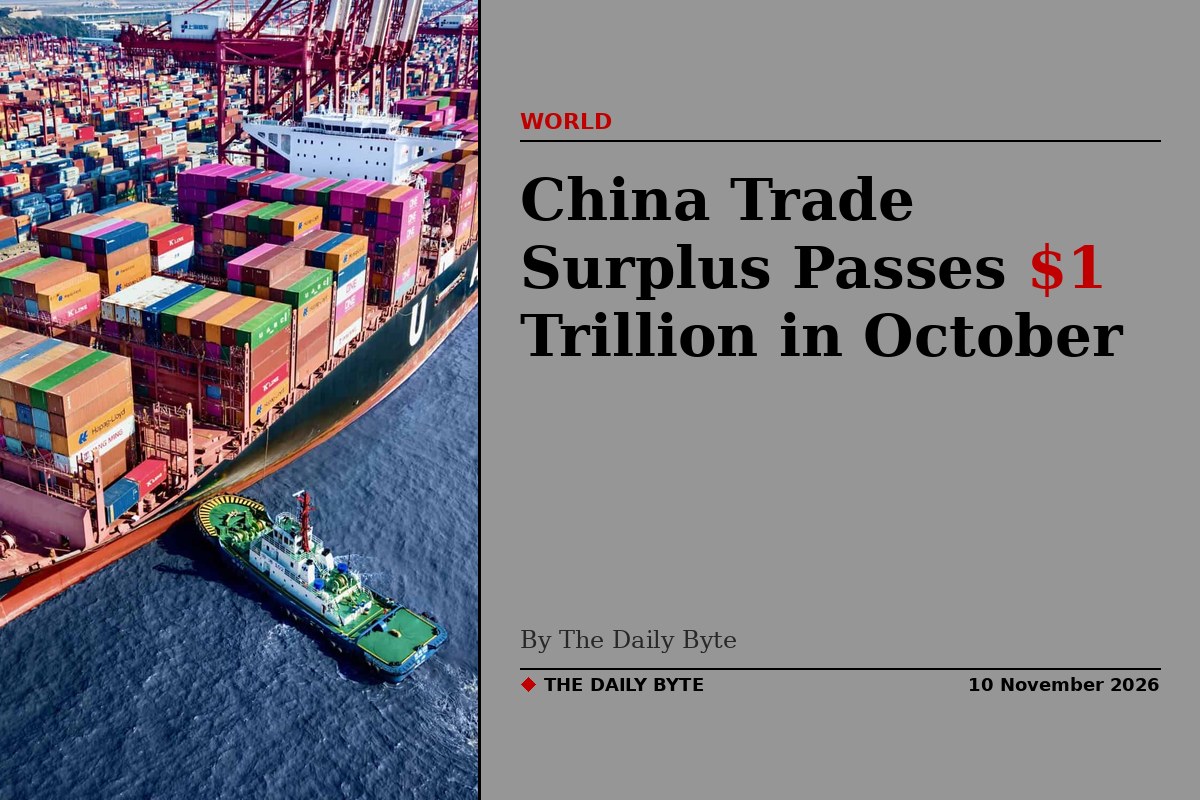
China's trade surplus has passed $1 trillion for the second year in a row, after exports surged in October on booming demand for artificial intelligence equipment and other technology goods.
Exports rose 35.2 per cent in October from a year earlier in US dollar terms, customs data showed on Tuesday, beating the 33.5 per cent rise economists had expected and extending a run of strong growth. Exports had risen 36.3 per cent in September.
Imports grew even faster, rising 41.6 per cent against a forecast of 32 per cent, and accelerating from the 31 per cent growth recorded in September. The monthly surplus narrowed to $105.28 billion, down from $133.53 billion in September and below the $125.8 billion economists had expected, but it was still enough to push the surplus for the first ten months of the year above $1 trillion.
In yuan terms, the October surplus was 712.72 billion yuan, down from 905.97 billion yuan in September and below the market forecast of 859 billion yuan.
AI shipments drive the export boom
The export surge has been driven by demand for the hardware behind the global rush into artificial intelligence. Shipments of semiconductors and computing equipment have led the growth, with semiconductor exports rising by more than 100 per cent in value terms in September, according to customs figures reported at the time.
China's exporters have also benefited from strong demand ahead of the winter holiday season, as retailers in the United States and Europe stock up. The figures suggest that, for now, overseas sales are more than offsetting weak demand at home, where consumers and businesses have been cautious.
The surplus had already reached $938 billion in the first nine months of the year. Last year's full-year surplus was a record of about $1.19 trillion, a level that was only crossed in November. This year the $1 trillion mark has been passed earlier, with two months of the year still to go.
Pressure from trading partners
A surplus of this size is likely to add to tensions with China's trading partners. Leaders in the European Union have called for stronger measures to balance the bloc's trade with Beijing, and Washington has kept pressure on China over market access.
The European Union reached an agreement with Beijing last month to limit Chinese exports of hybrid vehicles to the bloc over the next few years, one sign of how the imbalance is spilling into trade policy. China has also extended its trade truce with the United States by two months, keeping an additional 24 per cent tariff suspended while a 10 per cent rate stays in place.
Economists say the October data also show the limits of the export boom. Imports rising faster than exports suggests Chinese factories are buying in large volumes of raw materials and components, and that domestic demand may be picking up from a low base. Whether that translates into stronger growth at home remains to be seen.
What comes next
The question now is whether the surplus keeps growing into the end of the year. Export growth has run at more than 30 per cent for three months, but orders could slow if overseas demand cools or if new trade barriers bite.
For now, the customs figures show an economy leaning heavily on the rest of the world. Exports are carrying growth while domestic spending stays subdued, and the $1 trillion surplus is both a sign of China's manufacturing strength and a reminder of the trade friction it creates.


