China urges dialogue as Middle East tensions persist
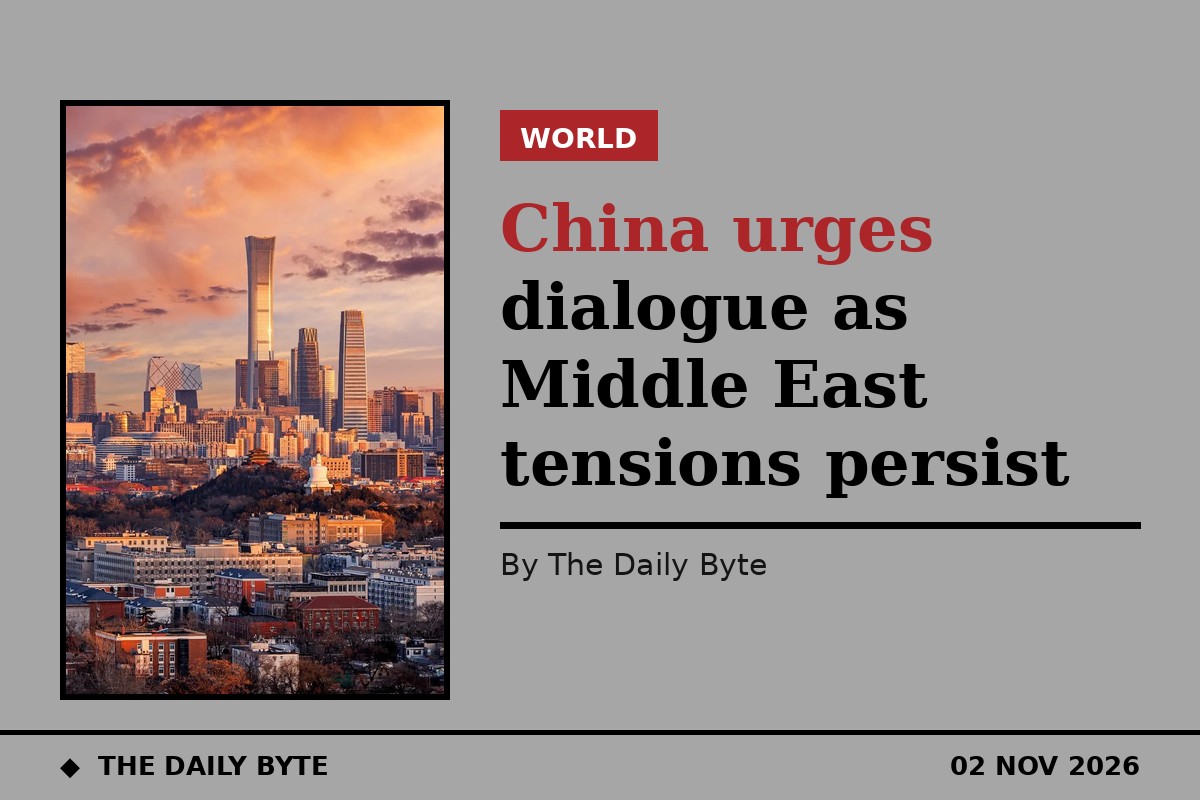
China's Foreign Minister Wang Yi told an Iranian security official in Beijing on Monday that all parties in the Middle East conflict should focus on political solutions rather than returning to arms. Dialogue and negotiation are the way to resolve Middle East conflicts, Wang told Ali Bagheri Kani, deputy secretary of Iran's Supreme National Security Council, Xinhua reported, via Reuters.
Wang also said China supports Iran in safeguarding its sovereignty and security. Earlier on Monday, President Xi Jinping told Oman's Sultan Haitham bin Tariq al-Said the Middle East and Gulf should not become a battleground for great-power rivalry. In a China-Oman joint statement that followed, Muscat said it supported China's peace proposals for the Middle East. China also announced that its special envoy to the Middle East would visit Iran, Oman and Saudi Arabia this month.
Why Beijing is stepping in
China is pressing for a bigger diplomatic role in the Middle East amid acute US-Iran tension. Qatar is mediating indirect contacts between Washington and Tehran, and governments across the Gulf have warned that a renewed round of fighting could threaten energy infrastructure, shipping and civilian populations. The diplomatic activity comes days before the United States midterm elections on 3 November, after which regional governments fear the conflict could escalate again.
Beijing's intervention does not by itself change the positions of the main parties. Iran says it will only reopen the Strait of Hormuz if Washington meets its conditions, including an end to the naval blockade and sanctions relief; Washington has not publicly accepted those terms. China's message adds a further voice urging restraint, but the outcome still depends on the mediated exchanges between Tehran and Washington and on decisions yet to be taken in either capital.
Sources: Reuters, citing Xinhua; China-Oman joint statement.