China Yuan Recovers From One-Month Low on Exporter Sales
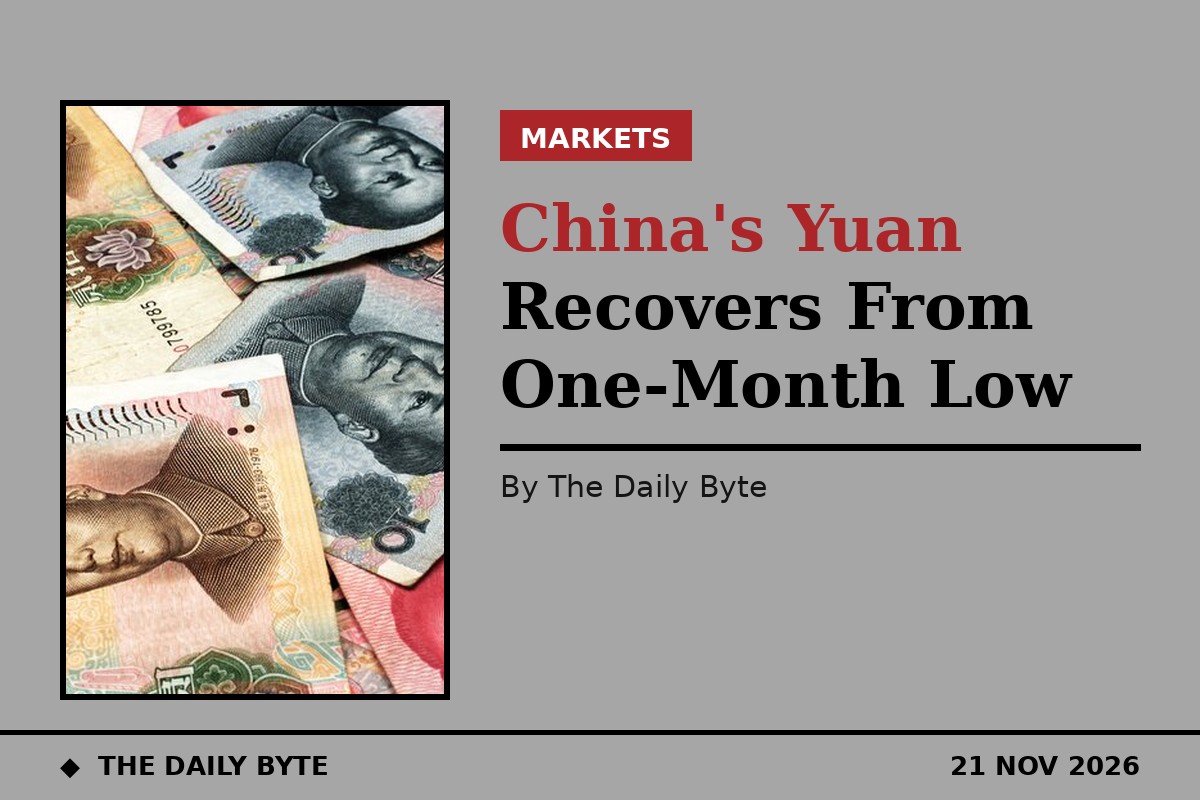
China's yuan has recovered from its weakest level in more than a month, helped by a seasonal rush of companies converting dollars into yuan, even as a strong US dollar and expectations of further Federal Reserve rate rises kept a lid on the rebound.
The onshore yuan slipped to 6.6950 per US dollar before rebounding to around 6.6715, Reuters reported, while the offshore yuan traded near 6.6746. The offshore currency firmed 0.3 per cent to 6.6762 per dollar on Friday, bouncing from a more than one-month low hit a day earlier.
The bounce is, in large part, a calendar effect. Exporters and other Chinese firms often convert foreign-currency receipts into yuan in December and January, ahead of Lunar New Year expenses such as payroll and bonuses. That seasonal demand creates a short-lived bid for the currency at the end of the year, and this time it arrived early enough to catch the yuan at its low.
Beijing signals a capped rebound
China's central bank appears in no hurry to let the recovery run. The People's Bank of China set its daily reference rate, the midpoint around which the yuan is allowed to trade within a 2 per cent band, at 6.7131 per dollar, much weaker than the 6.6731 level suggested by Reuters' model estimate. The gap of roughly 400 pips was read by traders as a message: officials are comfortable with a firmer yuan, but not with a straight-line rally that could hurt exporters while domestic demand is still soft.
That caution is understandable. A stronger yuan makes Chinese exports more expensive abroad, and the economy is already contending with weak consumption at home. The fixing is the central bank's main tool for shaping expectations, and a weaker-than-expected fixing is its way of drawing a line without intervening directly in the market.
Dollar strength still dominates
The headwinds behind the yuan's slide have not gone away. The US dollar is near a 19-month high, with the dollar index around 103.9 and on course for a fourth consecutive weekly gain, as expectations of further Federal Reserve tightening underpin the currency and jitters over the artificial intelligence trade send investors towards safe-haven assets.
The pressure on emerging-market currencies broadly picked up after the Federal Reserve's October meeting minutes signalled that officials were open to additional tightening. Markets have now fully priced in a quarter-point rate rise at the Fed's December meeting, with further increases expected in early 2027.
China's own monetary stance is not adding to the pressure. The People's Bank of China left its key benchmark lending rates unchanged in November for an 18th consecutive month, holding policy steady while the Fed moves in the opposite direction.
What comes next
Analysts expect the seasonal repatriation flow to keep supporting the yuan into the new year, and some see a gradual appreciation through 2027, supported by China's current-account surplus and easing capital outflow pressure. But the near-term picture is better described as a floor than a rally: a seasonal bid meeting a central bank that is signalling it does not want the currency to run, against a dollar that is still strengthening.
For traders, the test is whether the yuan holds its recovered ground once the year-end conversion season passes. If it does, the low of 6.6950 may mark the bottom of this move. If the dollar keeps climbing, the rebound is likely to prove a pause rather than a turn.