Coalition Urges Russia Winter Energy Truce in Berlin
Ukraine and its European partners called on Russia on Thursday to agree to a winter energy ceasefire and a truce allowing food exports through the Black Sea, as a first step towards ending the war. The call came in a joint statement by the leaders of Germany, France, the United Kingdom and Ukraine after a Coalition of the Willing summit in Berlin on 19 November.
The statement said the leaders wanted Russia to agree to an energy ceasefire for the duration of the winter, and stressed the need for a separate ceasefire to allow food exports from the Black Sea region, given the importance of safe passage and freedom of navigation for global food security. The appeal was made as winter approached and as Russian strikes on Ukraine's power and heating systems continued, leaving civilians facing another season of blackouts, water shortages and heating outages.
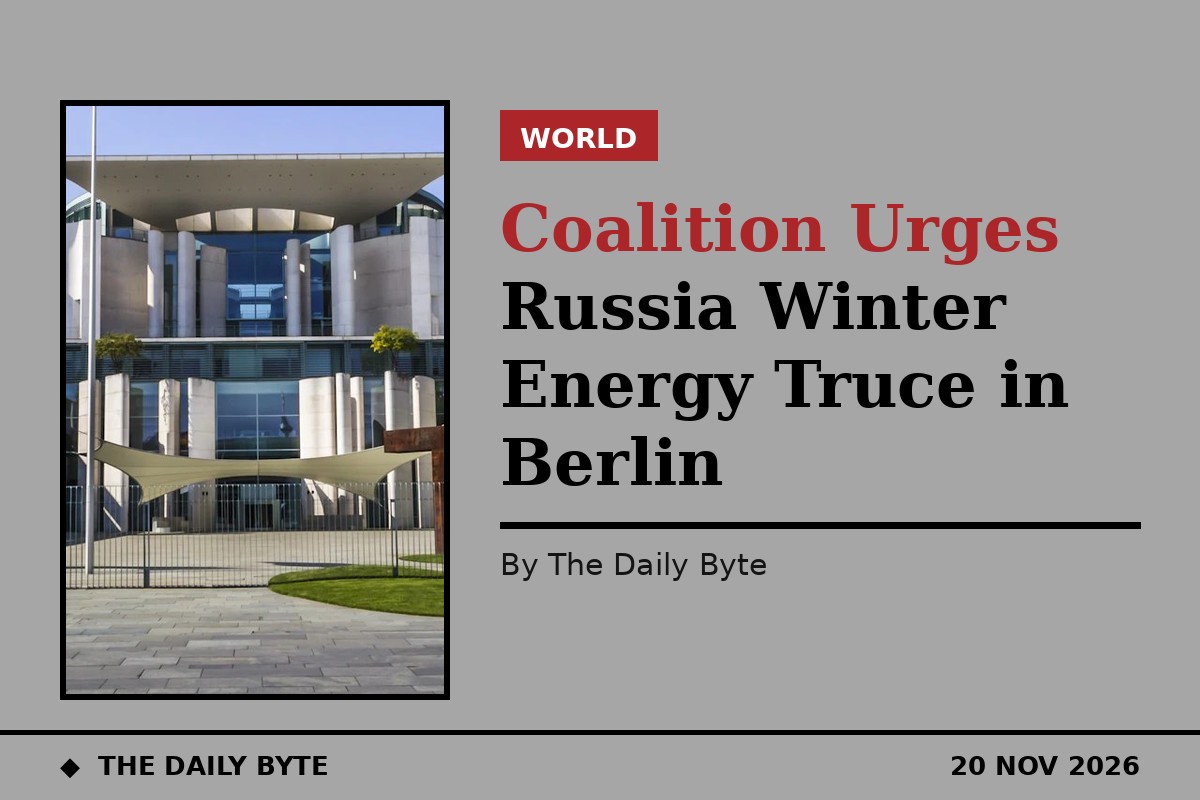
Chancellor Friedrich Merz hosted the meeting at the Federal Chancellery, with President Volodymyr Zelenskyy taking part alongside French President Emmanuel Macron and British Prime Minister Andy Burnham. The gathering was the coalition's largest so far, with 44 delegations taking part, including 26 heads of state or government and the leaders of the European Union and NATO. The United States was represented by envoys Steve Witkoff and Jared Kushner, who also met Zelenskyy separately.
Security guarantees and money
The statement also set out what Ukraine's partners are prepared to offer once fighting stops. The leaders said any future ceasefire must come with robust, legally binding security guarantees for Ukraine, defensive in nature and closely coordinated with the United States. They restated their readiness to take part in peace negotiations and to provide guarantees after a settlement, and said international borders must not be changed by force and Ukraine's right to choose its own security arrangements and alliances must be fully respected.
On money, the leaders pointed to 90 billion euros under the European Union's Ukraine Support Loan for military and financial assistance through 2027, and reaffirmed NATO's pledge of 70 billion euros in military equipment, assistance and training for Ukraine in 2026, with at least the same level in 2027. They promised additional air defence systems ahead of the winter, and committed to ramping up economic pressure on Russia's war effort through further sanctions, wider economic measures and action against sanctions circumvention, including measures covering Russian oil and cryptocurrency.
Moscow's answer so far
Russia has shown no sign of accepting the proposal. President Vladimir Putin said on 19 November that, following Ukraine's strikes on the Crimean Bridge, Moscow was no longer willing to discuss even the possibility of a truce on energy facilities or in the Black Sea. The joint statement records no Russian agreement, and the truce remains a proposal to which Moscow must respond.
Zelenskyy, speaking to reporters in Berlin, argued that the fastest way to end the war was economic pressure from the world's largest powers. He said the United States and China could stop the war by halting trade with Russia, telling journalists: if you want to stop Russia, stop trade between Russia and your country, China can do it and the United States can do it. He added that there was a huge chance the war would end if the United States really put pressure on Putin.
A European seat at the table
The Berlin statement also matters for how any future talks are organised. It came ahead of anticipated multilateral negotiations on ending the war, talks that for the first time are expected to include European representation alongside officials from Kyiv, Moscow and Washington. The leaders said they had converged on broad positions and principles for Europe's engagement in the talks, and praised Zelenskyy's willingness to agree to an immediate ceasefire and engage in meaningful negotiations, including direct dialogue between Ukraine and Russia with American and European participation.
Whether the winter truce proposal gains traction will depend on Moscow and on Washington's diplomacy in the coming days. For now, the coalition has put its position on record: stop hitting the energy grid for the winter, keep the Black Sea open for food, and pair any ceasefire with guarantees and money that make it stick.


