Colombia Charges Starlink Over Prison Signals
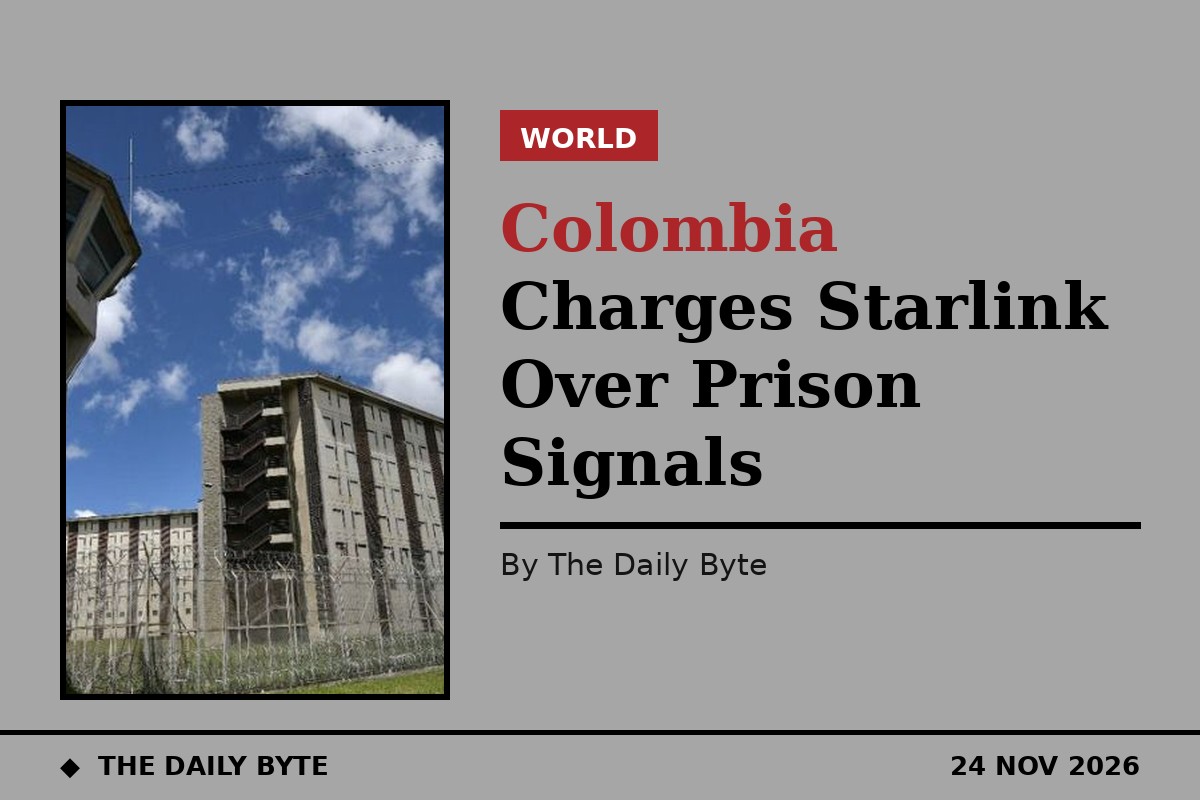
Colombia has filed administrative charges against Starlink and four mobile phone operators, accusing them of failing to restrict telecommunications signals inside the country's prisons. The government announced the action on Saturday, 21 November, in a statement from the presidential office, and the investigations will now determine whether the companies took the technical steps the law requires to stop unauthorised communications from correctional facilities.
The announcement followed a raid at La Picota prison in Bogotá, where officers found six Starlink satellite internet antennas alongside hundreds of unauthorised communications devices. During the raid, authorities seized 582 mobile phones, 3,754 SIM cards, six Starlink antennas and 38 modems, according to the official statement carried by UPI.
In Starlink's case, the Ministry of Information and Communications Technologies is investigating whether the company put in place the legally required technical measures to prevent unauthorised use of its satellite internet connections. The ministry's Communications Services Monitoring and Inspection Center detected internet connections running through Wi-Fi networks provided by Starlink at four correctional facilities.
Four prisons, five companies
The four prisons named in the investigation are La Picota in Bogotá, Bellavista in Bello in the department of Antioquia, Acacías in the department of Meta, and Las Heliconias in Florencia in the department of Caquetá. Inspectors found Starlink-powered Wi-Fi connections at each of them, raising questions about how satellite signals reached inmates despite the restrictions that apply inside prisons.
The ministry did not stop with the satellite provider. It also opened investigations and filed charges against four mobile operators: Partners Telecom Colombia, Colombia Telecomunicaciones, Comunicación Celular Comcel, which operates under the Claro brand, and the Colombia Móvil–Colombia Telecomunicaciones joint venture, known as Tigo. Those companies are accused of failing to eliminate or restrict mobile signals at La Picota, and the proceedings will examine whether they took the measures required to restrict the transmission, reception and control of mobile services inside the facility.
Colombian law sets out the obligation clearly. Law 65 of 1993, as amended by Article 16A added by Law 1709 of 2014, requires telecommunications network and service providers to attenuate the signals covering penitentiary and prison facilities. The law also assigns responsibilities to the National Penitentiary and Prison Institute, known as Inpec, which oversees efforts to prevent unauthorised communications, including those using mobile and satellite services. The measures must avoid disrupting services outside prison grounds.
Heavy penalties on the table
The government warned that companies found to have violated the regulations could face fines of up to 15,000 times Colombia's statutory monthly minimum wage, temporary suspension of operations, or revocation of their licences, authorisations and permits, depending on the circumstances. Officials said the investigations will proceed with guarantees of due process and the companies' right to defend themselves, and no findings have yet been made against any of them.
President Abelardo de la Espriella backed the investigations and called for stronger measures against the illegal use of telecommunications services in prisons. “Prisons are for serving sentences, not for directing crime,” he wrote in a post on X, adding that SIM cards used illegally from prisons must be deactivated and unauthorised satellite connections restricted.
The case matters because prisons in Colombia have long been used as bases for coordinating crime outside their walls, including extortion and drug trafficking. Phones and internet access smuggled into cells allow inmates to run criminal operations, order killings and extort businesses and families, and the authorities have repeatedly seized large numbers of devices in raids. The Starlink case is the first time a satellite provider has been drawn into that enforcement effort, and it will test whether the signal-blocking rules written for mobile networks also bind a company whose dishes can be installed almost anywhere.
Starlink had not publicly responded to the allegations as of publication. The proceedings will now determine what each company did, and whether the antennas and connections found inside the four prisons amount to a breach of the duties the law imposes on them. El Fondo reported the same charges against the four mobile operators and the administrative proceeding against Starlink Colombia.


