Colombia Protests Erupt Over De la Espriella Tax Plan
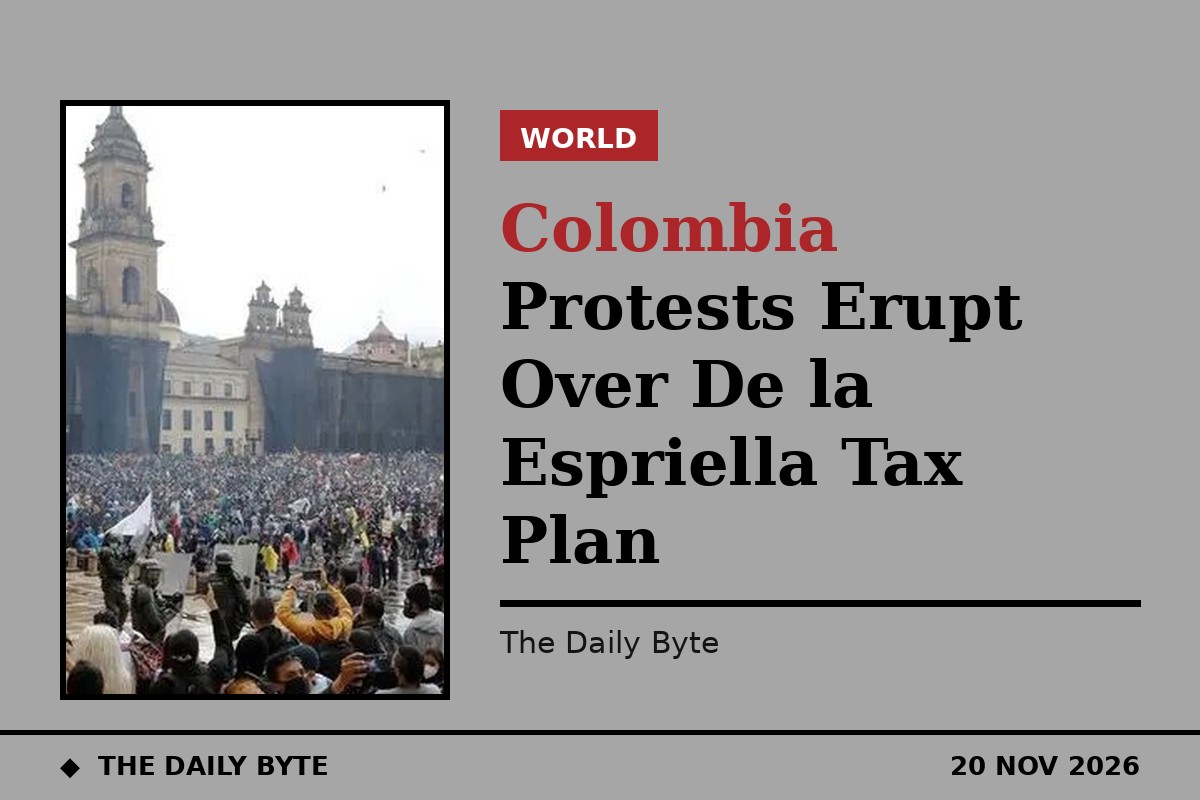
Thousands of Colombians took to the streets on Thursday in a second nationwide protest against President Abelardo de la Espriella, opposing his government's proposed tax reforms and the rising cost of living. Trade unions, students and opposition groups staged demonstrations in Bogota and other major cities, in the biggest show of opposition to the president since he took office in August.
The marches were backed by the country's main labour confederations, including the CUT and the teachers' union Fecode. Former President Gustavo Petro, now a leading opposition figure, urged Colombians to mobilise against the government's policies, which he said threatened household incomes.
What the tax bill would change
At the heart of the dispute is a fiscal bill sent to Congress on 29 October. One of its most contested measures would lower the monthly income at which Colombians start paying income tax, from roughly $1,419 to about $985, pulling many more salaried workers into the system. The proposal also raises health contributions for some workers and trims corporate income tax from 35% to 33% in 2027 and 31% from 2028.
The government argues it has little choice. It projects next year's budget deficit at 9.4% of gross domestic product, which AFP described as the highest in Latin America. De la Espriella has already withdrawn a plan to raise value added tax on basic foods after a public backlash, but unions said that concession did not go far enough and vowed to keep pressing for the whole bill to be scrapped.
"A large part of Colombia's population feels vulnerable. It is the rich who are getting richer," Leidy Gutierrez, a 21-year-old psychology student, told AFP at one of the marches.
Mostly peaceful, with some clashes
The demonstrations were largely peaceful, although some descended into clashes with riot police, who fired tear gas and used water cannon to disperse protesters, AFP reported. The US Embassy had advised Americans to expect traffic delays and disruption to Bogota's TransMilenio bus system.
De la Espriella said citizens were free to demonstrate peacefully but warned that his government would not tolerate road blockades or what he described as "urban terrorism". Rights groups have also criticised an October decree that relaxed restrictions on how much force security forces may use at demonstrations.
Thursday's demonstrations followed a first nationwide mobilisation on 14 October, when tens of thousands protested what they viewed as a rollback of rights and social reforms introduced under Petro.
A row over US military cooperation
The protests came amid a dispute over reported US-Colombian plans for joint military operations against drug trafficking groups on Colombian territory. The New York Times reported on Wednesday, citing US officials, that de la Espriella had told Washington he lacked sufficient congressional support to authorise the proposed operations. Both the president and US Defence Secretary Pete Hegseth have denied that any proposal was rejected.
De la Espriella said cooperation with Washington was intended to strengthen Colombia's military capabilities rather than facilitate the deployment of American troops, and emphasised that any deployment of US forces on Colombian territory would require congressional approval. During his visit to Bogota on Wednesday, Hegseth praised Colombia's participation in the US-led Americas Counter Cartel Coalition, an initiative aimed at strengthening regional military cooperation in the fight against organised crime.
What happens next
The tax bill still has to pass through Congress, where lawmakers could amend it before any final vote. Union leaders have warned they will keep up the pressure until the reform is withdrawn, setting up a further test of a president who has been in office for barely three months.


