Congo Ebola Fight Hit by Attacks on Health Workers
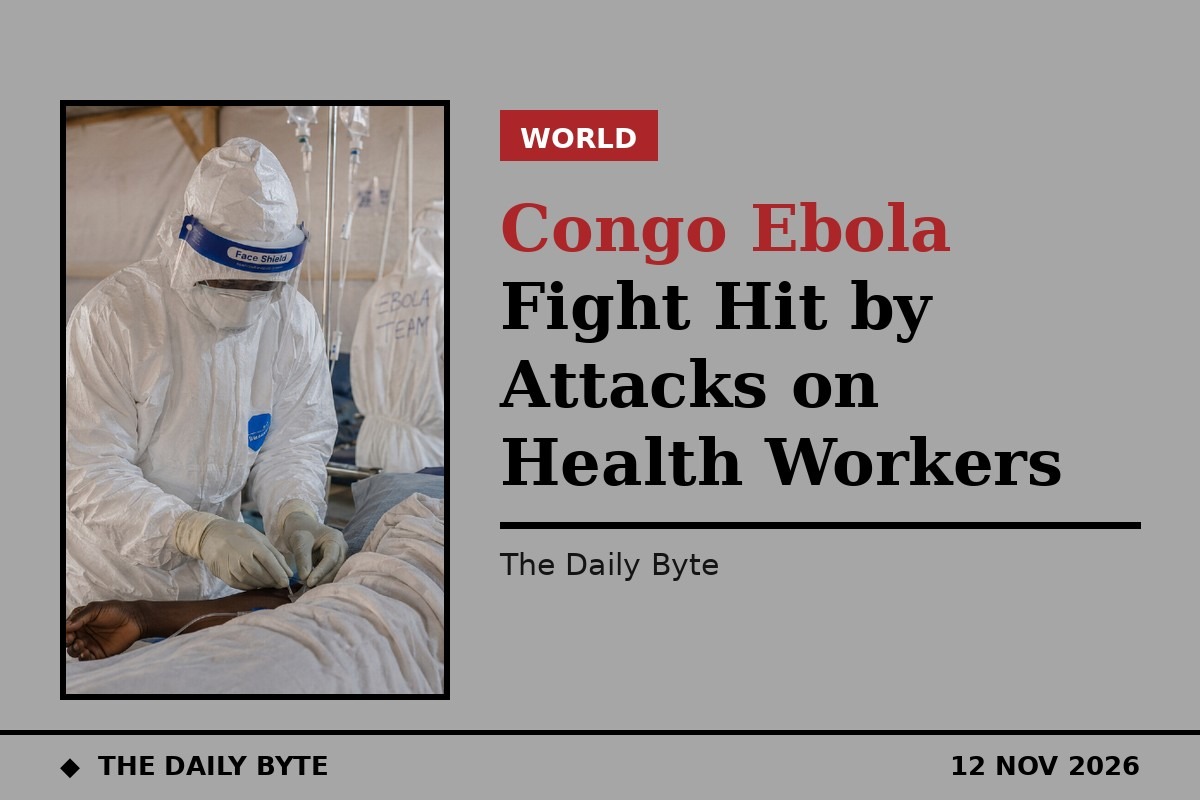
Attacks on health workers and clinics are increasingly hampering efforts to contain the Ebola outbreak in eastern Democratic Republic of Congo, Africa's top public health agency warned on Thursday, as the death toll passed 5,400.
Africa CDC said the incidents included four armed attacks, 16 assaults on responders and 11 health facilities that were burned or otherwise targeted. Wessam Mankoula, speaking for the agency at a press briefing on Thursday, said the attacks had become increasingly deadly since late September.
The warning came as the outbreak, declared on 15 May, reached 11,114 infections and 5,433 deaths, according to Congolese government figures cited by Reuters, making it one of the worst Ebola outbreaks on record.
Attacks growing deadlier
Mankoula pointed to an attack last week on Cantine-Aloya in North Kivu by the Allied Democratic Forces, an armed group linked to Islamic State, which killed 66 people, including three health workers.
More than 1,000 contacts of confirmed cases have been lost to follow-up, and three confirmed Ebola cases remain unaccounted for, raising fears that the virus is spreading undetected in communities caught up in the fighting.
At a separate briefing, World Health Organization experts said continuing violence risked reversing the progress made over the past six months. WHO Director-General Tedros Adhanom Ghebreyesus said on Wednesday that insecurity was now one of the greatest obstacles to the Ebola response, restricting humanitarian access, disrupting operations and making it harder to reach communities quickly.
Outbreak still out of control, MSF warns
Médecins Sans Frontières (MSF) said on Thursday that, six months into the outbreak, many cases were likely being missed, transmission in hospitals in some areas was rife and the virus was still spreading out of control.
The outbreak is caused by the rare Bundibugyo species of the virus, for which there are no approved treatments or vaccines, and with confirmed cases now above 11,000 it is the second-worst Ebola outbreak on record.
MSF said that over the last month, close to two-thirds of reported Ebola-related deaths had occurred in communities rather than in treatment centres. In the Beni health zone in North Kivu, almost three-quarters of Ebola patients are believed to have contracted the disease in healthcare settings, where a lack of supplies, from water to chlorine, is also a risk.
What happens next
MSF called on the Congolese government and United Nations agencies, including the WHO, to ensure that the resources mobilised for the response translate into support on the ground.
The WHO said it was working with the Congolese authorities, Africa CDC and other partners to strengthen the response, but warned that insecurity, notably attacks on health facilities, had become one of the biggest obstacles to containing the outbreak.
Health workers in North Kivu continue to treat patients under armed guard in some areas, while response teams try to trace the contacts lost to follow-up before the virus spreads further beyond the reach of treatment centres.