Conviasa resumes Havana flights despite fuel shortage
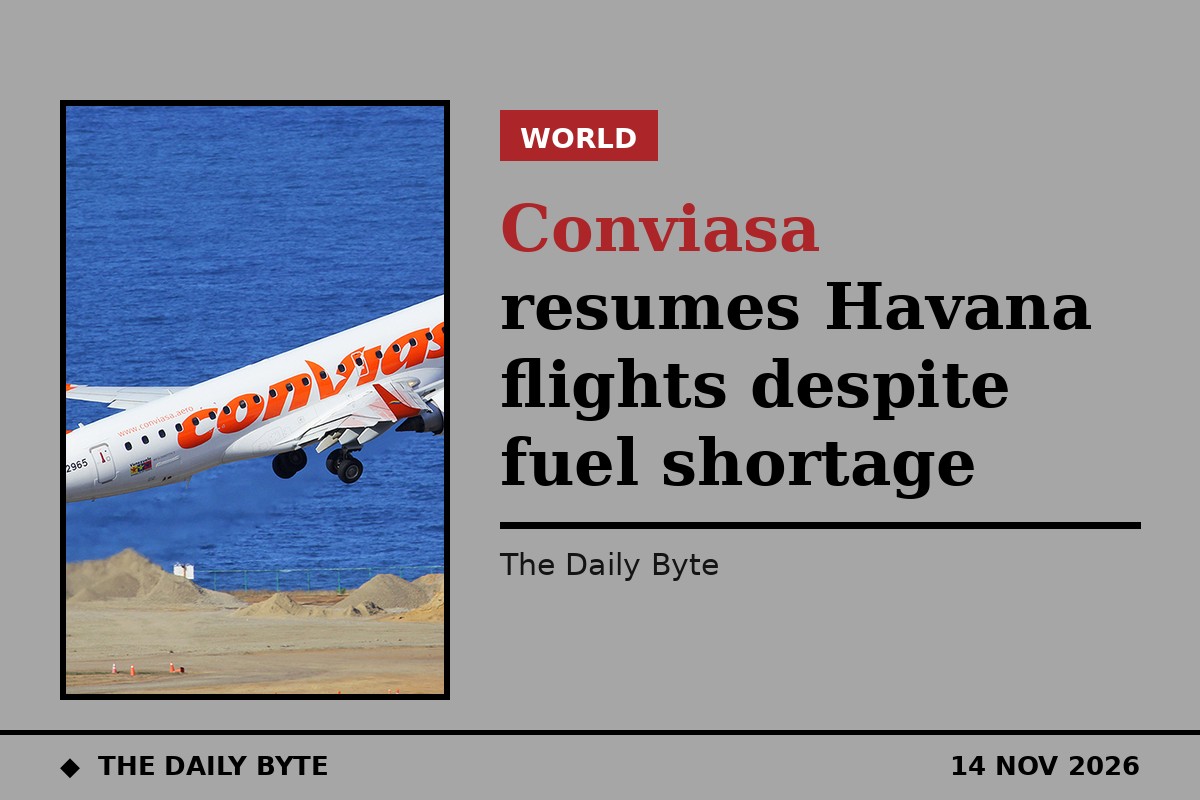
Venezuela’s state-owned airline Conviasa has resumed flights between Caracas and Havana, even though jet fuel is unavailable at ten Cuban airports. The service restarted on Friday, 13 November, with two flights a week, on Wednesdays and Fridays.
The route had been suspended on 27 October, when the carrier said it wanted to concentrate its aircraft on domestic flying. Its return was announced on Conviasa’s official Instagram account, which told passengers that flights from Caracas to Havana would operate every Wednesday and Friday and invited them to buy tickets.
The airline has not publicly explained how it plans to refuel its aircraft in Havana. The Cuban Air Navigation Company issued notices to airmen on 30 October, numbered A3875/26 to A3884/26, stating that Jet A-1 fuel was not available at ten airports, including Havana’s José Martí International Airport, Varadero, Santa Clara, Camagüey, Holguín and Santiago de Cuba. The restrictions are officially in place until 04:00 UTC on 1 December.
Airlines work around the fuel shortage
The notices do not close the airports or automatically cancel international flights, but they force airlines to operate without relying on fuel bought on the island. Other carriers have adapted in different ways. Copa Airlines loads extra fuel in Panama, Air Europa makes a technical stop in Punta Cana on its way back to Madrid, and Air China refuels in Nassau. American Airlines and Southwest fly their Cuba routes carrying enough fuel for the round trip.
Those workarounds add cost and can limit how many passengers or how much cargo an aircraft can carry. Conviasa has not said whether it will carry round-trip fuel from Caracas or make a technical stop elsewhere. Its long-haul Airbus A340, the type previously used on the Havana route, is costly to operate on a route with modest demand.
Conviasa is also bringing back its Caracas to Mexico City service, which uses Felipe Ángeles International Airport rather than the capital’s main Benito Juárez airport. That route returns on Tuesday, 17 November, with one flight a week.
A route that matters for Cuban shoppers
The Caracas–Havana service carries more than tourists. Many Cubans use it to buy goods in Venezuela, including hardware and solar panels, for resale on the island, where shortages are widespread. The flight’s return therefore matters to small traders as well as to families split between the two countries.
It also comes against a severe decline in Cuba’s air links with the rest of the world. Iberia has suspended its direct Madrid–Havana route until the end of June 2027, Delta ended its Atlanta service in June and cut frequencies from Miami, and at least 11 airlines ceased operations to Cuba at some point during 2026, leading to forecasts of more than 1,700 flight cancellations.
The fall is mirrored in visitor numbers. From January to August 2026, Cuba welcomed only 450,353 visitors, a drop of 64.4 per cent on the same period in 2025. In September, just 27,354 foreign tourists arrived, the lowest figure for that month outside the pandemic years.
The fuel crisis has deepened as the United States has tightened pressure on Cuba. Washington imposed a fresh round of Cuba-related sanctions on Thursday, hours after United Nations experts described the effective fuel blockade of the island as tantamount to “energy starvation”. Only one Russian oil tanker has reached Cuba in recent months, compounding an energy crisis already driven by economic stagnation.


