COP31 Runs Into Overtime as Ethiopia Named COP32 Host
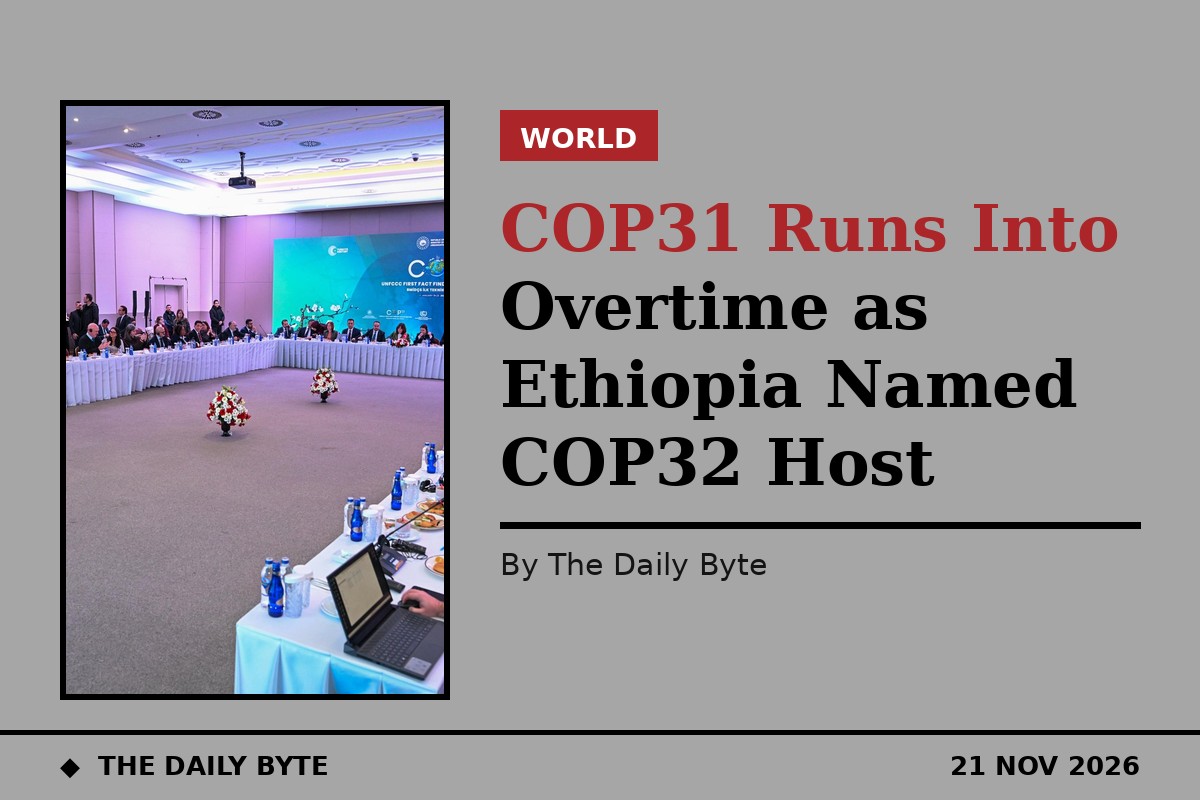
The COP31 climate summit in Antalya has run into overtime, with the closing plenary suspended late on Friday night and negotiations set to resume on Saturday as countries remain divided over fossil fuels and climate finance.
The conference, due to close on Friday 20 November, passed its deadline without agreement on several of its most contentious issues. The closing plenary eventually convened at around 9.30pm local time, adopted a handful of decisions that had already been finalised, and was then suspended at 10.29pm, with talks expected to resume on Saturday. COP31 President Murat Kurum of Türkiye said a third version of the proposed final agreement would be released on Saturday morning after overnight consultations.
One decision was settled before the suspension. Ethiopia was announced as the host of the next UN climate conference, COP32, in 2027, with its capital, Addis Ababa, selected as the host city. The announcement puts Ethiopia at the centre of the next round of climate negotiations and brings the global climate community to Africa for COP32.
Fossil fuels cut from the draft text
The central dispute is over fossil fuels. The latest draft of the proposed final political agreement removed explicit references to fossil fuels, including language on accelerating the transition away from them. It marked a retreat from the earlier draft, which had included proposals for faster action on phasing them out. The revised text was cut from 144 paragraphs to 80 and contains no mention of coal, oil or gas.
The draft would still be the first COP cover decision to acknowledge that warming is set to pass the Paris Agreement’s 1.5 degrees Celsius limit, while calling for any overshoot to be kept as small and as short as possible. But the proposed roadmap on fossil fuels remained unresolved, and the COP31 president named just transition, finance, mitigation and adaptation among the outstanding issues.
African ministers reject the draft outcome
African negotiators were among the most vocal critics. Speaking for the African Group of Negotiators, representing 54 countries, Ghana’s environment minister Zanetor Agyeman-Rawlings said Africa would not accept another COP outcome of declarations without the resources to implement them. “We didn’t come here to beg,” she said, arguing that African communities, which have contributed least to greenhouse gas emissions, continue to bear disproportionate climate impacts.
Adaptation finance was a major sticking point. The second draft dropped a proposed target of providing $120 billion a year by 2035. The broader proposal to triple adaptation finance by 2035 remained, but countries had yet to agree on a clear financial baseline and delivery pathway. African ministers noted that public adaptation finance to developing countries stood at between $28.2 billion and $31.7 billion in 2024, against estimated annual needs of about $305 billion by 2035, and insisted that finance should be new, predictable and primarily grant-based.
Just transition talks also deadlocked
Ministers also failed to agree on a just transition mechanism. Australia’s presidency of negotiations proposed a phased approach, under which countries would agree at COP31 on key messages and the continuation of the Just Transition Work Programme, with the mechanism’s functions and governance developed further in June 2027. Many parties supported the approach, but others cautioned that agreeing on the mechanism’s functions would be premature.
Some business was completed before the suspension. Parties adopted decisions on Article 6 of the Paris Agreement, which governs international cooperation and carbon-market mechanisms, and on matters relating to least developed countries. Discussions on the periodic review of the long-term global goal ended without agreement on whether the review should continue, disappointing many developing countries.
A group of countries led by France and Panama pressed the presidency on Friday for a far stronger agreement, setting out six priorities including an explicit shift away from fossil fuels, fairer climate finance and faster cuts in methane. Panama’s environment minister, Juan Carlos Navarro, warned his country would formally object to any outcome that failed to meet its demands, a step that could block adoption because decisions require consensus.
Climate Action Network International rejected the draft and urged developing countries to do the same. Its executive director, Tasneem Essop, said there was nothing on the table that protects people or addresses the priorities of the Global South. Mohamed Adow, director of Power Shift Africa, called it the worst COP ever. The evening plenary was also disrupted when climate activist Amalen confronted President Kurum over the removal of fossil fuel references and was escorted out and detained, drawing condemnation from climate and human rights advocates.
A Carbon Brief survey of summit watchers put the median expected finish at late on Sunday night, about 28 hours after the scheduled close. Negotiations resume on Saturday with the third draft, and the outcome now depends on whether ministers can bridge the gaps on fossil fuels, finance, adaptation and just transition.


