COP31 ends in overtime with no deal on fossil fuels
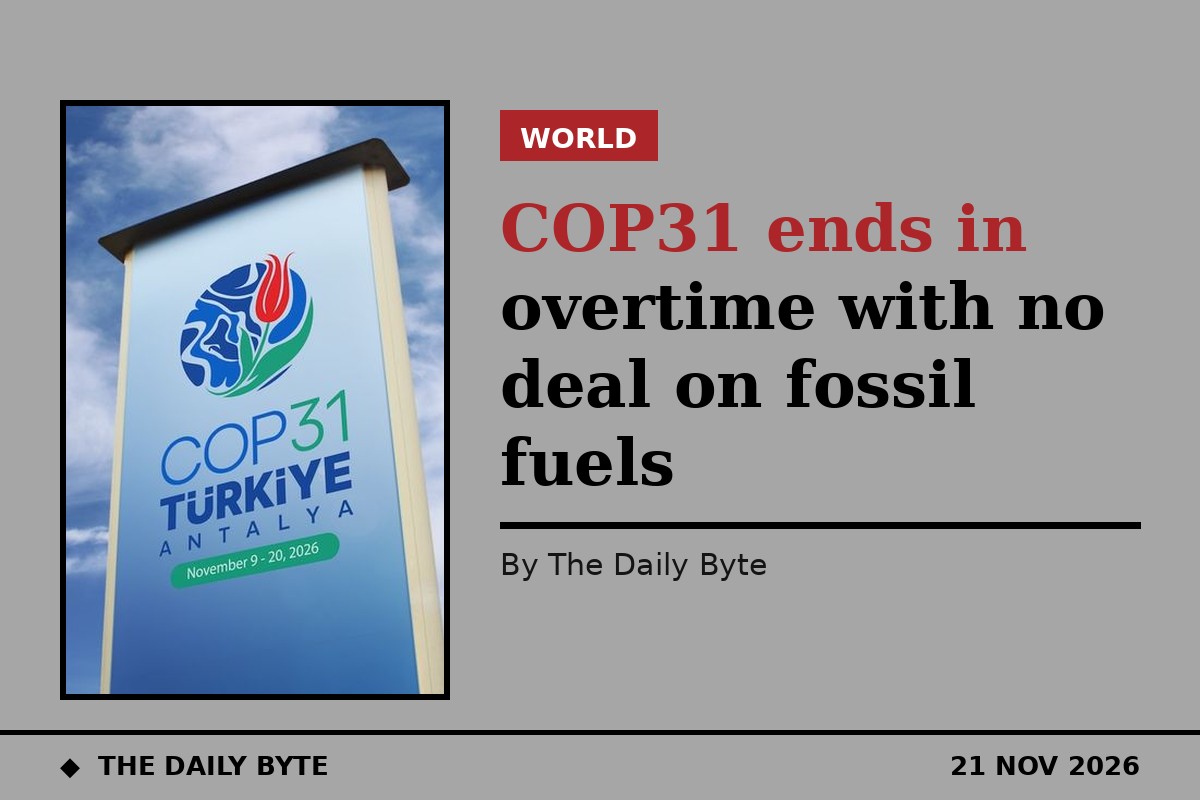
United Nations climate talks in Turkey stretched into overtime on Friday with no final deal, after the latest draft of the summit agreement dropped every mention of fossil fuels and drew protests from delegates and campaigners.
The COP31 talks in Antalya had been due to close on Friday evening, but negotiators from nearly 200 countries remained deadlocked after two weeks of bargaining. The summit president, Turkish Environment Minister Murat Kurum, promised a third version of the draft agreement on Saturday morning after overnight talks.
"We are close to the finish line but not there yet," Kurum said, as delegates passed a protest banner reading "failure" and a demonstrator interrupted him, shouting: "You are killing the future, you are killing the future."
Fossil fuels cut from the text
The second draft of the summit's main political decision, published on Thursday, was cut from 144 paragraphs to 80 and contains no mention of coal, oil or gas. The first version, issued on Monday, had urged countries to move swiftly away from fossil fuels in energy systems, but that language vanished after objections from Saudi Arabia and other large oil and gas producers.
The same revision dropped a proposed target of 120 billion dollars a year in adaptation finance for developing countries by 2035, replacing it with a call for further discussion about tripling adaptation finance. The text still keeps the presidency's goal of lifting electricity to 35 per cent of total final energy use by 2035, up from about a fifth today, but does not say that electricity must come from renewable sources.
The closing plenary was suspended until Saturday morning because of sharp disputes over the watered-down text. If the draft stands, COP31 would be the second summit in a row whose main decision fails to name the fuels behind nearly 90 per cent of the world's carbon dioxide emissions.
Anger from vulnerable countries
A group of countries led by France and Panama pressed the presidency on Friday for a far stronger agreement, setting out six priorities including an explicit shift away from fossil fuels, fairer climate finance and faster cuts in methane. Panama's environment minister, Juan Carlos Navarro, warned his country would formally object to any outcome that failed to meet its demands, a step that could block adoption because decisions require consensus.
"It is not acceptable to have a COP or a cover document that does not even mention fossil fuels, and we simply will not put up with it," Navarro said.
Campaigners were blunter. Tasneem Essop, executive director of Climate Action Network International, told a packed press conference: "There is nothing on the table that protects people, or addresses the priorities of the Global South." Delegates chanted and held signs reading "SHAME!"
Mohamed Adow, director of Power Shift Africa, called it the worst COP ever and warned that if the text remained unchanged, the summit would be a "ghost COP" with nothing to show for two weeks of talks.
What happens next
Germany's environment minister, Carsten Schneider, said some countries did not want the words fossil fuels used at all. "There are some who earn a lot of money with that," he told reporters on Friday.
Australia's Chris Bowen, who is leading the negotiations, said COP31 would be the first climate summit to acknowledge that the world is set to fail to hold warming to 1.5 degrees Celsius above pre-industrial levels, the goal set in the 2015 Paris Agreement. October 2026 was 1.8 degrees warmer than the mid-1800s, according to Berkeley Earth.
The United States, one of the world's top greenhouse gas emitters, is absent for a second consecutive year. With the scheduled deadline passed, negotiators now face a weekend of overtime talks to decide whether the summit can produce any agreement at all.


