Costa Unveils €2 Trillion EU Budget Plan With Digital Tax
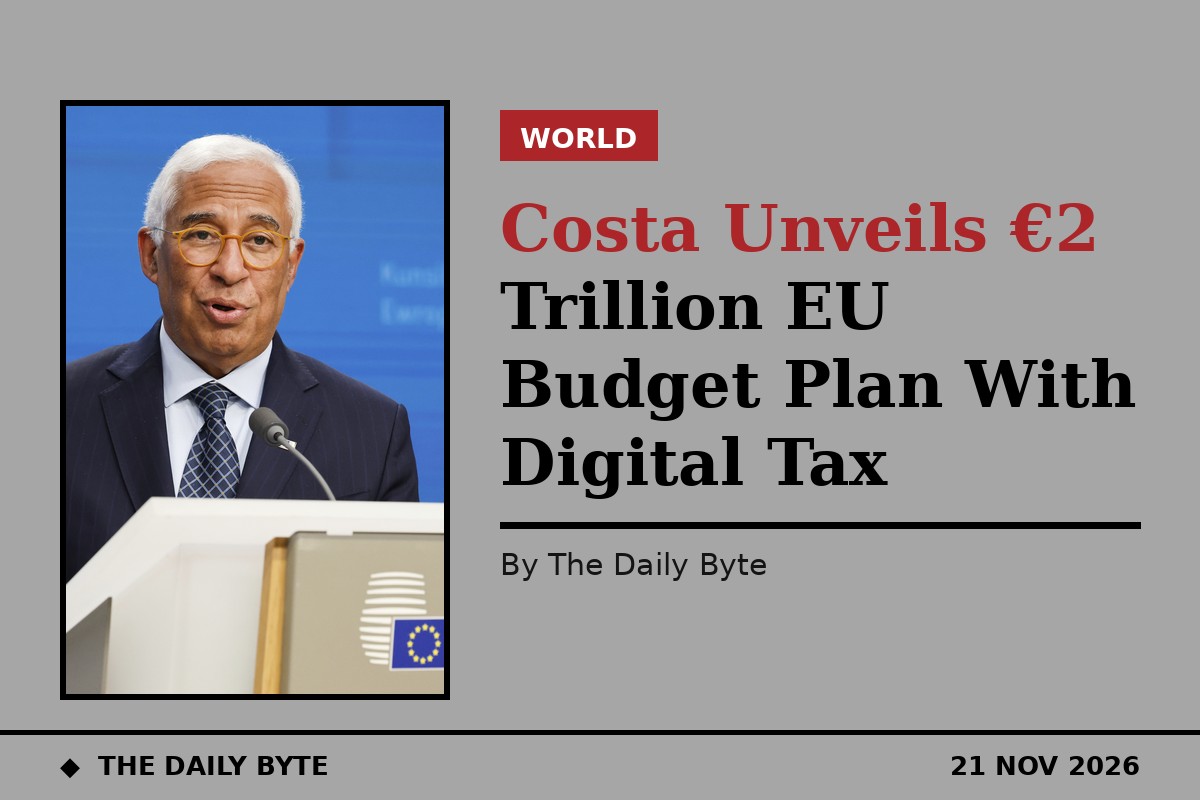
European Council President António Costa has put forward his plan for the European Union's next seven-year budget, proposing a smaller overall package than the European Commission first suggested and a new levy on large technology companies to help pay for it.
Costa presented the revised negotiating proposal at a press conference in Brussels on Saturday 21 November. It will form the basis for talks at a special European Council meeting on 26 and 27 November, with leaders aiming to reach agreement before the end of the year. EU leaders asked Costa to take the negotiations forward at their meeting on 15 and 16 October, after months of deadlock over the 2028-2034 multiannual financial framework.
The Commission proposed a budget of almost €2 trillion in July 2025. Costa's version trims that by 10.2 percent, or about €204 billion, bringing the total to roughly €1.58 trillion in 2025 prices.
Defence and competitiveness get the biggest rises
The proposal directs the largest increases to the priorities leaders set for the next cycle. Funding for competitiveness would rise by 120 percent compared with the current 2021-2027 budget, and funding for defence by 232 percent. Money for migration management and border control would double, while funding for projecting Europe in the world would rise by 23 percent.
The EU's flagship science programme, Horizon Europe, would grow by 57 percent, and Erasmus, the student exchange programme, by 25 percent. Costa also kept a target of directing 35 percent of spending across programmes to climate and environmental action, and set a target of 14 percent of national and regional envelopes contributing to social goals. The fund supporting the Common Agricultural Policy and cohesion policy would remain the largest in the budget.
A 3% levy on big tech among five new revenue streams
To keep national contributions in check, Costa proposed a basket of five new sources of EU revenue, known as own resources. The most eye-catching is a 3 percent levy on the digital services revenue of large technology companies, covering online advertising, digital marketplace services and the monetisation of user data.
The levy would apply to companies with more than €50 million of annual digital turnover in the EU and more than €750 million of revenue worldwide. Costa stressed that it was not aimed at any specific company. It is expected to raise about €5 billion a year.
The other four streams are revenue from the carbon border adjustment mechanism, a fee on electronic waste that is not collected for recycling, a levy on tobacco products, and part of the revenue from the emissions trading system. Together with existing revenue, the package could bring in about €60 billion a year.
On average, national contributions would rise only slightly, from 0.80 percent to 0.82 percent of member states' gross national income, under the proposal.
External action faces the deepest cuts
The compromise is not painless. Global Europe, the budget line for the EU's external action, would fall by about 21 percent to €150.1 billion, down from the €190 billion the Commission proposed. The pillar for enlargement and the eastern neighbourhood would receive €30.9 billion.
Support for Ukraine's accession process and longer-term reconstruction would be unchanged, at up to €88.8 billion over the period.
"I am confident that this proposal is a good basis for moving forward towards a final agreement," Costa said as he presented the plan. Whether leaders agree next week will show whether the compromise, and its new tax on digital giants, can bridge the gap between member states that want a smaller budget and those defending spending on farming, regions and the EU's role in the world.


