Costa to unveil revised EU budget compromise
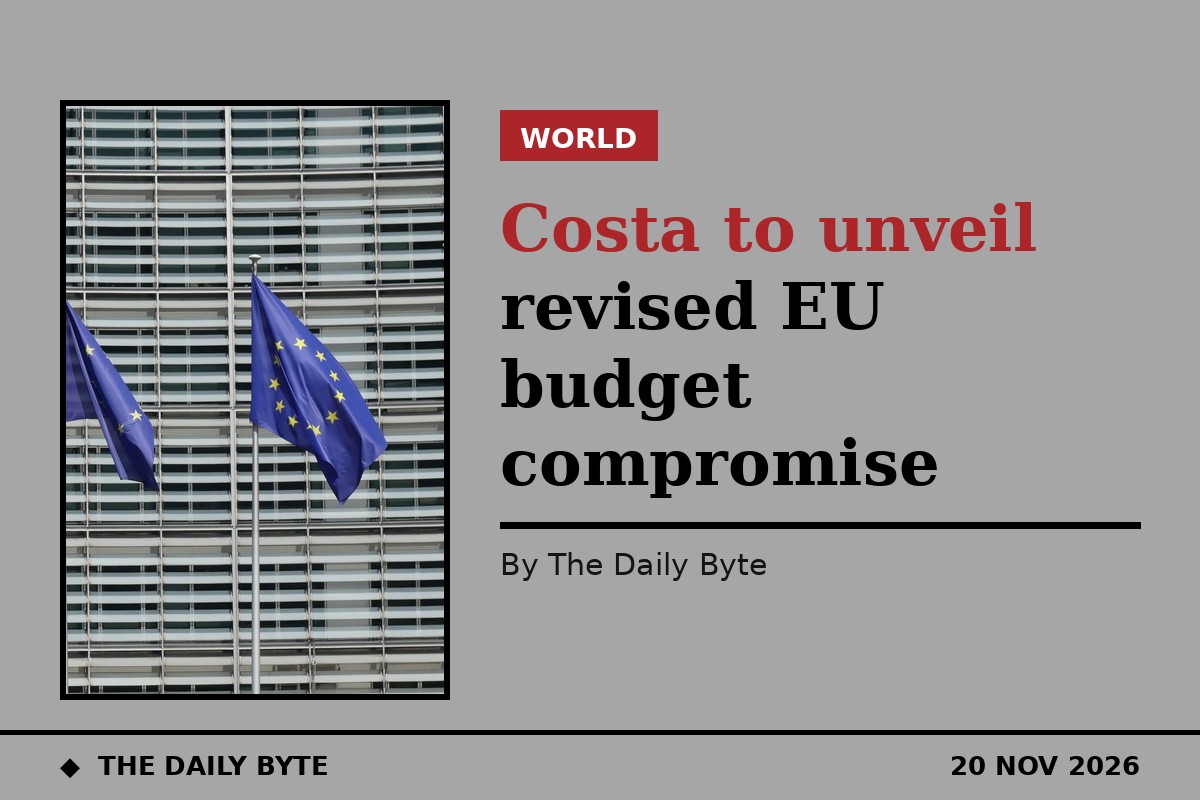
European Council President António Costa will unveil a revised compromise for the European Union's next seven-year budget on Saturday, in a final attempt to bridge differences worth hundreds of billions of euros before EU leaders meet next week.
The European Council announced on Thursday that Costa would present the revised negotiating framework, known in Brussels as the negotiating box, on 21 November, ahead of a special summit of the 27 national leaders on 26 and 27 November. A press conference on the revised framework is scheduled for 11.00 on Saturday.
The negotiations concern the Multiannual Financial Framework for 2028–2034, which will set the EU's main spending commitments for seven years. The European Commission's original proposal, presented in July 2025, envisaged spending of almost €2 trillion in current prices, equivalent to about 1.26 per cent of the EU's combined gross national income.
Cuts of about €210bn expected
Agreement remains elusive. The European Parliament supports a budget of about €1.789 trillion, excluding repayments of debt taken on under the NextGenerationEU pandemic recovery programme, while the Irish presidency's proposal, discussed by leaders in October, amounted to €1.473 trillion on the same basis — a gap of more than €300 billion. Leaders were unable to endorse the Irish proposal at their meeting on 15 and 16 October.
EU diplomats expect Costa's revised text to cut roughly €210 billion from the Commission's proposal, according to Rapporteur. The German-led group of budget hawks, known as the frugals, is refusing to back down from demands for cuts amounting to several hundred billion euros, and cohesion funding for less-developed regions is expected to be cut in the new compromise.
That puts Costa, a Portuguese socialist, in a difficult position. Cohesion is a top priority for the 17-strong Friends of Cohesion group, and diplomats say he may struggle to defend cuts to it. Agricultural funding, which remained largely untouched in earlier compromise texts put forward by the Cypriot and Irish presidencies, is unlikely to face major cuts in Saturday's proposal, the diplomats said.
New taxes to plug the gap
Costa is also betting on new EU-wide revenue streams, known as own resources, to ease the burden on national contributions. One idea under discussion is to narrow the Commission's proposed corporate tax, known as CORE, so that it applies only to companies with net turnover of at least €750 million. Diplomats have also floated a separate roadmap covering possible levies on crypto assets and spectrum auctions, keeping those options on the table rather than ruling them out.
Any new revenue streams would need to be in place by early 2028, when the next seven-year budget cycle starts. The Commission's proposal allocates about €865 billion to programmes supporting member states and regions and €409 billion to competitiveness, including research and innovation, although those remain proposed allocations rather than agreed commitments.
What happens next
Saturday's document will show whether Costa and the Council presidency have found a compromise capable of narrowing the differences. Leaders have set themselves a deadline of the end of this year to agree the budget so it can take effect on 1 January 2028, with a further summit on 17 and 18 December expected to be the moment negotiations go to the wire.
Any deal requires the unanimous agreement of all 27 member states, followed by the consent of the European Parliament. Defence and security have emerged as major new spending priorities alongside traditional farm and regional programmes, while Brussels must also begin repaying the debt accumulated under the pandemic recovery programme.


