Court Limits DOJ Demand for Journalists' LinkedIn Records
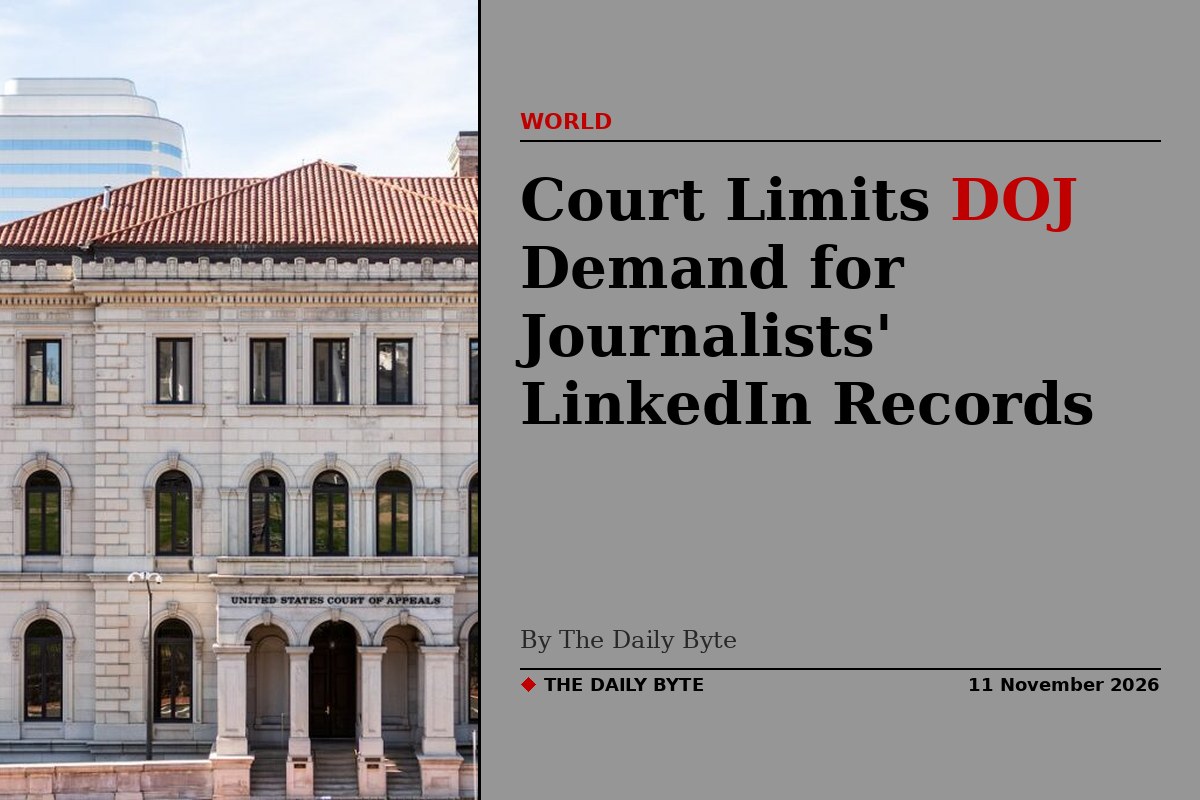
A US federal appeals court has ruled that the Justice Department's demand for 18 months of journalists' LinkedIn records was too broad, ordering a lower court to narrow an order that could have exposed a large number of confidential sources.
The unanimous decision by a three-judge panel of the Fourth US Circuit Court of Appeals, issued on Tuesday, is a setback for the Trump administration's leak investigation and a significant ruling on press freedom and the limits of government demands for reporters' records.
Judge J. Harvie Wilkinson III, appointed by President Ronald Reagan, wrote the opinion, joined by Judges James Andrew Wynn and Nicole Berner. The panel said that while the government was entitled to investigate leaks, it could not seek records "carte blanche".
What the government sought
Investigators were looking for the source of classified information about a top-secret US military operation overseas, after an unidentified news organisation published a report describing it. The Justice Department obtained court orders requiring LinkedIn to hand over metadata from the accounts of six journalists, covering an 18-month period.
The records would have shown who the journalists communicated with on LinkedIn, but not the content of their messages. According to court filings, the demand covered about 1,900 interactions. LinkedIn challenged the orders in federal court in Virginia in November 2025, arguing that they were overbroad and that a related order barring the company from telling the journalists about the demand was unlawful.
A district judge ruled in the government's favour in June, and LinkedIn appealed to the Fourth Circuit, which heard argument in September.
Why the court intervened
The panel found that the demand reached far beyond records reasonably relevant to the suspected leak. During the 18 months covered by the order, the journalists collectively published nearly 1,000 articles, and the court said fewer than 5 percent appeared to have anything to do with the subject of the investigation.
Wilkinson wrote that the order "may catch sources relevant to the government's investigation" but would also "inevitably sweep in every other confidential source with whom the targeted journalists spoke". The panel said such broad disclosure could expose confidential sources unrelated to the case, undermine informed public debate and harm democratic institutions.
The court did not, however, throw out the disclosure order altogether. It sent the case back to US District Judge Elizabeth Hanes, who issued the original order, with instructions to draw it more narrowly, and to reconsider the order that has kept LinkedIn from telling the journalists about the demand for a year.
A case largely conducted in secret
Much of the case has played out under seal. The news organisation and the journalists have not been publicly identified, and the details of the leaked information remain secret. LinkedIn is a subsidiary of Microsoft, which has backed the challenge.
The ruling does not end the leak investigation, and the government may still obtain records that are genuinely relevant to it. But it sets a limit on how far investigators can go when the records they seek belong to journalists, and it requires judges to weigh the First Amendment interests at stake before granting sweeping demands.


