Lords begin scrutiny of jury trial reforms
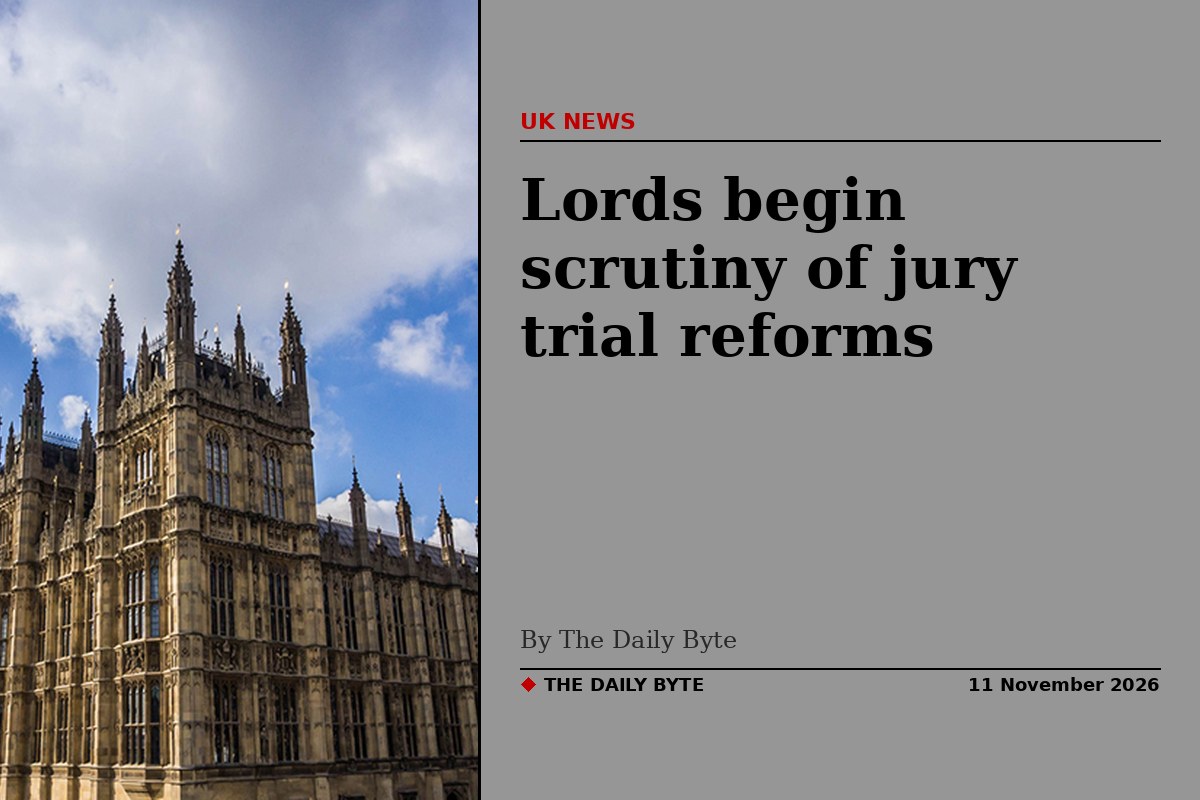
Peers have begun line-by-line scrutiny of the Courts and Tribunals Bill, the government’s reform of the criminal courts in England and Wales that would curb the right to a jury trial for some offences.
The House of Lords opened committee stage on Tuesday 10 November, with a second day scheduled for Monday 16 November. Peers will consider amendments on judge-only trials, magistrates’ sentencing powers and the appeals process.
What the bill would change
The bill would remove an adult defendant’s right to elect a Crown Court jury trial for “either-way” offences, which can be heard in either court. It would also allow judge-only trials for certain complex or lengthy cases, including fraud, tax evasion and bribery, and would replace the automatic right of appeal from the magistrates’ court with a permission-based system.
Ministers say the measures, drawn from Lord Leveson’s review, respond to record levels of open cases in the Crown Court. The bill would also reform evidence and procedure in sexual offence prosecutions and repeal a parental-involvement presumption in the Children Act 1989.
Peers challenge ministerial powers
The bill has drawn sustained opposition from the legal profession and MPs, who have questioned its effect on fairness and magistrates’ court capacity. Last week the Lords Delegated Powers and Regulatory Reform Committee recommended removing two ministerial powers, including the power to add offences to the judge-only list by order rather than through primary legislation.
The committee also urged peers to remove a power letting the Secretary of State set the maximum sentence magistrates can impose for a single either-way offence at six, 12, 18 or 24 months, against a current limit of 12 months. The bill completed its Commons stages on 13 October, after its Lords second reading on 27 October.
Sources: UK Parliament and House of Lords Library.