Covid Inquiry: Test and Trace Came Too Late, Report Finds
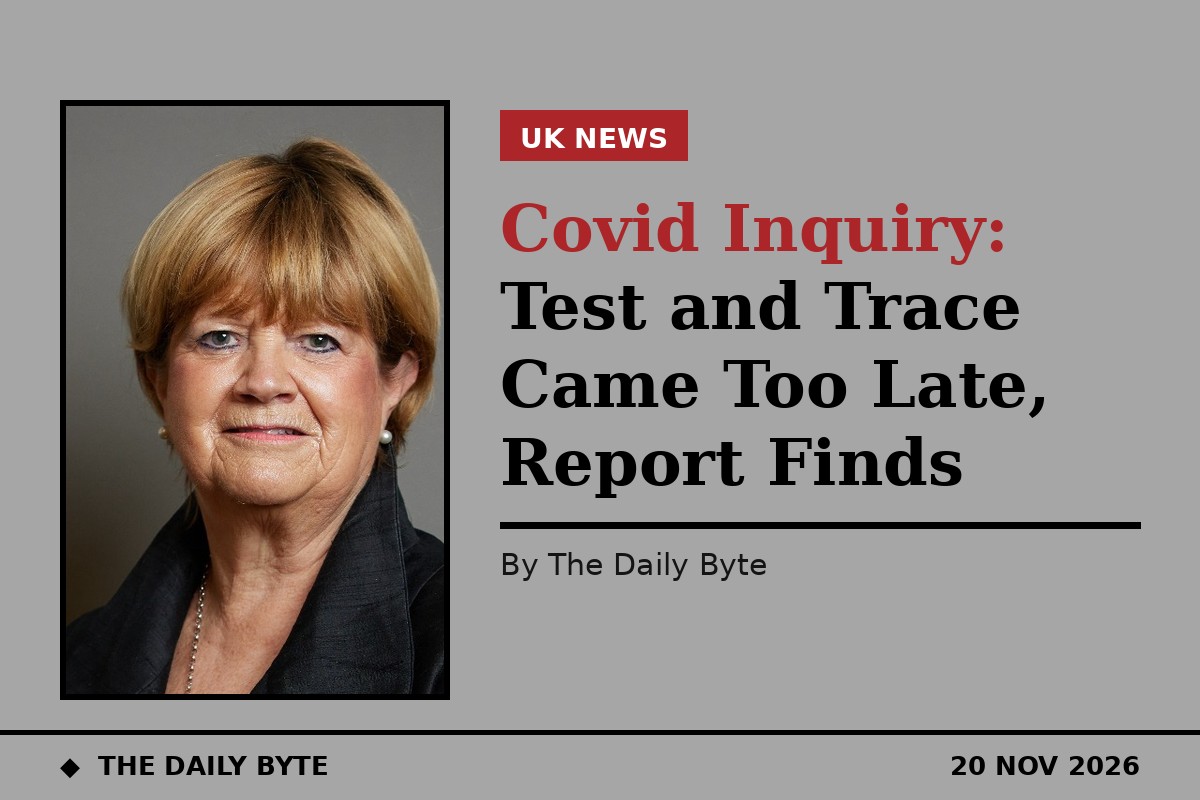
The UK entered the Covid-19 pandemic “woefully ill-prepared” to test, trace and isolate, allowing the virus to spread virtually unchecked for the first three months, the UK Covid-19 Inquiry has found.
The inquiry’s seventh report, published on 19 November and chaired by Baroness Heather Hallett, examines the test, trace and isolate systems used by the UK and devolved governments during the pandemic. It concludes that early efforts to contain the virus “were doomed to fail” because the system could only cope with a small number of cases.
British scientists had developed an effective diagnostic test by mid-January 2020, the report says, but “there was no system of widespread testing, tracing or isolation for several months”. Community testing and contact tracing were abandoned in March 2020 because of shortages of tests and equipment and insufficient laboratory capacity, leaving decision makers “blind to the true spread of the virus”.
Blind to the spread
The inquiry identified failures in five operational areas. Before major testing sites were established, existing capacity in private and academic laboratories was left underutilised, and public bodies were wholly unprepared to carry out contact tracing at the scale required. It took until summer 2020 for widespread contact tracing to be established, by which point the virus had already swept through the population.
Self-isolation support was also lacking. The report found that support was not provided to ensure people could self-isolate if they tested positive, leaving many facing a choice between losing income and risking spreading the virus. Early estimates suggested fewer than half of infected people were complying with isolation rules, and fines of up to £10,000 were later introduced. Financial support of £500 for low-income workers in England did not arrive until September 2020.
The cost — and the pingdemic
Building test and trace systems in the middle of the emergency cost an enormous amount of money. More than £25 billion was spent on NHS Test and Trace in England between the start of the pandemic and June 2022, and more than £30 billion was spent across the UK on testing, tracing and isolation.
The report also examined the “pingdemic”, when large numbers of people were told to self-isolate by the NHS Covid-19 app. For one week during the pandemic, around 7 per cent of UK adults — about 4.5 million people — were self-isolating, with an economic impact the inquiry said was greater than initially predicted.
Borders and warnings ignored
The report heavily criticised the then government’s border policy, saying the decision not to implement widespread border controls from the outset “represented a missed opportunity” to slow the spread of infection. By April 2020, 93 per cent of countries had border measures in place; the UK did not impose them until June 2020.
Simulation exercises held before the pandemic had already flagged the weak points. Exercise Cygnus, which rehearsed a flu pandemic, and Exercise Alice, which rehearsed an outbreak of Mers, both identified problems with testing, tracing or isolation that the report says do not appear to have been fully acted on.
Nine recommendations for the next pandemic
The report makes nine recommendations, including monitoring the UK’s testing capabilities, having plans ready for large-scale manual contact tracing and a UK-wide digital contact tracing tool, and putting local plans in place for practical and financial support if self-isolation is required.
Its overarching recommendation is that the UK government and the devolved administrations work together to build a single, integrated UK-wide test, trace and isolate system that can be deployed from the outset of any future pandemic. Three more inquiry reports are expected by mid-2027.
Baroness Hallett said: “When Covid-19 arrived in January 2020 the UK was simply not prepared to deliver test, trace and isolate systems at the scale or speed required. Such a system has the potential to slow the spread of the next deadly virus.”
Royal College of Nursing chief executive Professor Nicola Ranger said the failure to prepare “made the job of nursing staff all but impossible”, adding: “There will be another pandemic and the legacy of this inquiry must be that we are never again failed in this way.”
The report also notes that once the scaled-up system was eventually established, it was extremely effective — but it came too late to prevent lockdowns, school closures and thousands of avoidable deaths.
Sources
UK Covid-19 Inquiry: Module 7 Report — Test, Trace and Isolate
Nursing Times: Test and trace failures left nurses in ‘all but impossible’ position