Cricket Australia rules out new Sandpapergate probe
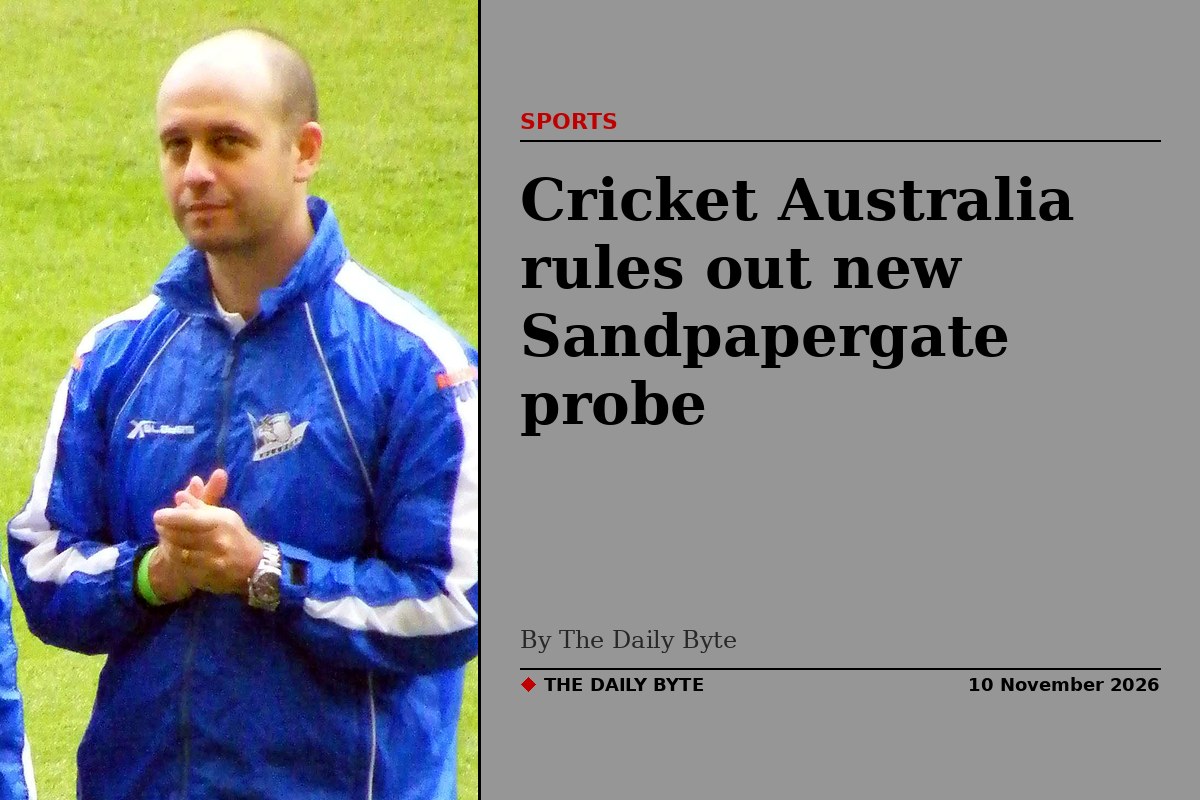
Cricket Australia has ruled out reopening its investigation into the 2018 ball-tampering scandal, despite fresh claims from Usman Khawaja and David Warner that knowledge of the plot was far more widespread than the original inquiry found.
Chief executive Todd Greenberg told radio station SEN on Tuesday that the Cricket Australia board saw no value in revisiting the case, which became known as Sandpapergate after Cameron Bancroft was caught using sandpaper on the ball during the third Test against South Africa at Cape Town in 2018.
“We don’t see any compelling reason to open the investigation or revisit this again. I don’t think there’s anything that can be gained from that,” Greenberg said.
Board sees no benefit in going back
Greenberg said the board’s position was clear. “There’s absolutely no benefit in going back,” he told SEN. “That’s the clear position of the CA board. I think it’s time we’ve got to look ahead, and the matter was dealt with under a previous leadership back in 2018.”
He added that Cricket Australia remained comfortable with the outcome of the original investigation. “We have said we’re comfortable with the outcome of the investigation based on the information we’ve received. That includes what we’ve seen from Usman, and our position hasn’t changed on that.”
Greenberg, who was not involved in cricket administration in 2018 and served as chief executive of the Australian Cricketers’ Association from 2020 to 2025, said he had spoken to several members of the 2018 team since Khawaja’s claims became public. He said their accounts differed sharply from Khawaja’s version of events, and that the players involved were unlikely ever to agree on what happened.
Khawaja’s claims in his autobiography
The renewed debate follows the release on Tuesday of Khawaja’s autobiography, Sabr, in which he devotes a chapter to the scandal. Khawaja says Warner, Steve Smith and Bancroft were not the only people who knew about the plan, and claims sandpaper was also used during the second Test of the series in Port Elizabeth, before the incident came to light at Newlands.
Khawaja also revealed that he was never interviewed during the original investigation, despite sitting next to Bancroft for the whole of the Cape Town Test. Extracts from the book were published in Australian media at the weekend, and Cricket Australia issued a statement on Saturday saying it stood by the findings of the 2018 inquiry.
Warner, who retired from international cricket more than two years ago, broke his silence on Monday to back his former team-mate, describing Khawaja’s account as “100% accurate” and the original investigation as rushed and botched.
What happened in 2018
The investigation that followed the Cape Town Test resulted in 12-month bans for Smith and Warner, who were captain and vice-captain at the time, and a nine-month ban for Bancroft. The four Australia bowlers who played in that match and still represent the country — Pat Cummins, Josh Hazlewood, Mitchell Starc and Nathan Lyon — issued a joint statement in 2021 denying any knowledge of the plot.
Greenberg confirmed that Cummins, the current Australia captain, would speak about the issue in the coming days. He also admitted he had not yet read Khawaja’s book, but said Khawaja had telephoned him about it.
For now, Cricket Australia’s position is settled: the case is closed, and the governing body intends to look forward rather than reopen an inquiry conducted under a leadership that has long since departed.