Croatia GDP Growth Quickens to 2.9% in Third Quarter
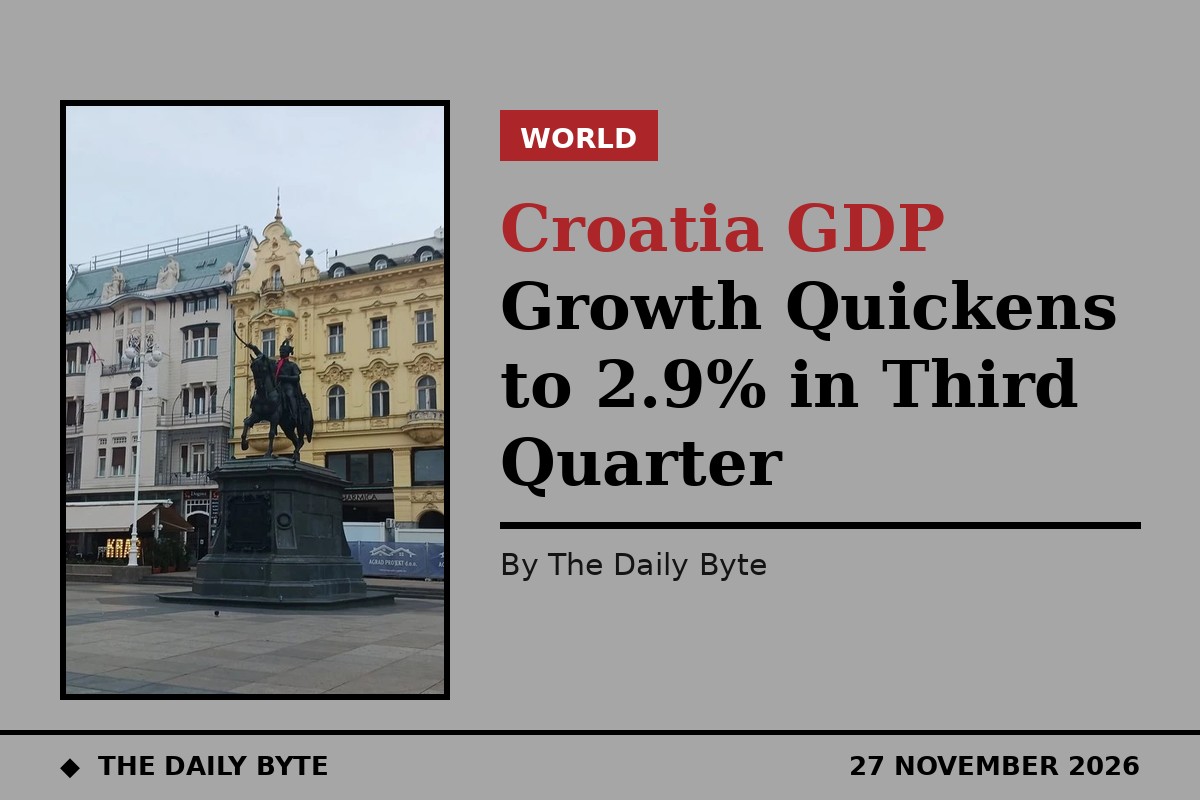
Croatia's economy grew faster in the third quarter of 2026, with official figures published on Friday showing growth of 2.9 percent on the year, up from 1.7 percent in the second quarter.
The first estimate from the Croatian Bureau of Statistics put seasonally adjusted growth at 1.2 percent compared with the previous quarter, after a 0.5 percent rise in the three months to June. The rebound reverses a slowdown that had taken annual growth from 3.3 percent at the end of 2025 to 1.7 percent in the second quarter, the weakest since the pandemic.
Gross domestic product in current prices totalled 29.1 billion euros in the July to September period, the statistical office said. Gross value added rose 2.7 percent in real terms on the year.
Consumption leads the rebound
Household spending drove the acceleration. Household consumption expenditure grew 2.8 percent on the year, much faster than the 0.5 percent increase recorded in the previous quarter, according to the expenditure breakdown in the first estimate.
The figures were stronger than some forecasts. The Institute of Economics in Zagreb had estimated growth of 2.0 percent for the quarter, while the Croatian National Bank's nowcasting model, published in its latest monthly bulletin, had pointed to growth of about 3.0 percent on the year and 1.2 percent on the quarter.
Forecasts and context
The rebound sits awkwardly with the International Monetary Fund's decision in October to cut its 2026 forecast for Croatia to 2.2 percent. It also contrasts with the wider eurozone picture, where growth has been much weaker: France's economy contracted by 0.2 percent in the third quarter, according to final figures published by INSEE on Friday.
For comparison, the euro area as a whole grew by 0.4 percent on the quarter in the three months to September, according to Eurostat, less than a third of Croatia's quarterly pace. The Croatian National Bank's bulletin had already pointed to a marked acceleration in activity in the third quarter, based on monthly indicators available to the end of September, and its nowcasting model put quarterly growth at 1.2 percent, exactly the figure the statistical office reported.
Croatia's inflation picture has been less comfortable. Inflation on the harmonised measure edged up to 4.4 percent in October, from 4.3 percent in September, according to the flash estimate.
The first estimate is based on incomplete data and will be revised as more information becomes available. Even so, the figures suggest Croatia's economy found new momentum in the summer after a weak start to the year, with consumers, rather than exports, doing most of the work.


