Cuba offers US dialogue amid fuel blockade
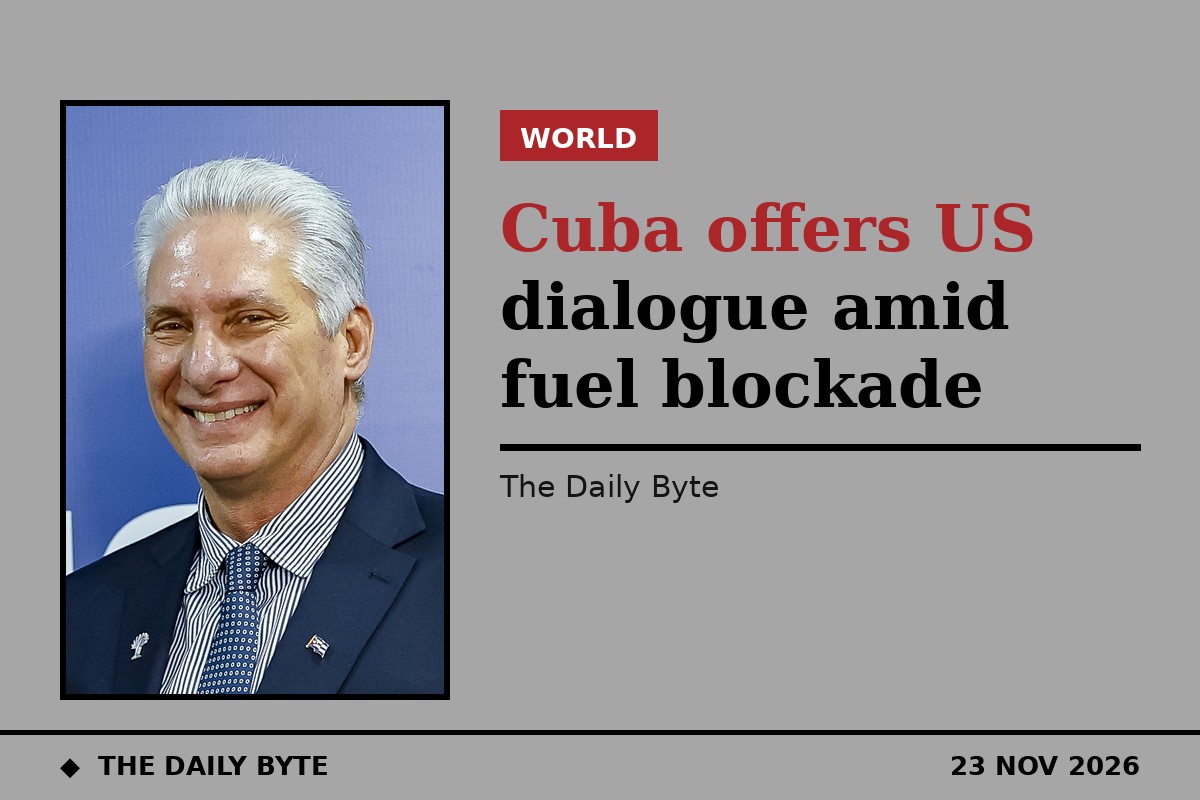
Cuba has renewed its offer of dialogue with the United States, even as a US fuel blockade continues to squeeze the island's economy and Washington keeps up the pressure on Havana. The Cuban Embassy in Washington said on Saturday 21 November 2026 that its offer of talks "remains on the table", a day after President Miguel Diaz-Canel made a similar conditional offer during a military mobilisation exercise with university students in Havana.
The embassy set out its terms in a message posted on X, saying any dialogue should be built on mutual respect, sovereignty and non-interference in Cuba's internal affairs. Mr Diaz-Canel used almost identical language on Friday 20 November, speaking during a student shooting exercise at the University Student Bastion event in Havana. "What the Cuban and American peoples deserve is not confrontation, but rapprochement and opportunities for cooperation between our two peoples," he said. He insisted that any talks must take place "without pressure, without preconditions, and without questioning our political system, our sovereignty, or our self-determination." Eastora News reported his remarks from the Havana event.
An island running short of fuel
The offer comes in the middle of a severe energy crisis. The United States has cut Cuba off from Venezuelan oil since January 2026, and the US Coast Guard has been stopping fuel ships bound for the island since February. Cuba produces only about 40,000 barrels of oil a day against needs of roughly 100,000, and the power grid has suffered eight nationwide collapses in 2026, the most recent on 18 September. Fuel shortages have cut interprovincial bus departures from Havana by 97.4% compared with 2025, according to CiberCuba, cited by the Cuba and Caribbean crisis tracker.
Washington's stance has hardened through the autumn. On 5 November, Secretary of State Marco Rubio announced new sanctions targeting Cuban oil and military networks, including Chinese suppliers linked to the armed forces. On 12 November, President Donald Trump said he would "certainly consider" the use of military force against Cuba. A day later, Mr Diaz-Canel activated Cuba's wartime defence structures and said the country would meet any aggressor with "an unbreakable resistance". The Cuban Embassy, in its Saturday message, complained that Washington has historically answered Havana's offers of dialogue with "more sanctions, increased restrictions on fuel and trade, and ongoing isolation".
Contacts, but no formal negotiations
Despite the public offers, there is no confirmed negotiation under way. In October, Cuba's charge d'affaires in Washington, Lianys Torres Rivera, told Reuters that contacts between the two governments were restricted to meetings, telephone calls and WhatsApp messages, with no formal negotiations taking place. Havana has also said its political system is not up for discussion, a red line it has held since the 2014 thaw under President Barack Obama, while Washington has said it will not invest in Cuba under its current system of government.
In Washington, the pressure on the administration is also coming from Congress. Representative Rashida Tlaib said on Friday 20 November that the incoming Democratic majority in Congress should act to end the fuel blockade, block military action and lift the embargo. For now, neither side has moved. Cuba is offering talks on its own terms, the United States is keeping the blockade in place, and the island's fuel and power shortages are getting worse while the two governments talk past each other in public.
Frequently asked questions
What did Cuba offer? Dialogue with the United States on the basis of mutual respect, sovereignty and non-interference, with no pressure, preconditions or questioning of Cuba's political system. The embassy in Washington repeated the offer on 21 November, a day after President Diaz-Canel made it in Havana.
Are the US and Cuba negotiating? No formal negotiations have been confirmed. Cuba's envoy in Washington said in October that contacts were limited to meetings, calls and WhatsApp messages.
Why is Cuba short of fuel? The US has cut off Venezuelan oil supplies since January 2026 and the Coast Guard has stopped fuel ships bound for Cuba since February, while domestic production covers only about 40% of the island's needs.
What has the US said? Secretary of State Marco Rubio imposed new sanctions on Cuban oil and military networks on 5 November, and President Trump said on 12 November that he would "certainly consider" military force.


