Cudy TR3000 flaw CVE-2026-75491 gives root access
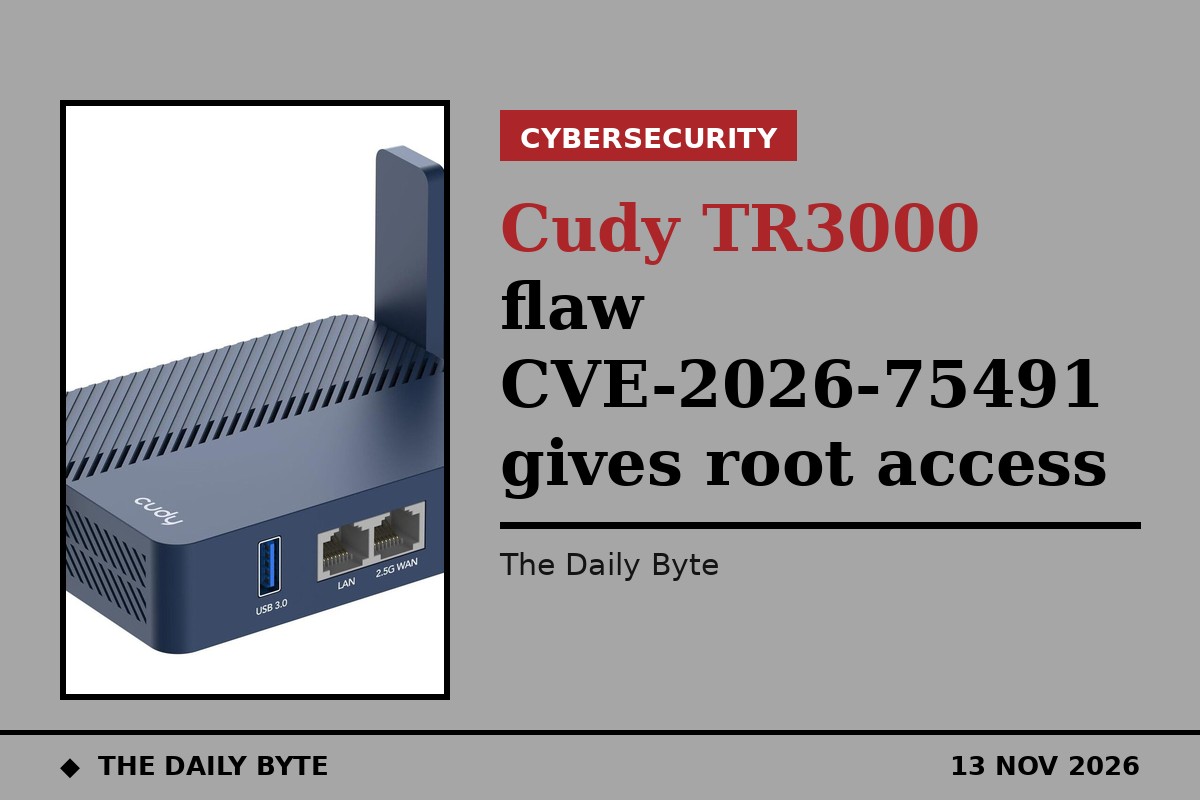
Cudy TR3000 routers running firmware older than version 2.5.42 carry a critical security flaw that lets an attacker bypass authentication and take full control of the device. The vulnerability, tracked as CVE-2026-75491, scores 9.2 out of 10 on the CVSS severity scale.
The flaw sits in the router's Mosquitto message broker, the software that coordinates its mesh Wi-Fi network. A plugin called auth_plugin_jwt.so accepts JSON Web Tokens signed with the "alg none" algorithm, meaning tokens with no signature at all are treated as valid. An attacker holding any client certificate trusted by Cudy can use such a token to log in as the admincudydevice account on port 8883, then send batchcmd requests that run commands as root, the highest privilege on the device.
Second critical flaw in the same firmware
The same router is affected by a second critical flaw disclosed alongside it. CVE-2026-75495, also rated 9.2, is an operating system command injection weakness that allows a malicious or compromised auto-configuration server to execute commands as root on the router. A third flaw in the same firmware, CVE-2026-75489, lets a nearby attacker forge mesh onboarding messages and force unpaired devices onto an attacker-controlled access point.
The flaws were published in vulnerability records on 12 November 2026 and flagged by the EU's vulnerability database on 13 November. Cudy has released firmware version 2.5.42 to fix the issues, and owners should update from the company's download centre. No public reports of the flaws being exploited in live attacks have been confirmed, but the authentication bypass needs only a trusted client certificate, so exposed routers should be treated as urgent.
What TR3000 owners should do
Owners should check their firmware version and install 2.5.42 or later, then change the router's admin password and review connected devices for anything unfamiliar. Routers reachable from the internet deserve the most urgent attention, since the MQTT service at the heart of the flaw listens on a network port. Until the update is applied, restricting remote access to the router's management services reduces the risk.


