CVE-2026-134956: WP REST Cache Flaw Injects Content
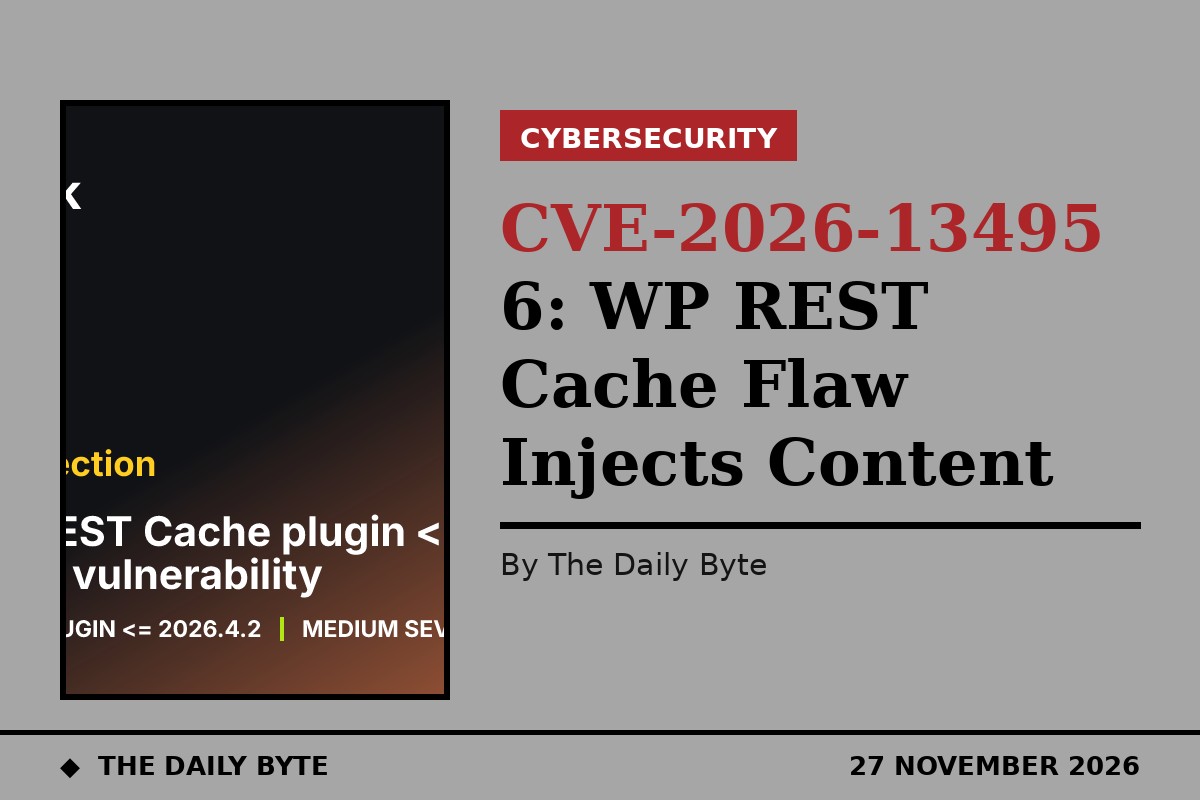
A flaw in the WP REST Cache plugin for WordPress could let an attacker with no login inject unwanted content into pages on a vulnerable site. The vulnerability, tracked as CVE-2026-134956, carries a CVSS score of 6.5 out of 10 and affects every version of the plugin up to and including 2026.4.2. A fixed version, 2026.4.3, is available now.
WP REST Cache, made by Acato, speeds up WordPress sites by caching responses from the site's REST API, the interface other software uses to read and write site content. The flaw is an improper neutralization of script-related HTML tags, listed as CWE-80 and commonly called a basic cross-site scripting weakness. In plain terms, the plugin fails to strip out dangerous markup in a way that lets an attacker smuggle code or content into a page.
What sets this flaw apart is that it needs no authentication at all. The published CVSS vector is AV:N/AC:L/PR:N/UI:N/S:U/C:N/I:L/A:L, which means the attack can be launched over the network, takes little effort, needs no login and needs no action from a visitor. The direct impact is rated low for both integrity and availability, which is why the overall score sits in the medium range rather than higher.
That modest score should not be read as harmless. Patchstack, which assigned the CVE record, describes the result as content injection: attackers can add unwanted content to pages, such as adverts, scams or links to malware. A visitor who trusts the site may click a link the site owner never placed there, and the site's reputation suffers even if no data is stolen. A flaw in a caching plugin is also a tempting target because cached content is served to many visitors at once.
Patchstack rates the vulnerability as moderately dangerous and says it is expected to become exploited, warning that flaws of this kind are used in mass-exploit campaigns against thousands of websites at a time. The CVE record was published on 27 November 2026, and Patchstack has issued a mitigation rule that can block attacks for sites that cannot update at once.
What site owners should do
Site owners running WP REST Cache should update to version 2026.4.3 or later as soon as possible. The update is available through the WordPress dashboard under Plugins, then Installed Plugins.
After updating, administrators should check their pages for anything unfamiliar, such as adverts, links or text they did not add. Any unexpected content deserves a closer look, and a site that was already attacked will not be cleaned up by the update alone. Sites that installed the plugin but no longer use it should remove it entirely, since an unused plugin is still an open door if it is left out of date.


