CZ: Binance Used $1bn to Cover $6.3bn Hack
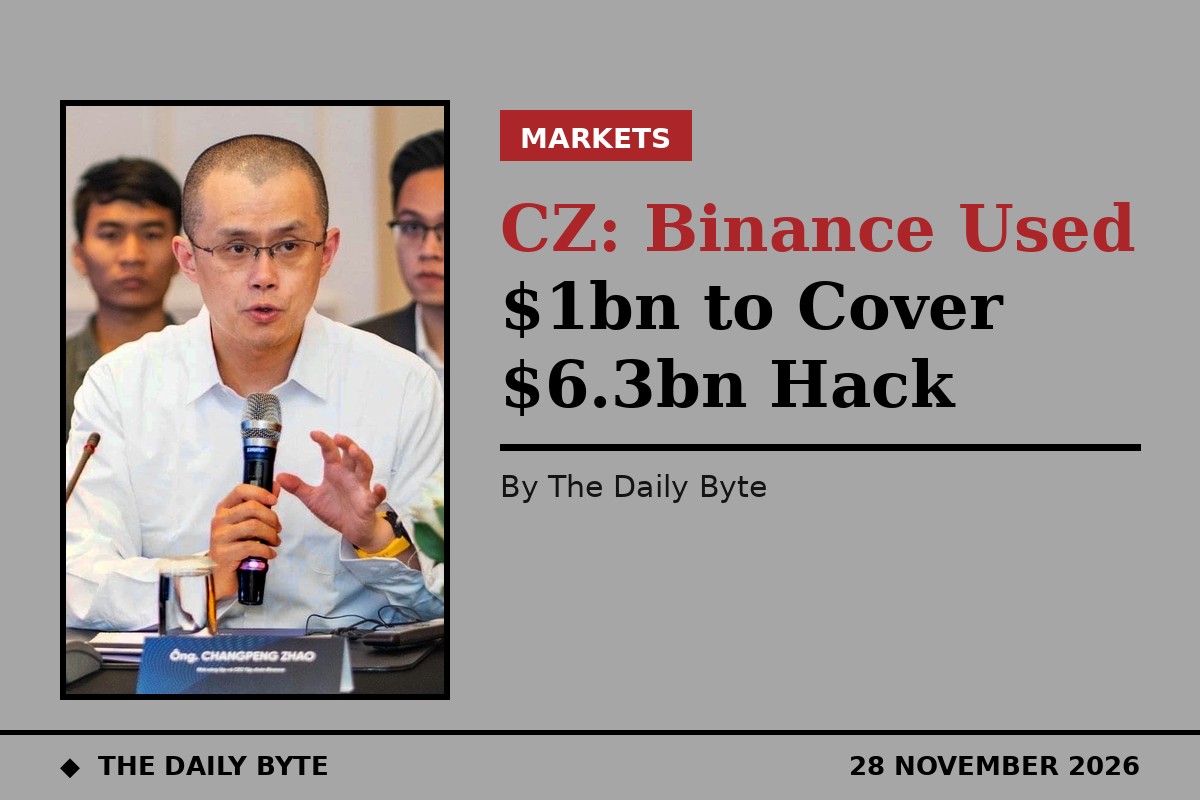
Binance founder Changpeng Zhao has said the exchange drew about $1 billion from its insurance funds to cover user losses from the $6.3 billion hack in October, and called for a crypto industry security alliance to stop it happening again.
Speaking at Binance Blockchain Week in Bangkok on Saturday 28 November, Zhao — known as CZ — admitted that the company's leadership had grown complacent after years without a major security incident. "Security is always the most important thing," he said in a fireside chat with The Block's Gareth Jenkinson, quoted in Binance's own account of the event.
"The company's senior leaders were not focused enough on security," Zhao said, according to Binance. The remarks were also reported by crypto.news, which covered the same session.
How the attack unfolded
According to Zhao, the attackers targeted 1,000 or more Binance employees through fake job interviews, using a bogus "Zoom upgrade" link to install malware. They then moved through the organisation, stole source code, and used artificial intelligence to analyse it in a single day — work he said would once have taken a person six months.
The breach, confirmed on 29 October, affected about $6.3 billion in digital assets. Binance's security chief separately said the incident involved an unauthorised on-chain approval, and that transfers continued for a time after the exchange paused withdrawals.
Binance had earmarked more than $6.34 billion in company funds for the recovery. It already held about $5 billion in the same cryptocurrencies taken, it said on 30 October, and bought the rest on the open market and over the counter.
How Binance covered the losses
Zhao said Binance covered user losses by drawing roughly half of its Secure Asset Fund for Users, known as SAFU, and roughly half of its futures insurance fund. The SAFU draw was about $1 billion. Binance identified its corporate treasury as a third source of funding and said it had replaced all affected token assets by 13 November.
Binance co-chief executive Richard Teng said the exchange replenished 95 per cent of the affected assets within two days and has since restored all of them, with Mandiant, SlowMist and Verichains brought in for audit and review. Stablecoin issuers froze more than $2 billion in stolen funds, in some cases within minutes, he said.
Binance lifted its withdrawal suspension in a phased reopening from 1 November, with nearly all networks available by 26 November. The first reopening brought $4.65 billion in withdrawals and $1.01 billion in deposits in nine and a half hours, Binance said.
A call for an industry alliance
Zhao urged crypto companies to share details of breaches even when doing so exposed their own mistakes, and to assume attackers may already hold their source code. He said some teams might need to spend as much as 80 per cent of their time on security over the next few months.
His proposed alliance would give companies a way to coordinate during an attack, compare security practices and review one another's systems. Zhao pointed to the help Binance received from stablecoin issuers Circle and Tether and from United States investigators as an example of how companies and authorities can work together to freeze funds.
"To defend, you have to find every problem and fix it. To attack, you only need to find one problem," he said. "Let Binance be the alarm. Do not let that happen to you."
A security panel at the event struck a similar note. Binance chief security officer Jimmy Su said AI is changing the economics and the speed of cyber attacks. Panellists cited North Korean groups using AI-generated deepfake video calls to steal more than $400 million in crypto over 18 months.
Prosecutors pursue $1.1bn
The United States Justice Department said on 23 November that it had filed a civil forfeiture claim for more than $1.1 billion in USDC that prosecutors allege was stolen from Binance by North Korean actors. The department said United States authorities had helped freeze, seize or return more than $2.9 billion in cryptocurrency from multiple sources since the 29 October breach.
Binance also said it obtained an Abu Dhabi court order on 18 November to support its asset-recovery effort.
On markets, Zhao said the current bear market is mild compared with past cycles. He pointed to bitcoin's earlier lows of about $150 in 2015, $3,100 in 2018 and $16,000 in 2022. "Markets only bottom when there's maximum fear. I think we're pretty close to that," he said, while declining to predict prices.
Zhao co-founded Binance and resigned as chief executive in November 2023 after pleading guilty to violating United States anti-money laundering law. He served a four-month sentence in 2024 and was pardoned by President Donald Trump in October 2025.


