David Walliams Named After Failed High Court Injunction
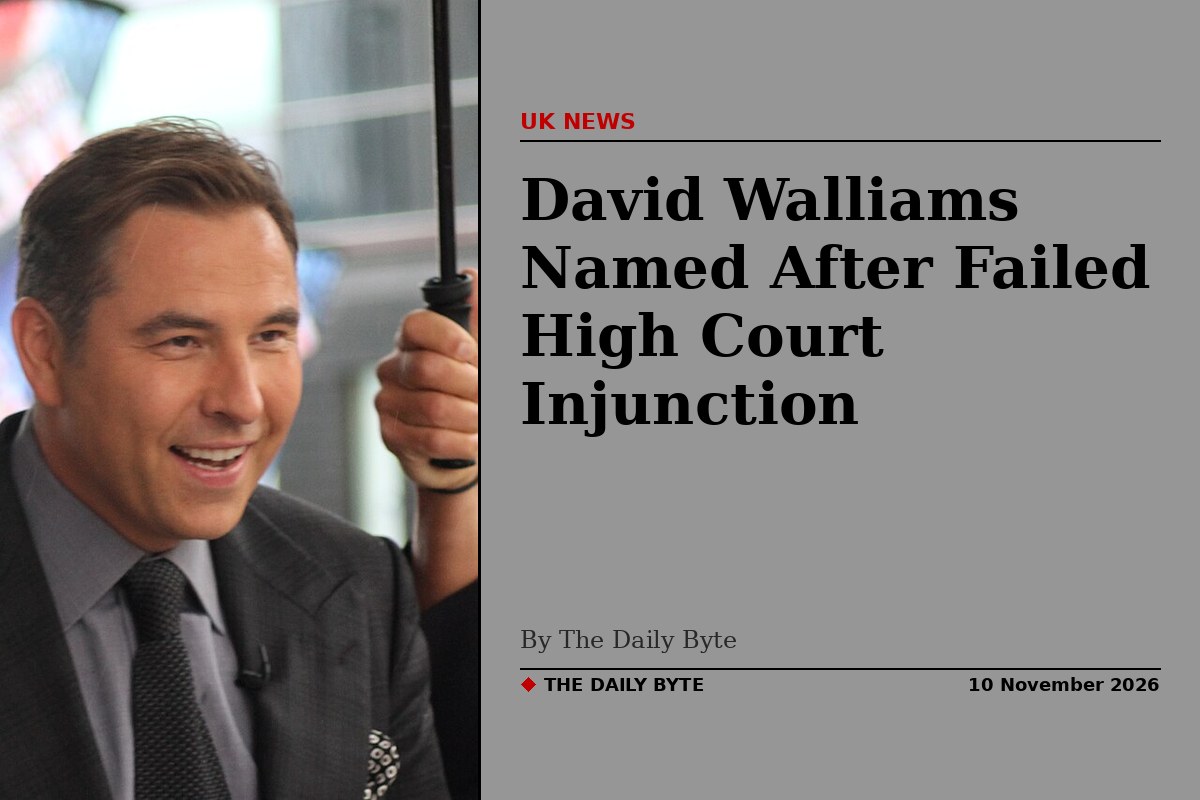
Comedian and children’s author David Walliams can now be named as the celebrity who failed in a High Court bid to prevent newspapers and broadcasters from reporting allegations of sexual misconduct against him.
The 55-year-old former Little Britain and Britain’s Got Talent star had been granted anonymity during the proceedings, when he was referred to in court only as “PPT”. His identity can now be published after he missed a deadline to take his case to the Court of Appeal.
Why Walliams can now be named
Walliams brought legal action against Independent Television News (ITN) and Guardian News and Media (GNM), publisher of The Guardian, ahead of the two organisations publishing allegations against him, including claims of sexual misconduct and potential criminal activity.
Mr Justice Nicklin refused the application for an injunction on 3 November, ruling that preventing publication would be an “exceptionally serious interference” with freedom of expression. In a 52-page judgment, the judge also said that granting the injunction would not treat the man’s psychiatric condition or remove his elevated risk.
Walliams then had until 4.30pm on Monday 9 November to lodge an appeal. Court staff confirmed that no notice of appeal, and no request for more time, had been received by the deadline. With the anonymity order lifted, ITN and GNM published their investigations on Tuesday 10 November.
What the investigation found
The allegations were gathered in a joint investigation by The Guardian and ITV News. Lawyers for the two organisations told the High Court in London that reporters had spoken to more than 100 people as part of what was described as a “wide-ranging and rigorous investigation”, including more than 30 sources said to have first-hand accounts.
The court heard the allegations involved Walliams’ alleged “abuse of power and status” to contact young women and try to engage in “inappropriate and exploitative sexual activities”. The investigation is reported to include allegations dating back to 2003.
Walliams has denied the allegations. He has issued a letter in response to the claims, and his publisher HarperCollins has dropped him as an author. He is reported to be in a psychiatric hospital.
The argument over suicide risk
Walliams’ legal team, led by Sara Mansoori KC, told the judge that publication would make the celebrity “highly likely” to take his own life, following two previous suicide attempts. The court heard he had previously attempted suicide after receiving letters from ITN and GNM asking for his response to the allegations.
Lawyers for the media organisations argued the suicide risk could be mitigated and that there was no proper basis to block publication. Judge Nicklin agreed there was “significant public interest” in the proceedings, while making clear he was not deciding whether the allegations themselves were true.
The judge said he would determine whether the star’s name could be published, but would not be responsible for determining the truth or accuracy of the allegations against him.
What happens next
With the injunction refused and no appeal lodged, The Guardian and ITV News are now publishing their findings in full. No criminal charges have been announced against Walliams, and the allegations remain unproven. The Metropolitan Police has said it was contacted by several people about possible criminal allegations against Russell Brand during and after his trial, and detectives are assessing that information — a separate matter that was also raised in court reporting on Tuesday.


