Syria Kurdish Integration Row Deepens Over Afrin Force
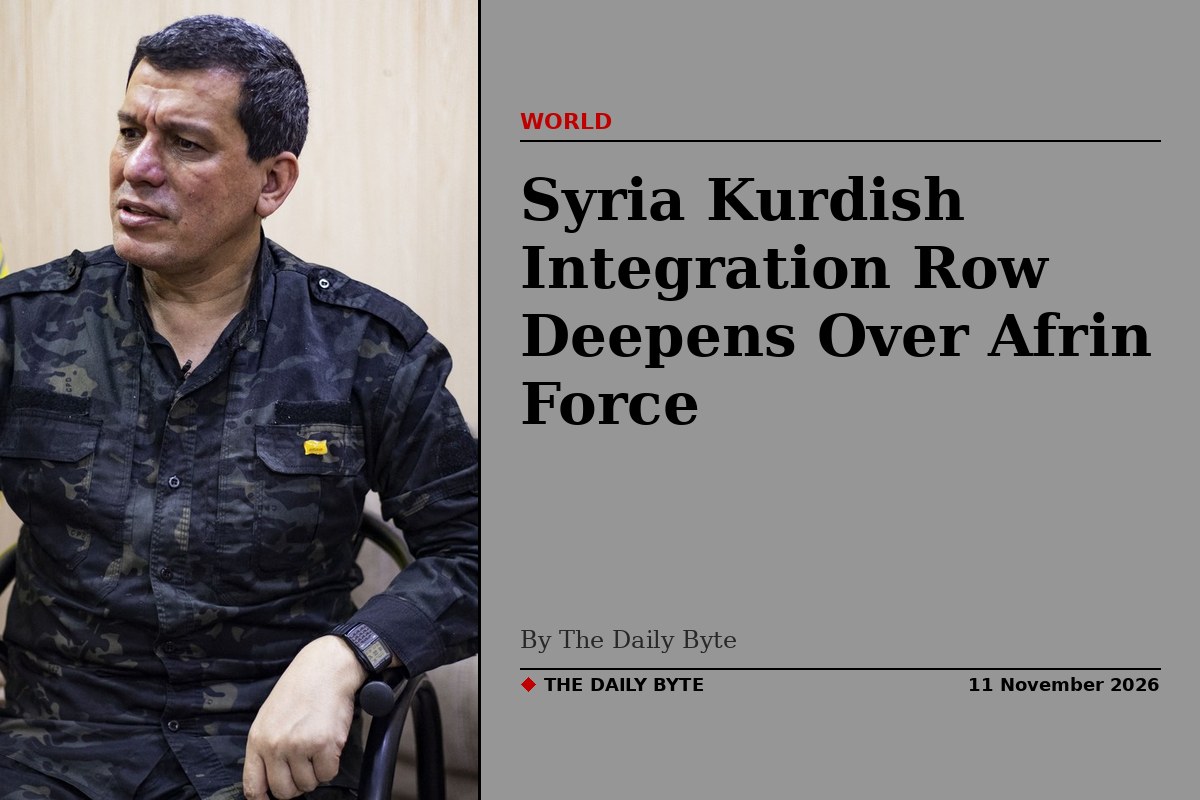
A row over Syria's agreement to integrate Kurdish-led civilian and military institutions into the state has intensified, after presidential adviser Mazloum Abdi accused unnamed parties of trying to derail the process. The dispute, reported on 11 November, centres on new Kurdish military formations and on how far integration into Damascus has actually progressed.
Abdi's remarks drew a sharp response from local Arab media outlets, including the Hasakah Media Center and Hasakah Observatory, which branded his comments provocative and portrayed them as part of an escalation campaign by former commanders of the disbanded Kurdish Syrian Democratic Forces (SDF) to unravel existing agreements.
The Afrin force announcement
The dispute intensified after Abdi told Kurdish broadcaster Nuce TV on Monday evening that a special force for Afrin was undergoing training and would soon formally begin operations. He also said the Syrian government had agreed to accept the Women's Protection Units (YPJ) as two special counterterrorism forces in the Jazira and Kobani regions.
How either arrangement would work in practice remains unclear. Asharq Al-Awsat, which first reported the row, said it had sought clarification from Syria's Interior Ministry and from the presidential team overseeing the agreement, particularly on the YPJ's integration, but had received no response.
Separately, the Syrian Observatory for Human Rights reported on 6 November that the YPJ and Syria's Interior Ministry had reached a preliminary understanding on integrating two YPJ battalions into the ministry's Special Tasks Forces. According to that report, one battalion would cover Aleppo province, including Kobani and Afrin, while the second would cover Al-Hasakah. Several issues remain unresolved despite multiple rounds of talks, with no timetable yet for a final agreement, and the YPJ is seeking guarantees for women's participation in military and security institutions.
Critics accuse former SDF commanders
Political researcher and Arab tribal elder Mudar Hammad al-Asaad accused some former SDF commanders of exploiting Kurdish sentiment to win over hardliners opposed to integration. He told Asharq Al-Awsat that the commanders were making statements detached from reality and outside the terms of the agreement, particularly to appeal to the Kurdish Revolutionary Youth.
Al-Asaad said some leaders in Hasakah and Afrin remained affiliated with the Kurdistan Workers' Party (PKK) and took orders from foreign parties. He added that the Arab community supported integration and an end to divisions in Hasakah and Afrin, and said that no one wanted the region to descend into tribal or ethnic conflict.
He also said Abdi's remarks about the Afrin force appeared to reinforce a system of ethnic or sectarian quotas. Military or security formations based on ethnic or sectarian identity were unacceptable, he argued, because the agreement required volunteers from all communities to enlist individually, without discrimination.
Kurdish party insists it remains committed
Mohammed Ibish, an official in the Kurdish Democratic Union Party (PYD), acknowledged that obstacles to integration were inevitable but said his party remained committed to seeing the process through. Some saw no benefit in completing the process, he said, but the party was working to bring the autonomous administration's institutions into state structures.
Ibish added that some parties had failed to grasp the importance of integration and of contributing to rebuilding the country, while certain regional players sought to keep Syria unstable. The PYD recently warned at a general council meeting that some parties were seeking to obstruct integration, while rising hate speech and incitement threatened civil peace.
The exchange underlines how unsettled the integration process remains. The agreement was meant to fold Kurdish-led civilian and military institutions into the Syrian state, but the public argument over an Afrin force and the future of the YPJ shows that key questions about command, identity and representation are still open, with neither side yet able to point to a settled answer.


