Delhi Doctors Urge Residents To Leave City Amid Toxic Air
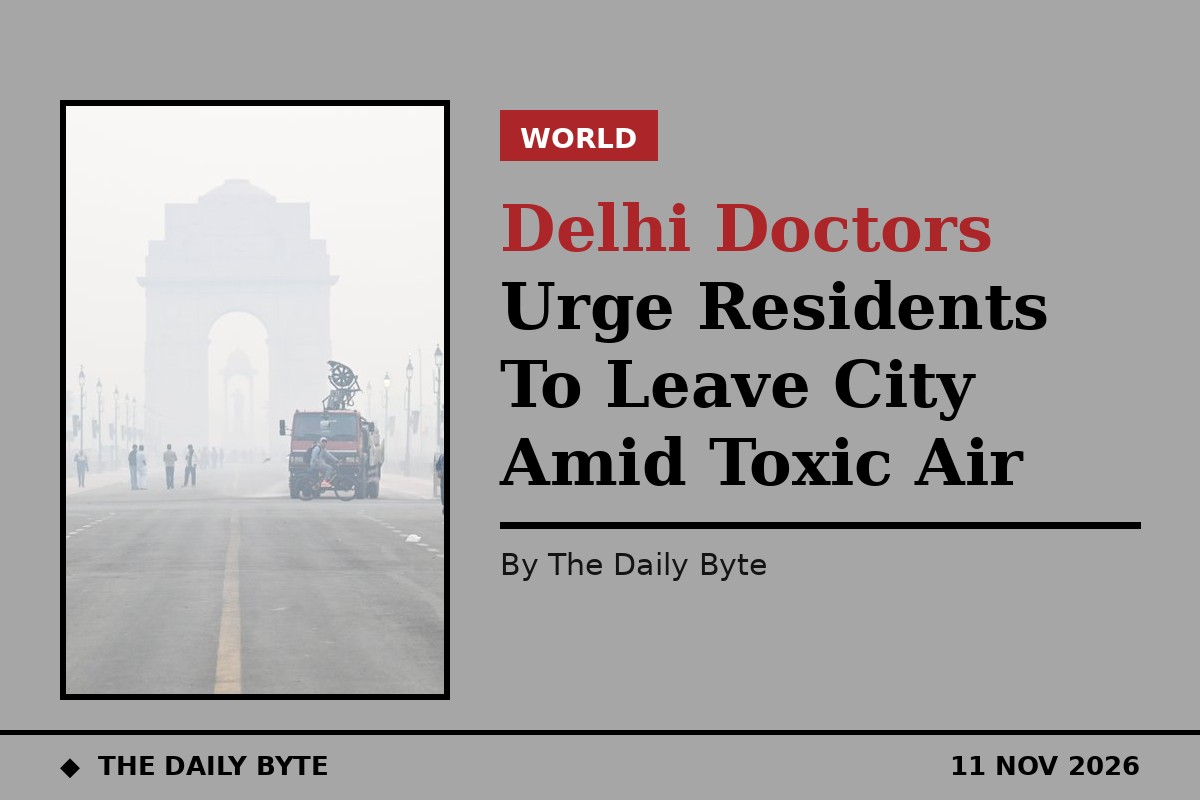
Doctors in Delhi have advised residents who have the option to leave the city for a few days until the air improves, as severe pollution drives a sharp rise in patients reporting breathing difficulties, coughs and eye irritation.
Dr Rajesh Chawla, senior pulmonologist at Apollo Indraprastha Hospital, said the number of patients coming to outpatient clinics with breathing problems, cough and eye irritation had increased. He advised people who could leave Delhi temporarily to do so and return once pollution levels settled down.
"If it is possible, people should not come to Delhi in the first place. Those who are already staying here can go away for a few days, if they have the option, and return once things settle down," he said, adding that people who stay should wear masks to reduce their exposure.
Firecracker smoke and the most harmful particles
Dr G. C. Khilnani, chairman of the PSRI Institute of Pulmonary, Critical Care and Sleep Medicine, cautioned against treating all PM2.5 pollution as equally harmful, saying its toxicity depended on its source. He called for stricter enforcement of the ban on firecrackers, arguing that the fine particles they produce are the most harmful because they contain heavy metals including chromium, strontium and aluminium, as well as charcoal, glue and paper.
He said those heavy metals could be deposited in the lungs and other body systems and were toxic. Air pollution was also causing inflammation in the airways of people without pre-existing respiratory conditions, he said. While their chest X-rays and lung function tests were often normal, their fractional exhaled nitric oxide levels, which indicate airway inflammation, were elevated.
Children and outdoor workers most exposed
Dr Nikhil Modi, senior consultant in respiratory medicine at Indraprastha Apollo Hospital, said there had been a noticeable rise in children coming to outpatient clinics with respiratory complaints during the current pollution spike. The symptoms included persistent dry cough, sneezing, nasal congestion, throat irritation, wheezing and breathlessness.
He said children who already have asthma were particularly vulnerable during prolonged pollution episodes, because their airways are already prone to inflammation and narrowing, and exposure to PM2.5 and other pollutants can aggravate that response.
Dr Arunesh Kumar, director and head of pulmonology at Paras Health in Gurugram, said working-age adults with prolonged outdoor exposure and daily commutes were particularly vulnerable. "Even otherwise healthy adults can experience respiratory discomfort due to high pollution exposure," he said. He advised well-fitted N95 masks outdoors, HEPA-filter air purifiers indoors, and keeping windows closed during periods of peak pollution.
In Mumbai, where air quality has ranged from moderate to poor or severe over the past week, Dr Jalil Parkar, pulmonologist at Lilavati Hospital, said symptomatic treatment and antibiotics were not working on his patients. "We are finding it difficult to treat the patients. They expect to get immediate relief but antibiotics are the symptomatic treatment is not working and many are left with prolonged asthma symptoms, pneumonia, bronchospasm and emergency visits," he said.
Air improves slightly, but no rain until 15 November
There was a small measure of relief on Wednesday, as Delhi's overall air quality improved to the "poor" category, although several residential areas remained "very poor". The Central Pollution Control Board recorded an air quality index of 301 at Anand Vihar, placing it in the very poor category, while Ashok Nagar stood at 294, in the poor category. ITO and Chandni Chowk also remained very poor.
A study by the Indian Institute of Tropical Meteorology found that firecracker smoke contributed more than 80 per cent of Delhi's pollution on Monday, the day after Diwali. The India Meteorological Department has confirmed that Delhi-NCR will not receive any rainfall until at least 15 November, meaning the toxic air is likely to persist for the next few days, with maximum temperatures around 27 degrees Celsius and minimum temperatures around 14 degrees.
Residents have been advised to limit outings, especially during the morning and evening hours, and to use public transport to reduce vehicle emissions. For doctors on the front line, however, the message is blunter: current measures are inadequate, and anyone who can leave the city for a few days should do so.


