Democrats to probe Trump's $100bn Venezuela oil deal
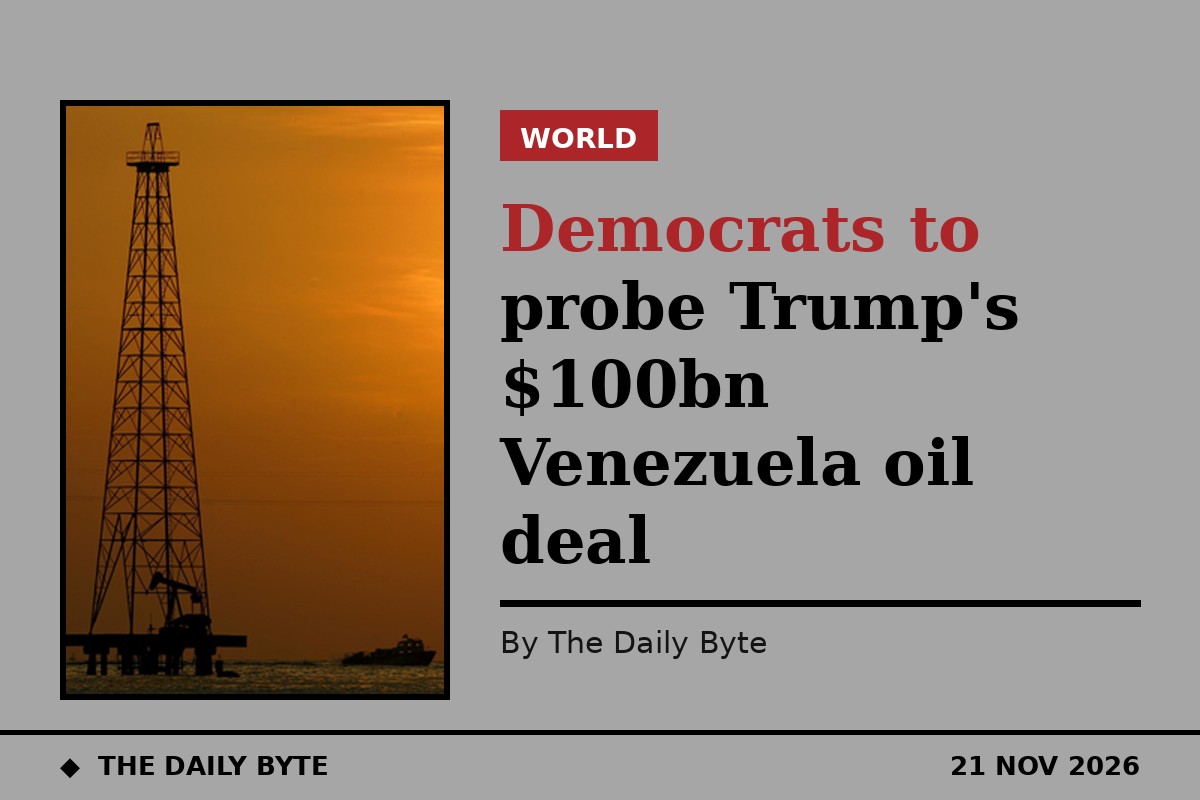
Congressional Democrats are preparing multiple investigations into President Donald Trump’s $100 billion Venezuela oil agreement, with plans to subpoena administration officials over a deal that handed a little-known private company rights to 17 Venezuelan oilfields.
The August agreement gives North American Blue Energy Partners (NABEP), controlled by businessman Alejandro Betancourt, 100-year concessions covering fields holding an estimated 65 billion barrels of reserves. Under the arrangement, Washington receives a 35 per cent equity stake in the company and the right to buy 20 per cent of its oil production at cost.
The $100 billion figure represents investment NABEP has pledged to make in Venezuela’s oil industry, rather than a commitment of US taxpayer funds.
Democrats want to know why NABEP was chosen
Democrats, who won control of both chambers of Congress in this month’s midterm elections, want to know why NABEP was selected, what Washington gave up to secure its stake, and how the oil revenues will be managed.
“We want to go in there and find out exactly what happened,” Representative Robert Garcia, who is expected to lead the House Oversight Committee next year, told Bloomberg.
The Senate Armed Services Committee is also preparing an investigation, alongside several other congressional panels. Senator Jack Reed has questioned whether securing Venezuelan oil was a principal motivation behind the US military operation that removed Nicolás Maduro in January.
Betancourt’s background has drawn scrutiny. He has faced money-laundering and corruption investigations in the United States and Europe, but has not been charged with any offence and denies wrongdoing.
White House defends the deal
The White House has defended the agreement, saying it would strengthen American energy security and lower petrol prices. NABEP said the government’s equity stake cost taxpayers nothing and that the company has received no US funding.
Investigators are also questioning whether the Pentagon had the legal authority to acquire an equity stake in NABEP through its Office of Strategic Capital.
The scrutiny extends to Venezuela’s oil revenues. A State Department report released on 12 November showed $12.1 billion was disbursed to Venezuela from a US-controlled account between January and September.
Production could be delayed, analysts warn
Rystad Energy warned that increased congressional scrutiny could delay Venezuelan oil projects representing roughly 500,000 barrels per day of potential production beyond 2040. The firm expects the country’s near-term recovery to continue largely unaffected, with output rising from 1.2 million barrels per day in October to around 1.5 million barrels per day by 2028.
Democrats will gain subpoena powers when the new Congress convenes in January, allowing them to demand documents and testimony that have so far remained out of reach.
The deal was signed in August, months after US forces removed Maduro from power in January and an interim government led by Delcy Rodríguez took over in Caracas. Washington has since overseen the flow of Venezuelan oil revenues through a US-controlled account, a system the State Department report shed rare light on.
For Democrats, the investigations will be an early test of their new congressional majorities. With subpoena power, the House Oversight Committee and other panels will be able to compel testimony from administration officials and company executives, and to demand the documents behind a deal negotiated largely out of public view.
Whether the inquiries slow Venezuela’s oil recovery remains to be seen. Rystad’s assessment suggests the bigger risk is to longer-term projects, while production from existing fields continues to climb. But with $100 billion of planned investment and 65 billion barrels of reserves at stake, the political fight over the deal is only beginning.


