Denmark Charges Teenager Over CPR Data Breach
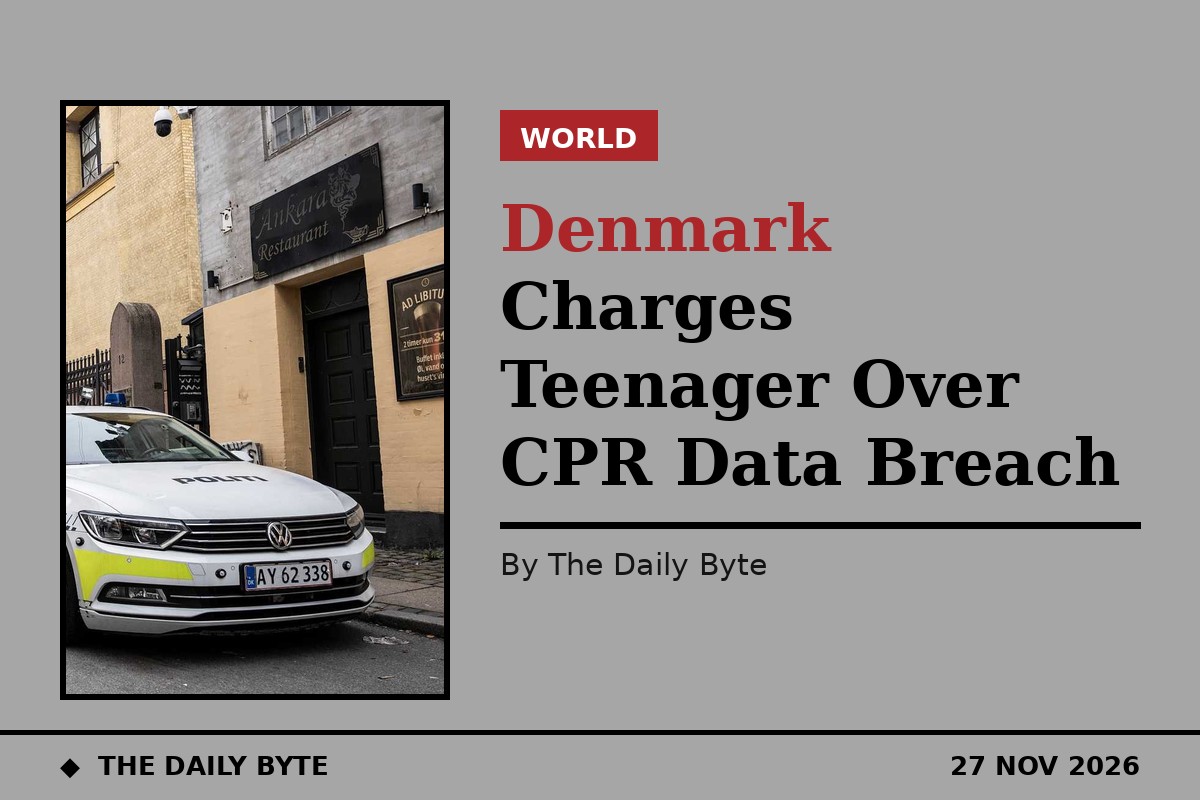
Danish police have arrested and charged an 18-year-old man over the latest breach of Denmark's national civil register, the second time the system has been hacked in less than two months.
East Jutland Police said in a statement on 26 November that they charged the teenager on Tuesday 24 November with unlawfully gaining access to the Central Person Register, known as the CPR, where he managed to retrieve 11,000 CPR numbers.
Officers arrested him the same day at an address in a small town just south of Aarhus, where he lives with his parents. "We searched the address and seized, among other things, computers and a phone, which we now need to examine more closely," said head of investigations Flemming Norgaard. The teenager has been remanded in custody.
How the breach was found
The breach was discovered on Monday 23 November, when the CPR administration noticed irregular lookup activity from a company. Unauthorised third parties had gained access to lookups covering CPR numbers, names and addresses of about 11,000 people.
The incident was stopped by new technical monitoring of CPR lookups introduced after the first breach. People registered with name and address protection were not affected, the ministry said.
Denmark's Ministry of Research, Education and Digitalisation disclosed the incident on 26 November. Neither the ministry nor the police has named the company used in the new incident, said how the 18-year-old got access, or said whether he is connected to the October breach, which police are also investigating.
Second breach in seven weeks
The November intrusion follows a substantially larger incident in early October, when attackers obtained unauthorised access to personal information relating to about 8.8 million people. The CPR holds names and other personal data for about 11.4 million people, including about 6.1 million living people.
The October attacker has still not been identified. A person who contacted the newspaper Politiken in October claimed responsibility for that earlier breach, saying they had found an entry point within hours using the login credentials of a former employee of a small Danish company. The person said the employee's password was 123456 and that there was no two-factor verification in place.
Danish authorities said they had updated and modernised security systems since the October attack. Despite that, the new breach still got through, although the new monitoring caught and stopped it far faster.
Minister warns CPR numbers are no longer secret
Digitalisation Minister Christina Egelund said those who extract data from the register without authorisation "must be found and prosecuted", and that Danes "should get used to the CPR number not being private" and use MitID to prove who they are instead.
The ministry reminded people never to give out passwords or other confidential information on the phone or by email, even when the caller appears to know their name, address and CPR number.
Companies have wide legal access to CPR data for purposes such as payroll, insurance and address changes. After October, the ministry tightened the security obligations on those companies, added lookup monitoring and started a security review of the whole system. The review's preliminary conclusion is that the CPR needs "a significant modernisation", with changes to the system and stricter requirements for the companies allowed to make lookups. The review is due to finish before Christmas.
Denmark raised the country's cyberattack threat level to "high" in September. Cyberattacks have surged recently, particularly those targeting supermarket refrigeration systems, and a spate of hoax bomb threats against schools and passenger aircraft across Europe has also fuelled concerns about hybrid warfare.


