Denmark e-SAF Deal Turns Green Methanol Into Jet Fuel
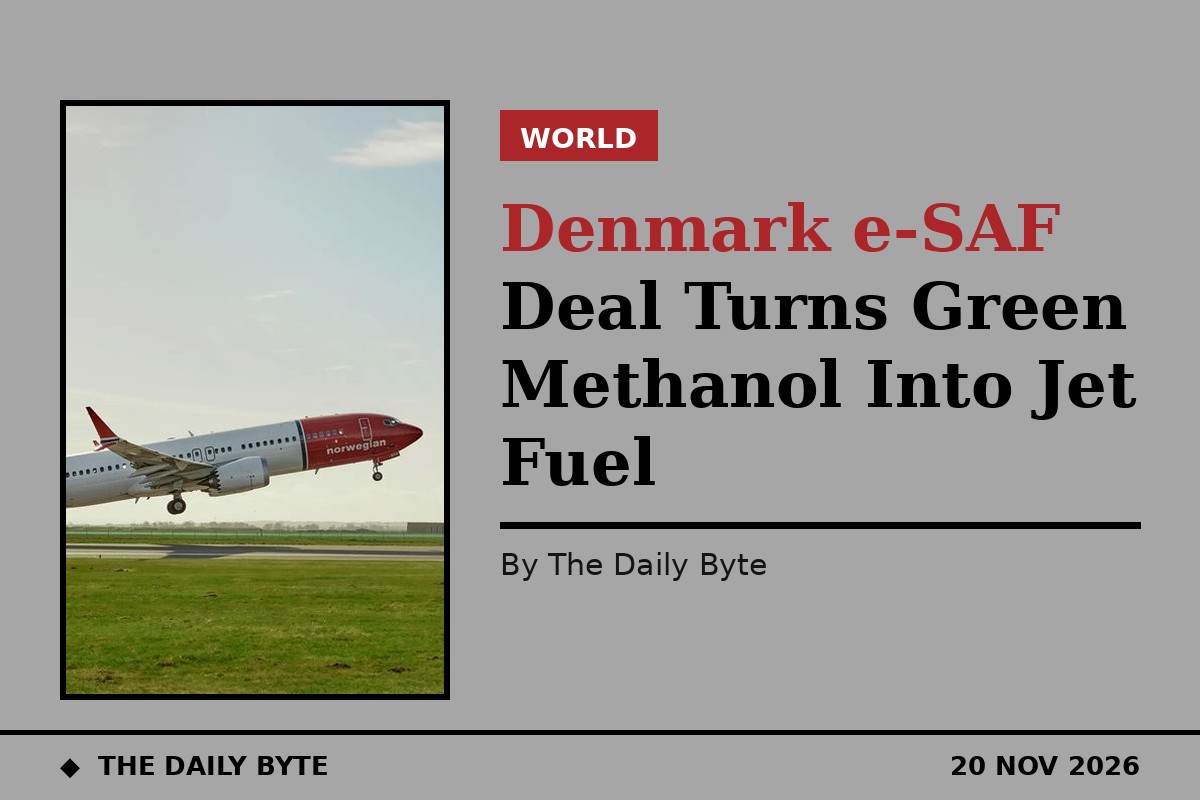
Danish renewable energy developer European Energy, Swiss aviation technology company Metafuels and Nordic airline Norwegian have signed a memorandum of understanding to develop a Danish supply chain for synthetic sustainable aviation fuel, known as e-SAF. The agreement was announced in Copenhagen on Thursday, 19 November.
The partnership brings together three parts of a new fuel chain. European Energy will supply e-methanol from its Kassø facility in southern Denmark, Metafuels will convert it into jet fuel using its aerobrew methanol-to-jet technology, and Norwegian will provide the airline demand for the finished fuel.
As a first step, the partners plan to prove the chain end to end with a showcase flight. European Energy will supply the e-methanol, Metafuels will convert it into synthetic aviation fuel at its aerobrew demonstration plant at the Paul Scherrer Institute in Switzerland, and Norwegian will fly with the resulting fuel.
From Kassø to Rotterdam
European Energy's Kassø plant, which began operating in May 2025, is the world's first large-scale e-methanol facility, with capacity of up to 42,000 tonnes of e-methanol a year. The plant makes the fuel from renewable electricity and carbon dioxide captured from biogas, and already supplies shipping, plastics and industrial customers.
The longer-term plan is to supply Danish e-methanol to Turbe, Metafuels' first commercial-scale aerobrew facility, in the Port of Rotterdam. The plant, hosted at the Evos Rotterdam terminal with McDermott as engineering partner, is close to completing front-end engineering and design by the end of 2026 and is expected to be operational in 2030.
Metafuels and Norwegian already have heads of terms in place for future offtake of e-SAF from Turbe. The new agreement brings European Energy into the value chain as a potential supplier of renewable methanol, giving the Rotterdam plant a Danish feedstock source.
Why methanol-to-jet matters
The timing is driven by European law. Under the EU's ReFuelEU Aviation rules, dedicated sub-mandates for synthetic aviation fuel come into force from 2030, which the partners say will drive rapid growth in demand. Unlike conventional sustainable aviation fuel pathways that rely on limited feedstocks such as waste oils, the methanol-to-jet route can be scaled up using renewable electricity and captured carbon dioxide.
Metafuels says its aerobrew process converts renewable methanol into jet fuel with up to 90 percent lower lifecycle emissions than fossil kerosene, and that the fuel is fully compatible with existing aircraft and airport infrastructure. “Aerobrew is the piece of the puzzle that turns green methanol into fuel an airline can actually fly on,” said Metafuels chief executive Saurabh Kapoor.
Norwegian, which employs around 8,900 people across its Norwegian and Widerøe airlines, says the availability of e-SAF will be critical to aviation's energy transition. “That is why we support the development of new supply chains and production opportunities closer to the markets where the fuel will be used,” said Knut Olav Høeg, the airline's chief IT and business services officer.
The policy ask
The three partners are also calling on Danish and EU policymakers to help close the price gap between e-SAF produced in Europe and fossil jet fuel. They want revenues from the EU Emissions Trading System and the Danish Air Passenger Duty to be used for that purpose, with significantly more sustainable aviation fuel allowances in the current EU ETS revision to cover the price gap for blending mandates over the next decade.
Their other priorities are to use the entire revenue from the Danish Air Passenger Duty to green Danish aviation, with the aim of making domestic aviation 100 percent green by 2030, and to launch the next green domestic-route tender from 2028 to 2029, switching from biofuels to e-fuels to move from demonstration flights to regular commercial operations.
The agreement is a memorandum of understanding to explore the value chain, not a binding supply deal, and no investment value or production volumes were disclosed. But the partners argue that Denmark, home to the Kassø plant, is one of the most credible places in Europe to supply synthetic aviation fuel at scale.


