Deutsche Bank Launches Crypto Custody Service
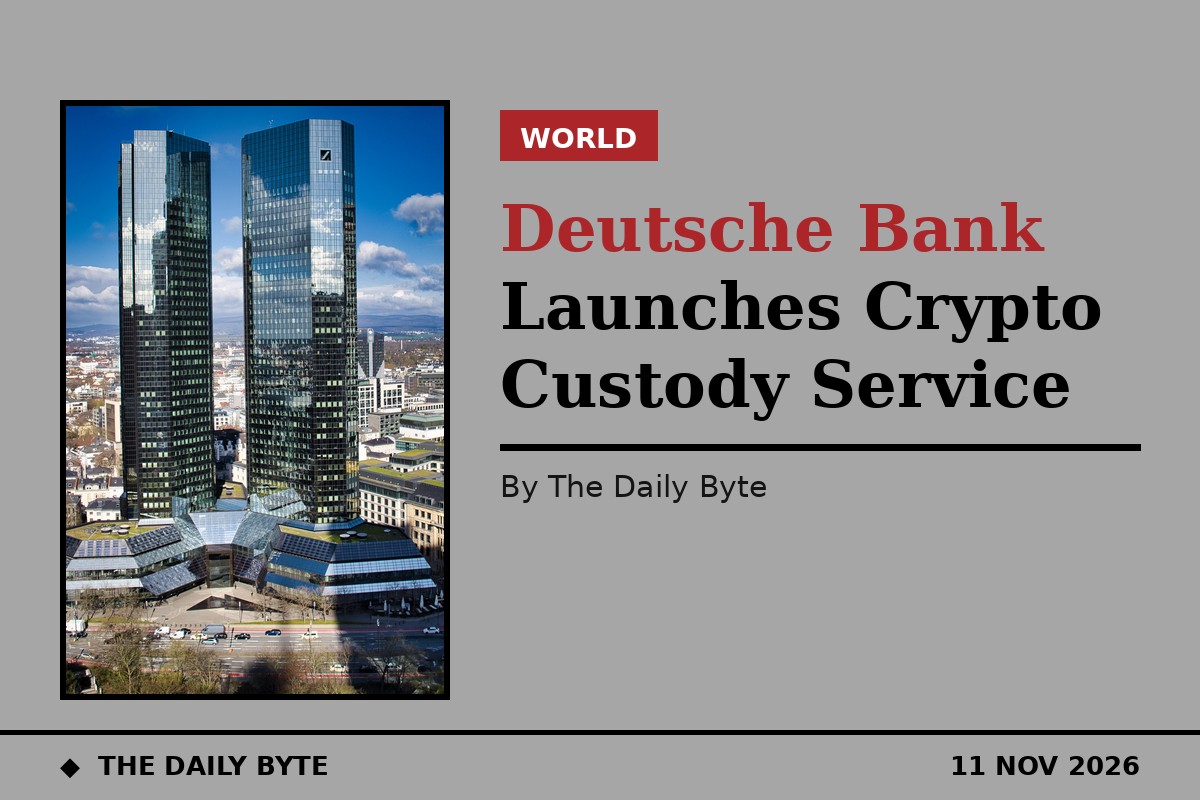
Deutsche Bank has switched on its digital asset custody service for paying clients, becoming one of the largest European banks to offer institutional safeguarding of cryptocurrencies. The service went live on Wednesday 11 November, just weeks after the bank first outlined its plans.
Germany's largest lender announced in September that it intended to offer custody for institutional and corporate clients in Europe, subject to regulatory approvals and internal sign-off. The launch confirms that those steps are complete and that the bank is now serving its first paying customers.
What the service covers
The custody service is aimed squarely at institutions, not retail investors. It covers bitcoin and ether, along with the stablecoins USDC, EURC and EURAU, according to the bank's official product page. Germany is the initial market, with European cross-border servicing subject to applicable rules.
Deutsche Bank manages client wallets and private keys on customers' behalf. The bank describes hardware-protected keys, warm and cold storage, multi-person approvals and segregation of client assets. The platform supports custody, transfers to third parties and internal transfers between storage environments, and clients can access the service through the bank's Autobahn corporate banking platform.
The bank has not disclosed how many clients have signed up or how much in assets it holds in custody. It also warns that crypto-assets do not carry the deposit-guarantee protection that applies to eligible bank deposits, a distinction that matters for corporate treasurers weighing the new service.
A wider digital-asset push
Paul Maley, the bank's global head of trust and securities services, said the ambition goes beyond safekeeping. “In the medium term we aim to deliver a fully integrated, regulated ecosystem that supports the custody, tokenisation, and settlement of digital assets,” he said.
The launch comes as European banks show increasing openness to digital markets. Deutsche Bank's September announcement had made the rollout conditional on regulatory procedures and internal approvals, and the start of service for paying clients confirms those conditions have now been met. The bank is not presenting custody as a standalone product: it is the foundation for the tokenisation and settlement services it plans to build next.
Alongside the launch, Deutsche Bank said it had signed a memorandum of understanding with Deutsche Asset Management, the money manager it mostly owns and which was known until recently as DWS. The agreement is to explore commercial and technical collaboration in the digital-asset space, but no joint product has been announced.
The bank has previously told Reuters it wants to expand the custody offering to Asia, with that step planned for 2027. For now, the launch is a European one, and it lands as other large banks show increasing openness to digital markets. For Deutsche Bank, custody is the first operational step; tokenised financial instruments and settlement services are the stated next stages.


