DHL Names Sascha Geiken CEO for Sub-Saharan Africa
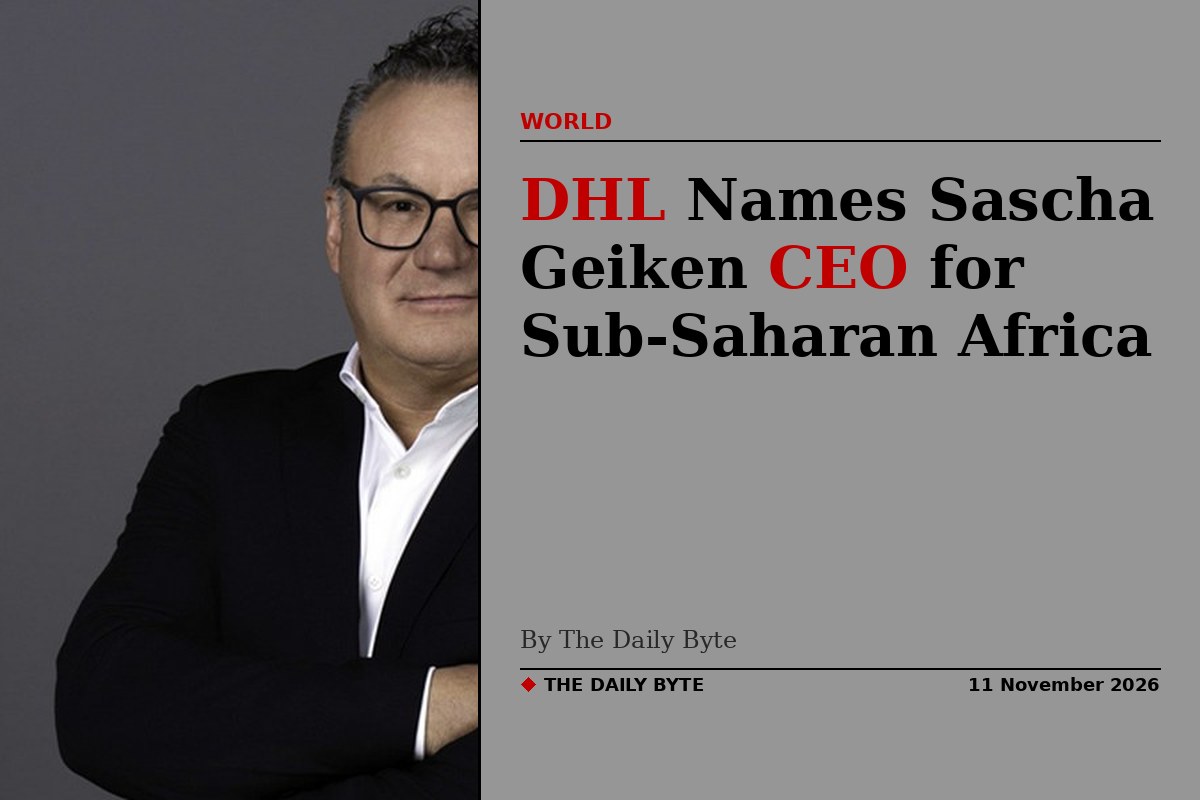
DHL Global Forwarding has appointed Sascha Geiken as chief executive officer for Sub-Saharan Africa, excluding South Africa, with the appointment taking effect on 10 November 2026. The move comes as the freight business continues to invest in its operations across the region.
Geiken succeeds Egidio Monteiro in the role and will report to Tobias Maier, chief executive of DHL Global Forwarding Middle East and Africa. He previously served as vice president of ocean freight for the Middle East and Africa, where he oversaw trade flows, capacity, rates and trade-lane development.
A 30-year freight career
Geiken brings more than 30 years of freight forwarding experience, having entered the industry in 1995. Before joining DHL Global Forwarding, he held senior leadership positions in the Middle East, including several managing director roles, and has managed ocean freight operations across markets in the Middle East and Africa, working on trade flows connecting the continent with Europe, Asia and the Middle East.
Maier said Geiken was the right person for the role. “Sascha knows our business and he knows this region,” he said. “He has spent many years working across complex markets and understands what it takes to turn growing trade flows into reliable solutions for our customers.”
Investment backing the appointment
The appointment follows DHL Group’s announcement in 2025 of an investment of more than €300 million in Sub-Saharan Africa. The funding is intended to expand infrastructure and services across DHL Express, DHL Global Forwarding and DHL Supply Chain.
Geiken said customers needed more than capacity from their logistics provider. “Trade is growing, but our customers need more than capacity,” he said. “They need reliability across the entire supply chain, from the international leg through customs and inland transport to final delivery.”
DHL Group generated revenue of approximately €82.9 billion in 2025 and employs around 389,000 people in more than 220 countries and territories. The leadership change signals a push for stronger local execution in a region Maier described as an important growth market for the group.


