Digital Euro Talks Stall as EU Misses Deal Deadline
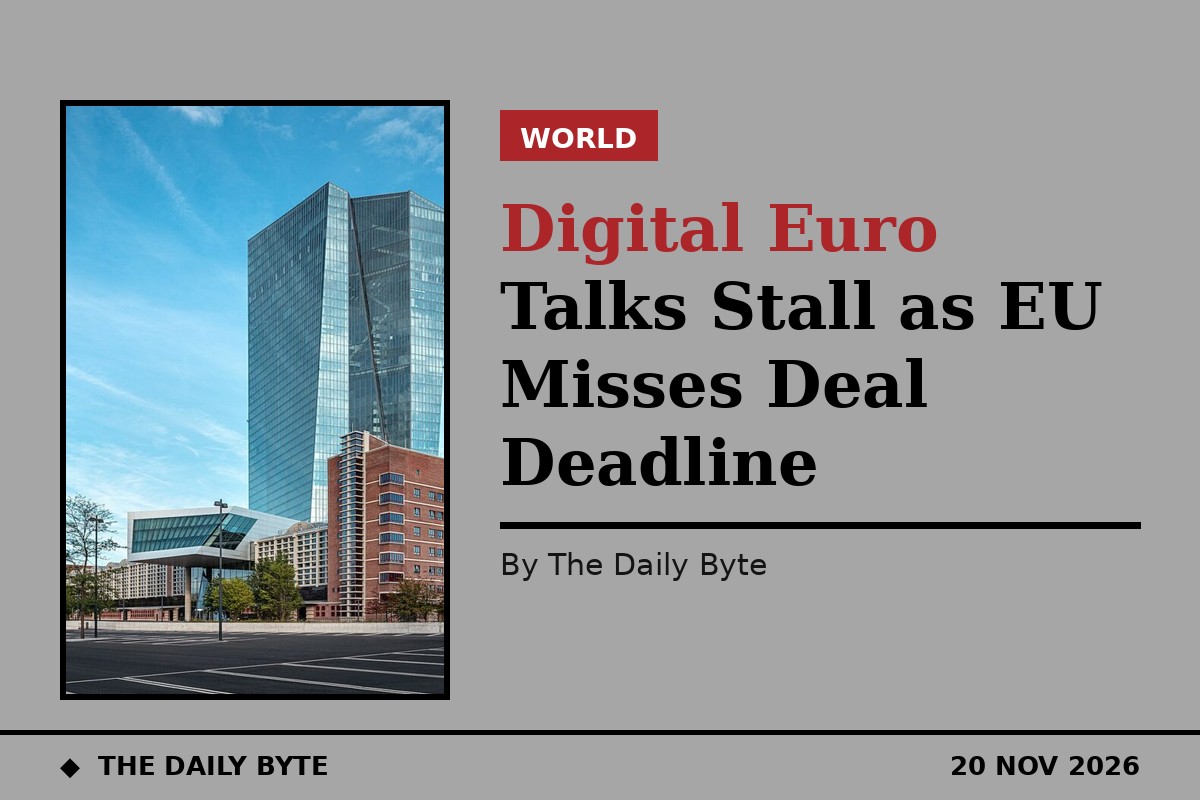
Negotiations over the digital euro have stalled, after European Parliament and EU Council negotiators failed to reach a political agreement during late-night talks this week. The setback leaves the timetable for a digital version of the single currency under pressure, with lawmakers now expected to meet again in December.
Negotiators from the Parliament and the Irish presidency of the Council failed to reach agreement during the night of Wednesday 18 to Thursday 19 November, according to Agence Europe. The Council said member states were ready to reach a deal, but a parliamentary source said the agenda for the session was simply too heavy to conclude one.
What is still blocking a deal
Lengthy discussions focused on possible exceptions to the mandatory acceptance of the digital euro by shops, and on the remuneration model for payment service providers, the firms that would distribute the currency. One of the most consequential disagreements concerns the charges retailers would pay when accepting digital euros, and whether those charges would leave shops worse off than under existing payment systems.
The Council's negotiating position provides for an initial period of at least five years in which charges would be limited by reference to comparable payment services. Parliament's negotiators have sought assurances that retailers would not face less favourable conditions than those offered by existing payment systems, while France has raised questions about how such comparisons should be made.
A further dispute has emerged over access to the digital euro for people subject to foreign sanctions, such as International Criminal Court judges sanctioned by the United States. Wording that would allow them to use the currency appears close to being agreed, but governments have raised concerns about the legal consequences. The two sides also remain at odds over who should set the maximum holding limit for a digital euro wallet, with the Council wanting to retain that power on the recommendation of the European Central Bank.
December dates set for a new attempt
Two further dates, 3 and 16 December, have been suggested for new political-level negotiating sessions, with the Council insisting the matter be concluded before the end of the year. The stakes are high: the European Central Bank intends to launch a 12-month digital euro pilot programme in the second half of 2027, involving 36 payment service providers, and aims to be technically prepared for a possible first issuance in 2029, assuming the necessary legislation is adopted by the end of this year.
ECB executive board member Piero Cipollone warned lawmakers on 10 November that a delay in adopting the regulation could postpone the introduction of the digital euro, entrench Europe's dependence on foreign payment providers and make it harder for European companies to innovate. The project is designed to reduce reliance on American networks such as Visa and Mastercard and on mobile payment services from Apple and Google, and to give the eurozone a universally accepted electronic payment instrument.
Privacy and cash safeguards
The proposals have also generated debate about financial privacy. The ECB maintains that its proposed system would prevent the Eurosystem from directly identifying individual users through their payments, and that offline transactions would offer greater privacy. The legislative package also includes measures intended to protect access to physical cash. The digital euro is designed as an additional payment instrument rather than a replacement for banknotes and coins, and the final decision on whether to issue it would rest with the central bank.


