Dodai Closes $16m Series A to Grow E-Bikes
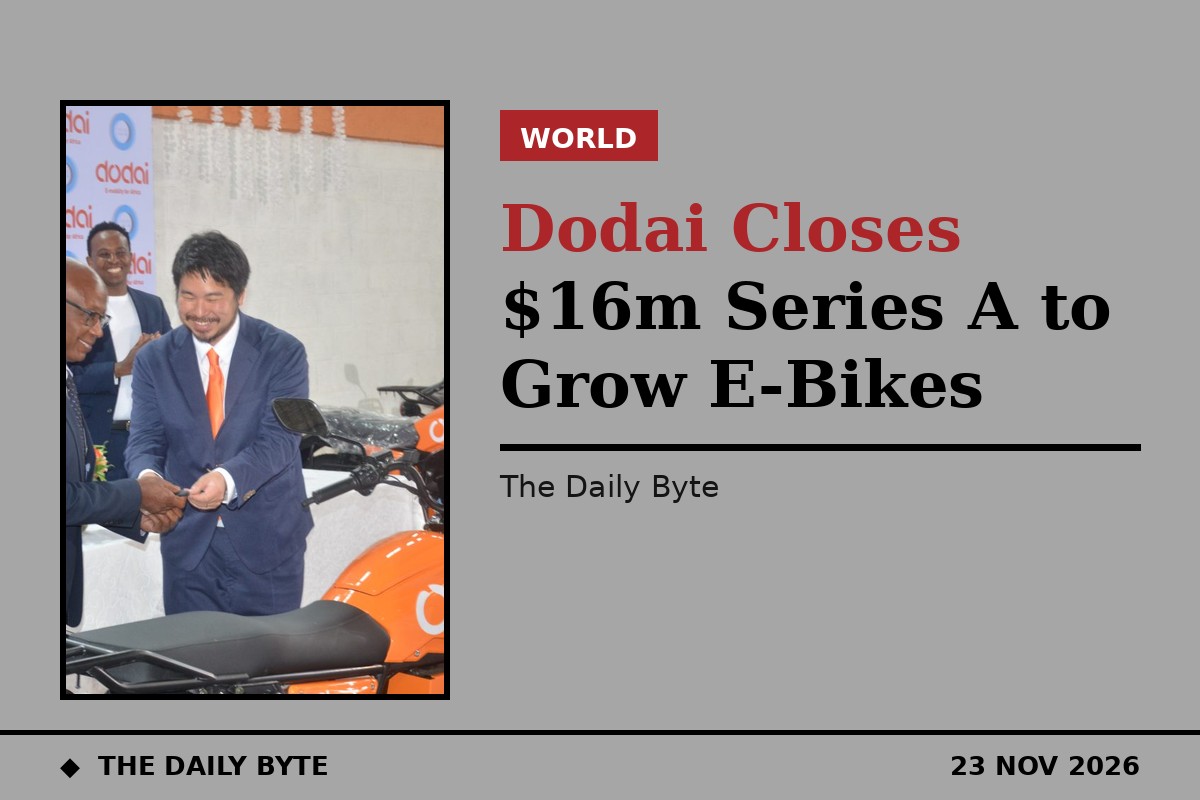
Ethiopian electric-mobility startup Dodai has closed its Series A funding round at $16 million after a $3 million extension from Japanese energy giant Tokyo Gas and Singapore-based family office Kaneto Capital Management, the company confirmed on 16 November 2026. The money will fund more electric motorbikes and battery-swapping stations in Addis Ababa, where Dodai assembles its vehicles and serves commercial delivery riders.
The extension takes the total Series A to $16 million. Dodai had already raised $13 million earlier in 2026, made up of $8 million in equity and $5 million in debt. Tokyo Gas invested through Acario, its corporate venture capital subsidiary, while Kaneto Capital Management joined as a new institutional shareholder. Before the deal was finalised, teams from both investors visited Addis Ababa to inspect Dodai's assembly plant and battery-swapping stations.
How the battery-swap model works
Dodai designs, assembles and deploys electric motorbikes for commercial delivery and logistics work, and runs stations where couriers exchange a depleted battery for a charged one in minutes instead of waiting hours to recharge. Most riders swap once a day. The company says the model suits riders who cannot afford to lose working hours to charging, and that owning both the vehicles and the swapping network is what makes the service reliable.
Dodai has assembled and deployed more than 2,000 electric motorbikes in Ethiopia over the past three years, with recent estimates putting the active fleet closer to 2,500. It employs more than 150 people, roughly 98 per cent of them Ethiopian nationals, and runs about 10 swapping stations across Addis Ababa. Within the next 12 months the company plans to reach 3,000 battery-swapping users served by 30 stations.
Why investors are backing Ethiopian electric transport
Ethiopia's government policy favours local assembly of electric vehicles. The country has banned imports of internal combustion passenger vehicles and set a national target of 500,000 electric vehicles on the road by 2030. Completely knocked-down kits imported for local electric-vehicle assembly are exempt from customs duty, excise tax and value-added tax, while semi-knocked-down kits face a 5 per cent tariff.
Tokyo Gas said it was drawn to Dodai's aim of tackling social and infrastructure problems by combining energy and mobility, and to the potential for future work together on battery technology and power distribution. The Japanese company also pointed to Dodai's internet-connected battery management system, which tracks use and charge status. Dodai was founded in 2021 by Japanese entrepreneur Yuma Sasaki, a former Uber executive, and earlier backers include British International Investment and a group of Japanese investors.
The funding is a milestone rather than a finished business. Whether the swap network becomes a durable transport service will be decided by how reliably its stations serve riders through a working day, and by station density, battery availability, maintenance and electricity supply. For now, the $16 million close is a clear sign of international confidence in Ethiopia's electric-mobility sector.
Frequently asked questions
How much has Dodai raised in its Series A? Dodai has closed its Series A at $16 million, after a $3 million extension from Tokyo Gas and Kaneto Capital Management on top of a $13 million round completed earlier in 2026.
What does Dodai do? Dodai assembles electric motorbikes in Addis Ababa and runs battery-swapping stations where commercial riders exchange a depleted battery for a charged one in minutes.
How big is Dodai's network today? The company reports about 2,500 electric motorbikes in use and around 10 battery-swap stations in Addis Ababa, with a plan to reach 30 stations and 3,000 users within 12 months.
Sources: TechBooky; Abay Times.


