DOJ Seizes $17bn in Largest-Ever Scam Crackdown
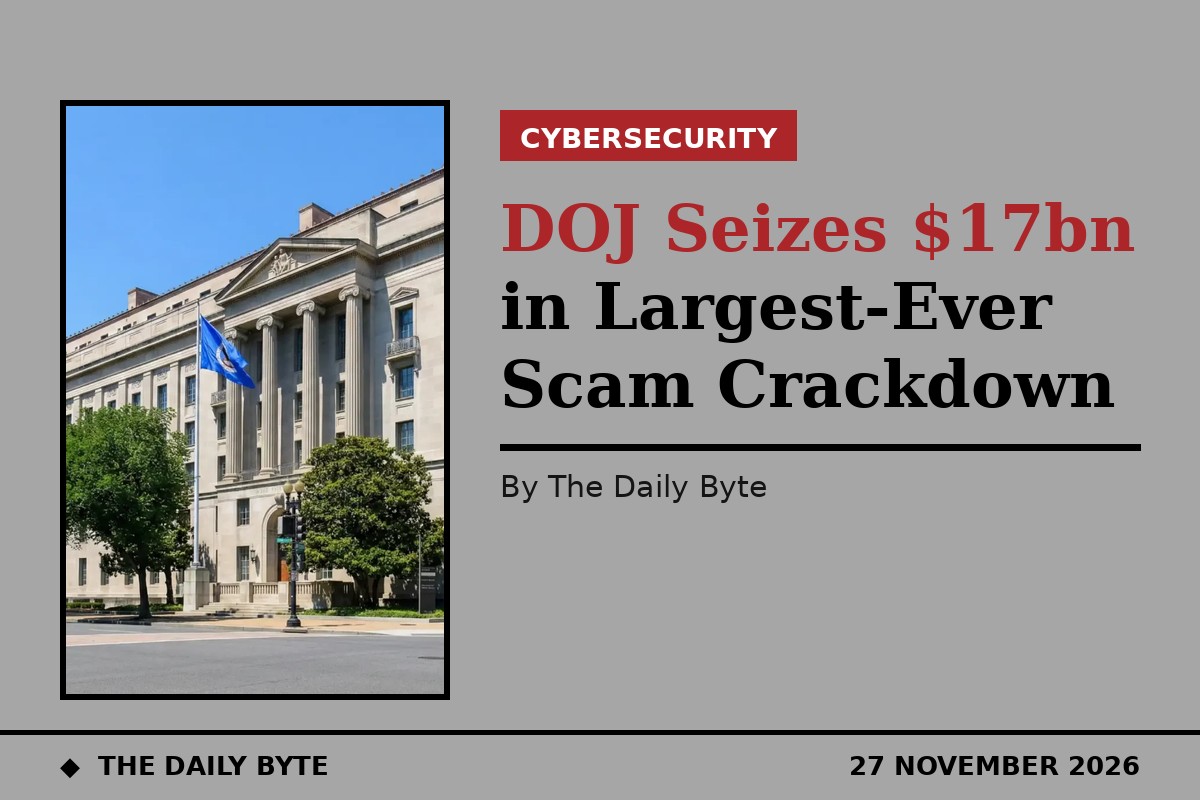
The United States Justice Department has announced what it calls the largest crackdown on scammers in its history, with action taken in more than 400 cases against more than 800 defendants across 85 federal districts. The results, announced on 24 November, cover an enforcement surge that began when President Donald Trump signed Executive Order 14390 on 6 March, directing a government-wide crackdown on predatory fraud.
Operation Blackout
The centrepiece is the FBI's Operation Blackout, a global initiative aimed at the scam compounds, mostly in Southeast Asia, where trafficked workers are forced to run fraud schemes targeting Americans. The FBI says it has restrained nearly $17 billion in illicit funds, seized more than 14,000 digital devices, and helped identify, disrupt and dismantle more than 29 scam compounds across Asia, Africa and the Middle East. The operations led to federal charges against more than 50 people, while foreign partners arrested or detained more than 320 others. More than 2,200 trafficked workers were freed and repatriated. FBI Director Kash Patel said agents had also warned more than 11,000 Americans that they were being targeted and prevented more than $690 million in potential victim losses. At the announcement, prosecutors said the cases involved more than $8 billion in intended victim losses.
The scale of the problem
The department put the scale of the problem in stark terms. Citing Gallup, it said one in ten American adults experienced a scam in the past year, directly or through someone in their household, and that Americans lost an estimated $68 billion to scams in 2025 alone. The schemes ranged from cryptocurrency investment fraud run from Southeast Asian scam centres to inheritance-fee fraud, fake sweepstakes targeting elderly Americans, and government imposter schemes.
The cases behind the numbers
Among the cases highlighted was a jury-duty imposter scheme run from inside Georgia prisons, where current and former gang members used contraband mobile phones to tell victims they had missed jury duty and would be arrested unless they paid a fine. Fourteen people were charged in three indictments, and 17 more were charged in state court over smuggling the phones into prisons. Other cases included a list broker in Mexico who sold the names and contact details of elderly Americans to dozens of scammers, a Peruvian call centre that threatened Spanish-speaking Americans with arrest or deportation unless they paid for English lessons, and a Nigerian national extradited from the UK for targeting US service members' pay. Thirty defendants were extradited to face charges in US courts.
A whole-of-government effort
The surge drew in agencies across the US government. The State Department said its support helped freeze more than $1 billion in stolen cryptocurrency and take down more than 1.4 million fraudulent websites and accounts. Homeland Security Investigations made more than 300 arrests and secured about 80 convictions and guilty pleas, with more than $120 million seized, restrained or recovered. The Secret Service restrained more than $200 million and disrupted 1,780 domains used by scammers. The Federal Trade Commission filed 16 actions against deceptive earnings claims, tech support scams and other frauds. The FBI's separate Operation Level Up has prevented more than $143 million in victim losses since March by warning people they were being targeted, and frozen more than $350 million through its Recovery Asset Team.
What the figures do and do not mean
The department described the $17 billion figure as funds restrained rather than money recovered for victims, and it gave no breakdown of how much of that total was cryptocurrency. Victims can petition for a share of forfeited proceeds tied to their own cases, and the March executive order directs the attorney general to recommend a programme to return recovered money to victims of cyber-enabled fraud. The department also launched a public education campaign urging Americans to talk about scams with family over the holiday season. Attorney General Todd Blanche said the results were just the beginning and promised continued prosecutions of the criminal networks behind the schemes.


