Drones Strike Dorogobuzh Chemical Plant
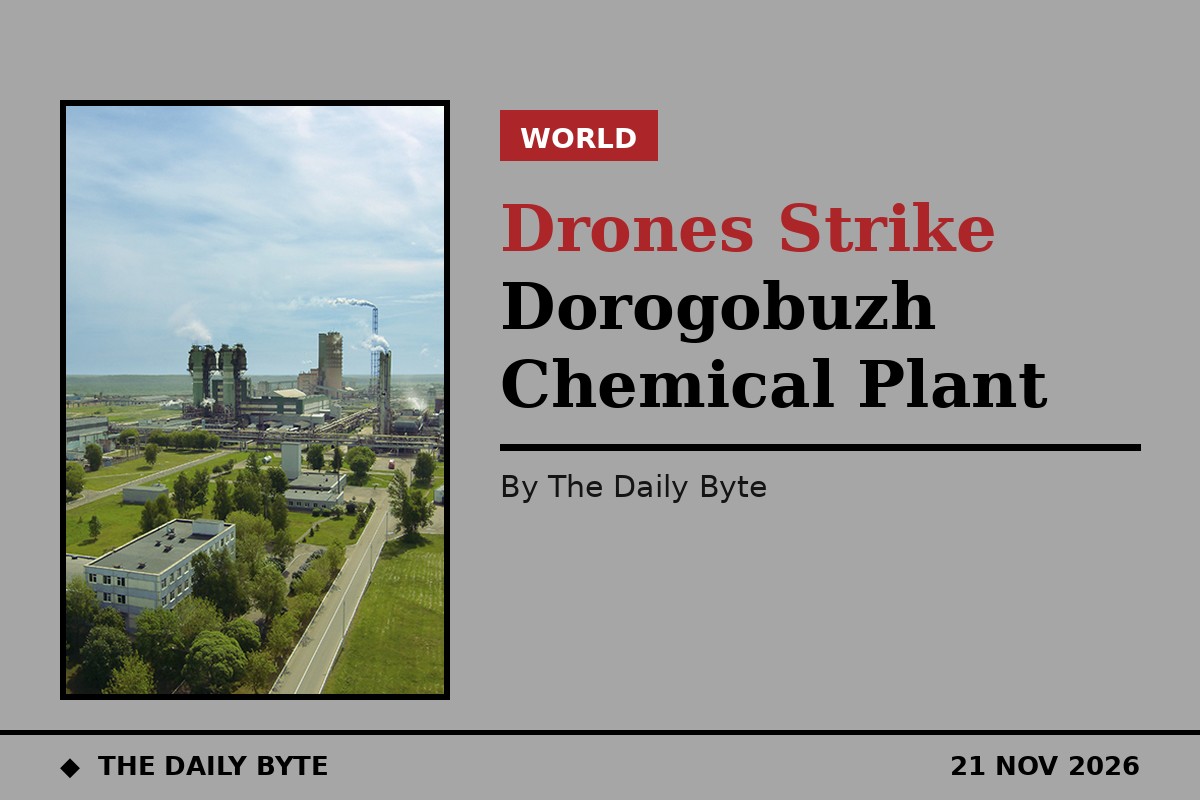
Ukrainian drones struck a chemical plant in Russia’s Smolensk region overnight on 19 to 20 November, causing an explosion and fire at a facility that produces components used in industrial explosives, monitors and officials said.
The target was the Dorogobuzh plant, one of Russia’s largest chemical and fertiliser producers, about 285 kilometres from the Ukrainian border. Open-source analysts at ASTRA confirmed an explosion at the plant from eyewitness video, and geolocated footage published on 20 November showed a fire burning near the site.
Smolensk region governor Vasily Anokhin confirmed that Ukrainian drones had attacked the region, saying they damaged a civilian industrial facility, an energy facility and a private home. He said nobody was injured in the wider attack.
The plant, owned by the Acron group, produces ammonia, nitric acid, mineral fertilisers and nitroamophoska. It is reported to account for about 11 per cent of Russia’s total ammonium nitrate production.
A dual-use target
Ammonium nitrate and nitric acid have both agricultural and military uses, and the plant’s output includes components for industrial explosives. Analysts say that dual-use character is why the facility has become a target in Ukraine’s campaign against Russia’s defence-industrial base.
The Institute for the Study of War, a US-based research group, said geolocated footage showed a fire near the Dorogobuzh chemical plant after the Ukrainian strike, and described the site as a producer of nitrogen fertilisers and explosive precursors.
The plant has been attacked before. It was struck in December 2025 and again in February 2026, in earlier rounds of Ukrainian drone attacks on Russian industrial sites.
An air-raid warning had been issued in the Smolensk region around midnight because of the threat of drone attacks. Monitoring channels reported explosions and a large fire at the plant shortly afterwards.
The Kyiv Independent, which first reported the attack, said it could not immediately verify the reports independently. Russian authorities did not confirm that the plant itself had been hit, referring only to damage to an industrial facility in the region.
Part of a wider campaign
The Dorogobuzh strike was part of a wider night of Ukrainian attacks on Russian territory. President Volodymyr Zelensky said Ukrainian forces also struck three Russian ballistic missile launchers overnight on 19 to 20 November, destroying at least one, as part of efforts to defend against Russia’s long-range strike campaign.
Ukraine has stepped up drone attacks on Russian oil refineries, chemical plants and military sites in recent months, aiming to degrade the industrial base that sustains Moscow’s war effort. Kyiv says the strikes are a response to Russia’s own attacks on Ukrainian energy infrastructure and cities.
The same night, Russia launched its largest missile and drone attack of November against Ukraine, firing 27 ballistic missiles, 84 cruise missiles and 404 drones at targets across at least 15 regions, killing eight people and damaging energy networks and bridges in Kyiv.
The extent of the damage at Dorogobuzh has not been established. The plant is one of the largest industrial employers in the Smolensk region, and any prolonged shutdown would affect both fertiliser supplies and the production of explosive components.
Ukrainian officials have not formally claimed responsibility for the strike, in line with their usual practice on attacks inside Russia. But the pattern of the attack, and the plant’s previous targeting, points to a deliberate and repeated effort to keep the facility out of action.


