CISA warns of Dorsett InfoScan flaws CVE-2026-117659 affecting water sector systems
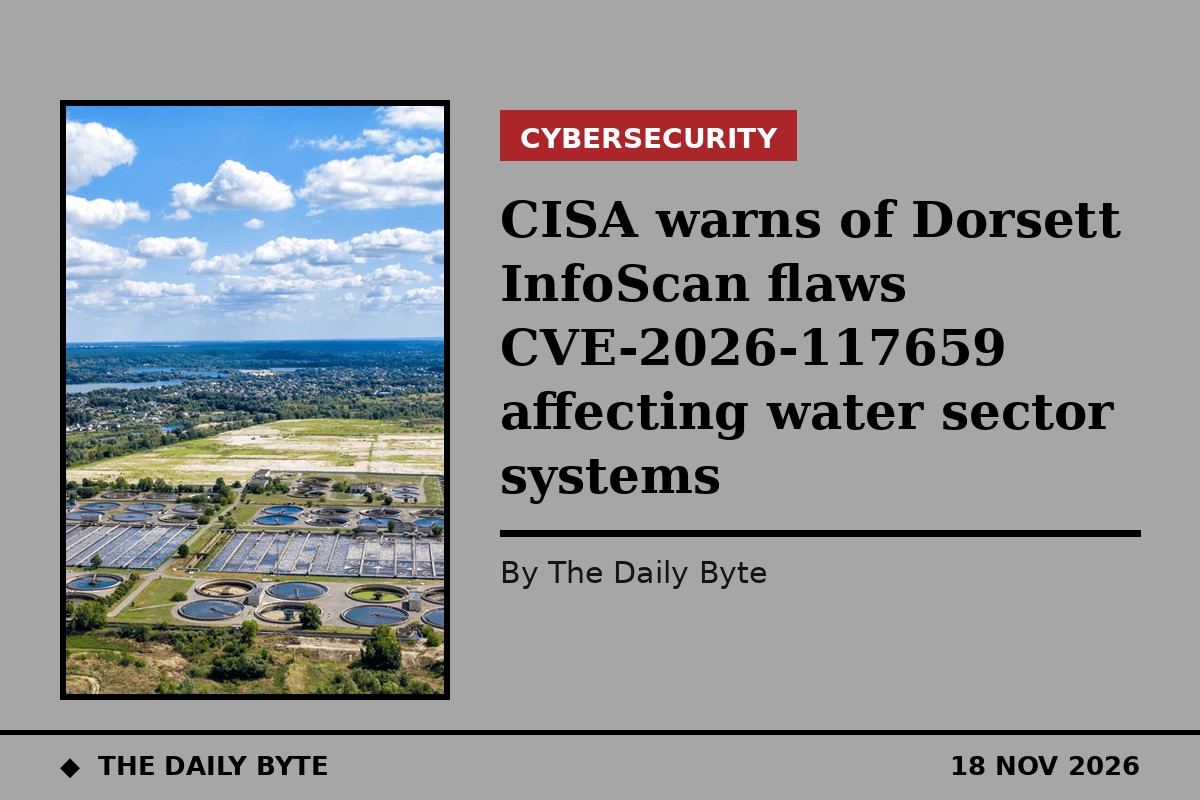
The US Cybersecurity and Infrastructure Security Agency (CISA) has warned of six vulnerabilities in Dorsett Controls InfoScan, a monitoring platform used in water and wastewater systems, according to CISA advisory ICSA-26-321-01, published on 17 November 2026. Successful exploitation could allow an attacker to retrieve sensitive system information, access application data without authorisation, recover stored credentials, or intercept and manipulate network communications.
InfoScan versions 1.45.0 and earlier are affected, and the product is deployed in the Water and Wastewater Systems sector worldwide. CISA recommends upgrading to InfoScan version 1.46 or later. Organisations running offline installations can obtain the update through the Dorsett Controls customer portal. CISA said no known public exploitation specifically targeting these vulnerabilities had been reported to it.
What the six flaws involve
The most serious flaw identified carries a CVSS score of 8.1. Tracked as CVE-2026-117659, it affects the InfoScan desktop client, which accepts untrusted TLS certificates instead of properly validating the remote endpoint. TLS is designed to protect communications against interception and manipulation, so when certificate validation is inadequate, an attacker positioned along the communication path could potentially impersonate a legitimate server and intercept traffic.
A second flaw, CVE-2026-120255, involves hard-coded cryptographic keys that could allow an attacker to recover the stored MongoDB database password. Database credentials are particularly valuable because they may provide access to information beyond the immediate application interface, so organisations should rotate the affected database credential after installing the security update.
A third flaw, CVE-2026-120271, involves endpoints that expose information without requiring authentication. The disclosed information includes usernames, multi-factor authentication status, server information and firmware details. Although these details may not independently provide direct access to operational systems, they can help attackers understand the environment they are targeting: exposed usernames could support targeted credential attacks, while MFA status could help attackers prioritise accounts.
The remaining three flaws, CVE-2026-120157, CVE-2026-120260 and CVE-2026-120298, cover installer information exposure, an endpoint lacking authentication, and verbose error messages that can disclose internal paths and implementation details. Individually these weaknesses may appear less serious than credential exposure or insecure TLS validation, but together they can provide useful information for reconnaissance and attack preparation.
Why water infrastructure is a sensitive target
Water infrastructure is part of the critical infrastructure ecosystem, and monitoring platforms help operators maintain visibility over systems responsible for essential public services. A compromise involving supporting IT or operational technology infrastructure could affect operational awareness, incident response and the confidentiality of industrial information.
It is important to keep the limits of the disclosure clear. The advisory does not establish that any water utility has been breached, that water treatment or distribution has been disrupted, or that attackers can directly manipulate water treatment processes, alter chemical dosing or control pumps through these vulnerabilities. Such outcomes would depend on additional technical conditions, system architecture, permissions and connectivity. The advisory also does not establish that every affected installation is remotely accessible.
What operators should do
Water utilities and industrial organisations using InfoScan should identify all installations running version 1.45.0 or earlier and upgrade them to version 1.46 or later. Offline systems should be updated through the official Dorsett Controls customer portal rather than assumed safe because they are disconnected: maintenance laptops, removable media and other trusted connections can still introduce malicious files or compromised credentials.
After upgrading, operators should rotate the MongoDB database credential, review database access permissions and remove unnecessary privileges. InfoScan access should be restricted to trusted internal networks, and monitoring systems should not be directly exposed to the public internet. Industrial monitoring infrastructure should sit behind appropriately configured firewalls, with authentication activity monitored and unexpected access attempts investigated. Patching should be coordinated with operational teams to avoid unnecessary disruption to essential monitoring services.
As Security Boulevard’s daily OT security briefing for 18 November 2026 notes, Dorsett’s own bulletin on the flaws is dated 22 October 2026, while CISA published its advisory on 17 November. The gap between a vendor bulletin and a CISA advisory is a reminder that asset inventory matters: some installations may still be running affected versions weeks after a fix was available, and the absence of reported exploitation is not the same as the absence of attacker interest.
Frequently asked questions
Which versions of Dorsett InfoScan are affected? InfoScan versions 1.45.0 and earlier. CISA recommends upgrading to version 1.46 or later.
Has any water utility been breached through these flaws? No. CISA has not reported any known public exploitation specifically targeting these vulnerabilities, and no compromised utility or disruption of water service has been established.
What is the most serious flaw? CVE-2026-117659, scored 8.1, in which the desktop client accepts untrusted TLS certificates, potentially allowing communications to be intercepted or manipulated.
Sources: CISA advisory ICSA-26-321-01; Security Boulevard daily OT security news, 18 November 2026.


