Double Jeopardy Killer Dunlop Recommended for Release
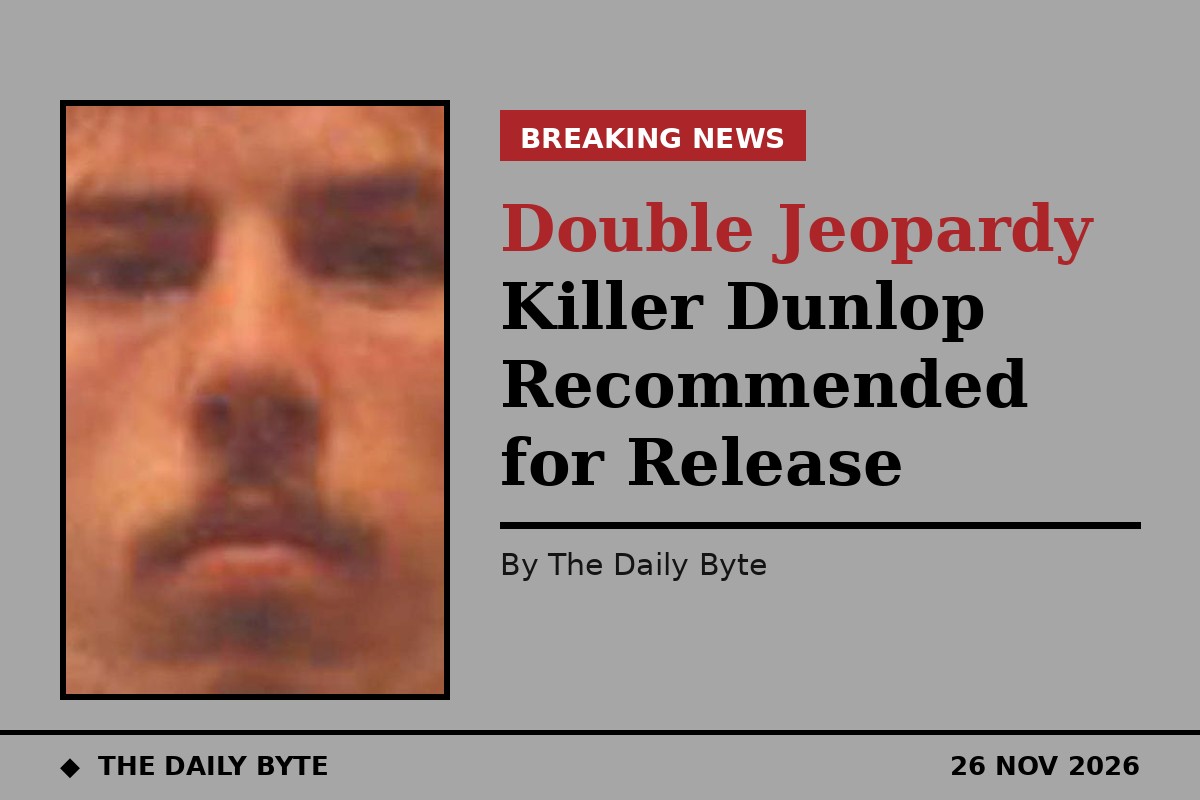
William Dunlop, the first person to be retried after Britain's centuries-old double jeopardy rule was changed, has been recommended for release from prison by the Parole Board.
Dunlop, now 63, strangled Julie Hogg, 22, at her home in Billingham, County Durham, in November 1989 and hid her mutilated body behind a bath panel. Her mother, Ann Ming, found it more than two months later.
The Parole Board considered his case at a public hearing on 21 October, his fourth application for release since the 17-year minimum term of his life sentence expired in 2021. A Parole Board spokesperson confirmed that a panel directed his release following the hearing. The Press Association understands the full written decision has not yet been published.
The decision has already been challenged. Justice Secretary Alex Norris has asked officials "to examine whether there are grounds to reconsider" it, the Ministry of Justice said. Under the reconsideration mechanism, the Justice Secretary can intervene in exceptional circumstances if a decision is legally irrational or the correct process was not followed.
How the law was changed
Dunlop, known as Billy, was tried twice for Miss Hogg's murder but both juries failed to reach a verdict. Three years later, while in prison for another offence, he confessed and admitted lying in court, boasting that nothing could be done to him because of the double jeopardy rule. Miss Hogg's family campaigned for 15 years to change the law, and in 2006 he became the first person tried under the new rules. He admitted murder at the Old Bailey and was jailed for life with a minimum term of 17 years. The sentencing judge said the murder was "accompanied by the brutal sexual degradation of (her) body".
What the panel decided
The panel said it was "mindful" of the feelings of the victim's family, who "take the view that (Dunlop) should never be released". But it said that if a prisoner meets the statutory test for release, "the panel is obliged by law to conclude that his release must be directed". A prison psychologist and an independent psychologist agreed he should be released, finding a low risk of violence, rising to moderate in the community.
The panel also considered earlier findings that there was "a serious possibility" allegations that Dunlop had sexual activity with children between 1985 and 1992 "may be true". It gave no weight to claims linking him to two other murders, in 1989 and 1994 or 1995. Dunlop, who has been assessed as having "high levels of psychopathic traits", has also accepted beating a partner with a pickaxe handle "until her face was almost unrecognisable" between 1994 and 1996.
The family's response
Miss Hogg's son Kevin, who was three when his mother was killed, said he had expected the decision. The 40-year-old called the Parole Board "not fit for purpose" and said victim personal statements "mean absolutely nothing". A panel has recommended Dunlop's transfer to open prison several times, but three justice secretaries have intervened to block the moves.
If he is released, Dunlop will spend 12 months in a specialist community forensic hostel under the supervision of the National Probation Service. He will wear a GPS tag for 18 months, observe a curfew from 8pm to 7am, sign in daily at 11am and 3pm, and face exclusion zones across Teesside and the North East. He will also take a polygraph test within three months of release. As a life-sentence prisoner he will remain on licence, under supervision, for the rest of his life and can be recalled to custody if he breaks the rules.
A Ministry of Justice spokesman said: "Julie Hogg's murder was a horrific crime and our thoughts remain with her friends and family. The Lord Chancellor's first priority is keeping the public safe, which is why he has instructed officials to examine whether there are grounds to reconsider this decision."