DR Congo Halts Cobalt Exports From 30 November
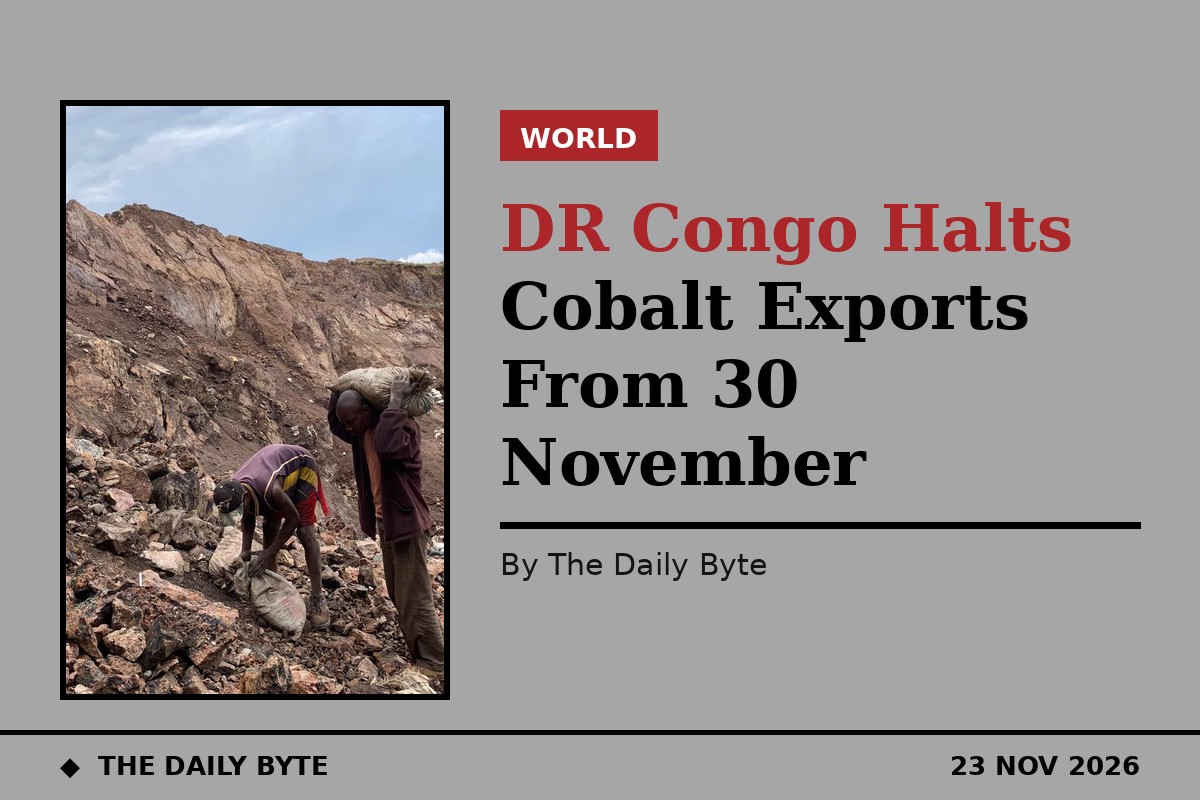
The Democratic Republic of Congo will suspend all cobalt exports from 30 November until further notice, its strategic minerals regulator said on Monday, in a fresh attempt to lift weak prices and clear a glut in the market for the battery metal.
The suspension, announced by the Authority for the Regulation and Control of Strategic Mineral Substances' Markets (ARECOMS), will cover cobalt from industrial mines and artisanal operations alike, and will remain in place until the regulator formally lifts it. Reuters reported the announcement on 23 November.
Why Kinshasa is acting now
ARECOMS said the measure was intended to address what it called a persistent imbalance in the cobalt market caused by weak demand, rising inventories and excess supply. In its statement, the regulator said cobalt prices had fallen significantly and persistently since the middle of the year, blaming slowing global consumption, rising inventories and speculative trading.
The decision is the second time Congo has halted cobalt exports since February 2025. The first ban, imposed that month after a sharp fall in prices, lasted about eight months before it was replaced in October 2025 by a strict quota system that limited shipments to less than half of the country's 2024 production levels.
That first intervention initially sent prices sharply higher. Data from Fastmarkets, cited by Mining.com.au, showed prices for cobalt hydroxide, the main cobalt product exported from Congo, more than quadrupled after the restrictions were imposed. But the rally did not last: prices have since fallen by nearly half from their peak in April this year, as demand stayed weak and supplies of recycled material rose.
Congo is the world's largest producer of cobalt, accounting for around three-quarters of global mined output, and most of its cobalt is extracted as a by-product of copper mining. That dominance means any halt to its exports is felt quickly by battery makers and traders, particularly in China, the largest buyer and processor of the metal. Cobalt is a key ingredient in the batteries used in electric vehicles and consumer electronics.
What happens during the pause
ARECOMS said it would use the suspension period to revise its quota-allocation system, with the aim of aligning exports more closely with global demand and helping to rebalance the market over the longer term. The regulator approved the temporary suspension at a meeting on 9 November, according to the statement, which was signed by ARECOMS president Patrick Luabeya.
The regulator said it would review the measure four months after it takes effect, but stressed that the review would not automatically lead to a resumption of exports. Any restart would require a separate decision setting export volumes, quota allocations and the conditions attached to them.
The largest producers operating in Congo, including China's CMOC Group, Glencore and Eurasian Resources Group, hold the country's biggest cobalt export quotas, and their shipment schedules are likely to be the most affected while the suspension is in force. Under the quota system, their exports had already been restricted to well below the levels seen before the first ban.
Why the earlier curbs did not hold
The return to a full suspension underlines how difficult Kinshasa has found it to support prices by restricting supply alone. The first ban and the quota system that followed it both pushed prices up at first, but neither produced a lasting recovery once the initial squeeze on supply had passed.
ARECOMS pointed to the same pressures in its latest statement: consumption growing more slowly than expected, stockpiles building up, and speculative trading adding to the downward pressure on prices since June. With demand soft and recycled cobalt adding to supply, cutting exports has so far offered only temporary relief.
For now, the market's attention turns to 30 November, when the suspension takes effect, and to the review due four months later. Until ARECOMS takes a separate decision to restart shipments, no cobalt will leave Congo legally, leaving buyers, miners and traders to wait on a regulator that has shown it is willing to intervene twice in less than two years.


