DR Congo hunger to hit record 30 million in 2027
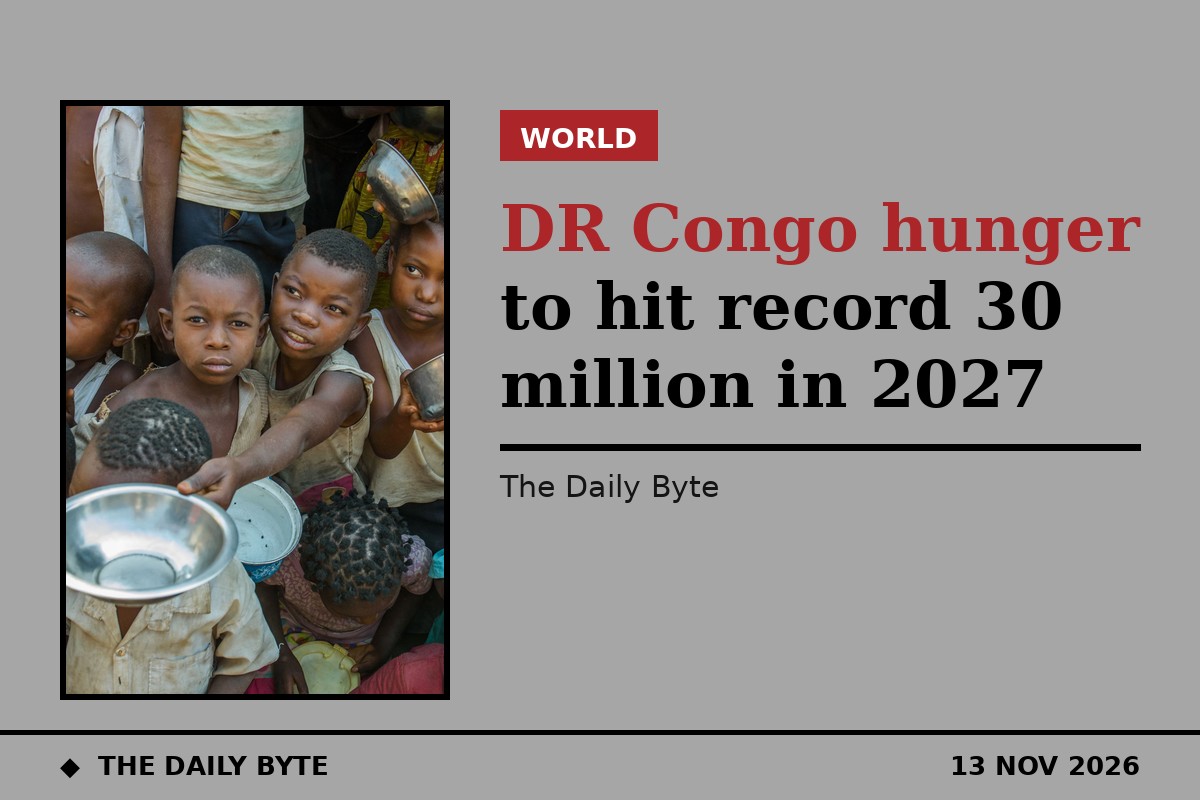
A record 30.3 million people in the Democratic Republic of the Congo are projected to face crisis levels of acute food insecurity or worse in the first half of 2027, United Nations agencies warned on Friday, 13 November, as conflict, displacement and Ebola deepen an already severe humanitarian emergency.
The warning comes from the World Food Programme (WFP), the Food and Agriculture Organization of the United Nations (FAO), UNICEF and the World Health Organization (WHO), based on the latest Integrated Food Security Phase Classification (IPC) analysis.
Nearly 29 million already facing acute hunger
Nearly 29 million people, almost a quarter of the population, already face Crisis or worse levels of acute food insecurity from September to December 2026, including 3.6 million in Emergency conditions. The total facing Crisis or worse is projected to reach 30.3 million between January and June 2027, up from 26.5 million in the same period of 2026, with 4.2 million people expected to be in Emergency by then.
Conflict, displacement and rising food prices are driving the crisis, compounded by Ebola and other disease outbreaks. Humanitarian assistance is now falling dangerously behind growing needs, the four agencies warned.
"Conflict is driving families from their homes, cutting them off from their fields and putting food beyond their reach," said Ross Smith, WFP Director of Emergency Preparedness and Response. "The Ebola outbreak is a crisis on top of a pre-existing crisis, and we must meet these humanitarian needs if we are to stop the spread of the virus."
Ebola outbreak adds to the emergency
The Ebola outbreak was declared in May 2026 and has since become the country's largest yet, spreading faster than any previous outbreak across the vast east and northeast provinces. To date, more than 11,000 people have fallen ill and more than 5,400 have died from the disease, caused by the Bundibugyo virus.
Despite progress in containing transmission within eastern DRC, about 400 to 500 cases of infection are still being identified every week, according to Dr Chikwe Ihekweazu, Executive Director of WHO's Health Emergencies Programme. UN responders also warned that unrest fuelled by armed groups is holding back the response, with more people being killed by Allied Democratic Forces fighters than by Ebola in recent days.
The most acute needs are in North Kivu, South Kivu and Ituri provinces, driven by persistent conflict and large-scale displacement. Ebola is disrupting agricultural activities and food markets, adding further pressure on families already struggling to eat, the FAO said.
Agencies call for urgent action
The UN agencies are calling for urgent, coordinated financing and diplomatic action to scale up food assistance, protect and restore agricultural livelihoods, prevent and treat acute malnutrition, and sustain essential health, nutrition, safe water and sanitation services, alongside secure, safe and unimpeded humanitarian access.
They warned that hunger and disease are reinforcing each other, with Ebola, cholera and mpox putting further pressure on health services and households already struggling to obtain food. For the full warning, see UNICEF UK's press release and UN News on the Ebola and hunger crisis.


