DRC Ebola Cases Hit 10,668 as WHO Adds New Vaccines
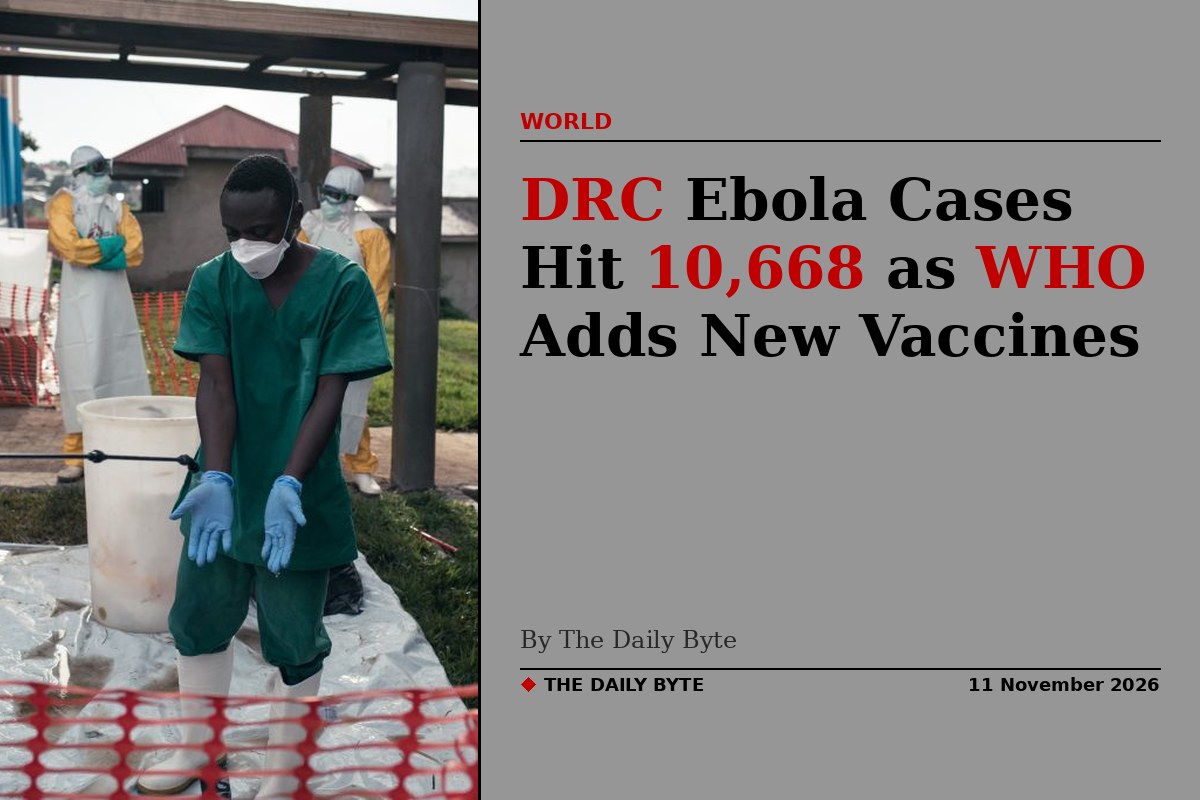
The Ebola outbreak in the Democratic Republic of the Congo has reached 10,668 confirmed cases and 5,198 deaths, the World Health Organization (WHO) has said, making it the largest Ebola outbreak ever recorded in the country.
The figures, covering the period to 3 November, give a case fatality rate of 48.7 per cent, with 2,881 recoveries recorded. Cases have been reported in 67 health zones across eight provinces, with active transmission continuing in 51 of them. A further 964 confirmed cases and 511 deaths were reported since the WHO's previous update on 23 October. Of the 512 deaths reported since 21 October, 335 occurred in communities and 177 in treatment centres, underlining the difficulty of detecting cases early and getting patients into care.
Ituri remains the epicentre
Ituri province remains the worst affected, with 7,485 confirmed cases and 3,532 deaths, followed by North Kivu with 2,593 cases and 1,422 deaths. North Kivu continues to record the highest provincial fatality rate, at 54.8 per cent. The outbreak, caused by the Bundibugyo virus and declared on 15 May 2026, is the second largest Ebola outbreak ever recorded anywhere. There is still no approved vaccine or specific treatment for Bundibugyo virus disease.
Two new vaccines join the Tumaini trial
WHO expert groups have recommended two additional vaccine candidates for clinical evaluation in the Tumaini trial, a Phase 2/3 study that began on 23 October in Bunia. The candidates are ChAdOx1, developed by the University of Oxford with the Serum Institute of India, and Moderna's mRNA-1469. They will enter the trial once Congolese regulators give approval, with initial results expected in early 2027.
The outbreak has also spread beyond the DRC's borders. Kenya has nine confirmed cases and two deaths, with no new cases since 19 October, while Nigeria reported one imported case in Abuja and is following 62 contacts. On 5 November the United Kingdom medically evacuated a confirmed case, a health worker, from the DRC to London. The WHO assesses the risk as very high in the DRC and high for neighbouring countries, and advises against travel or trade restrictions. WHO and GOV.UK reported the latest figures.


