DRC Ebola outbreak passes 10,000 cases, 4,887 dead
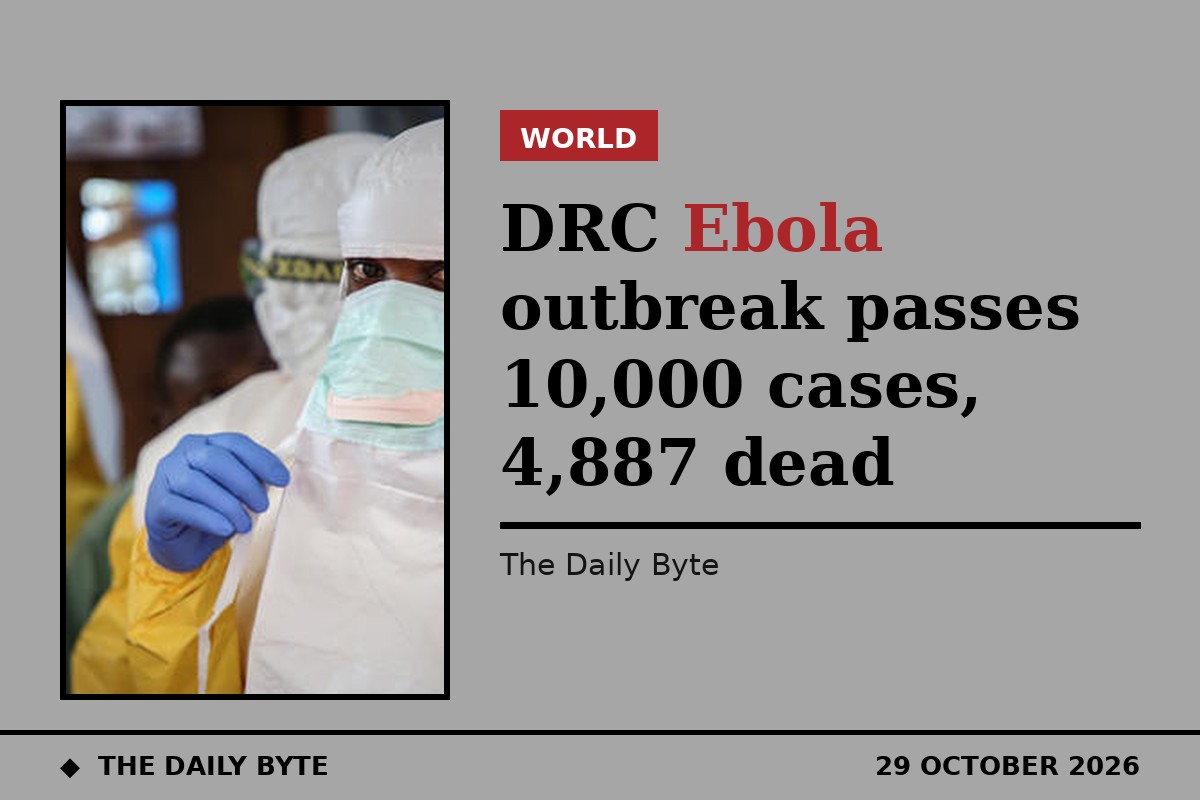
The Democratic Republic of Congo's Ebola outbreak has passed 10,000 confirmed cases, with 4,887 deaths recorded as of 25 October, according to the country's public health institute, making it the largest outbreak in the country's history and the second largest ever recorded worldwide.
Children bearing the heaviest cost
The outbreak, caused by the rare Bundibugyo species of Ebola virus, was declared on 15 May 2026 in Ituri Province in eastern DRC. It has since spread from a single health zone to 66 health zones across eight provinces, with Ituri remaining the epicentre, accounting for more than 70 per cent of confirmed cases.
Regional spread raises alarm
With a case fatality rate of 48.6 per cent, children are becoming sick and dying, being orphaned, separated from loved ones and missing months of education, Save the Children said. More than 1,900 children have been orphaned or separated from one or both parents or caregivers, an average of nearly two children a day.
There is currently no approved vaccine specifically for the Bundibugyo strain driving the outbreak, making prevention, surveillance, community engagement and access to healthcare critical to slowing transmission, the charity said.
Fears of wider spread have grown as cases have been reported beyond DRC's borders. Kenya has confirmed nine cases since its first earlier in October, after a man who travelled from Congo via Uganda died in Nairobi. Nigeria became the fourth African country to report a case last week; Uganda, which reported 20 mostly imported cases in May and June, was declared Ebola-free in August.
The World Health Organization has warned that insecurity, displacement and restricted humanitarian access are disrupting surveillance and response, raising the risk of undetected infections. Only the 2014-2016 West African outbreak, which infected more than 28,600 people and killed over 11,000, has been larger.
Sources: ReliefWeb (Save the Children) and Reuters via Duke FM.