DR Congo Opposition Calls Protests Over Constitution
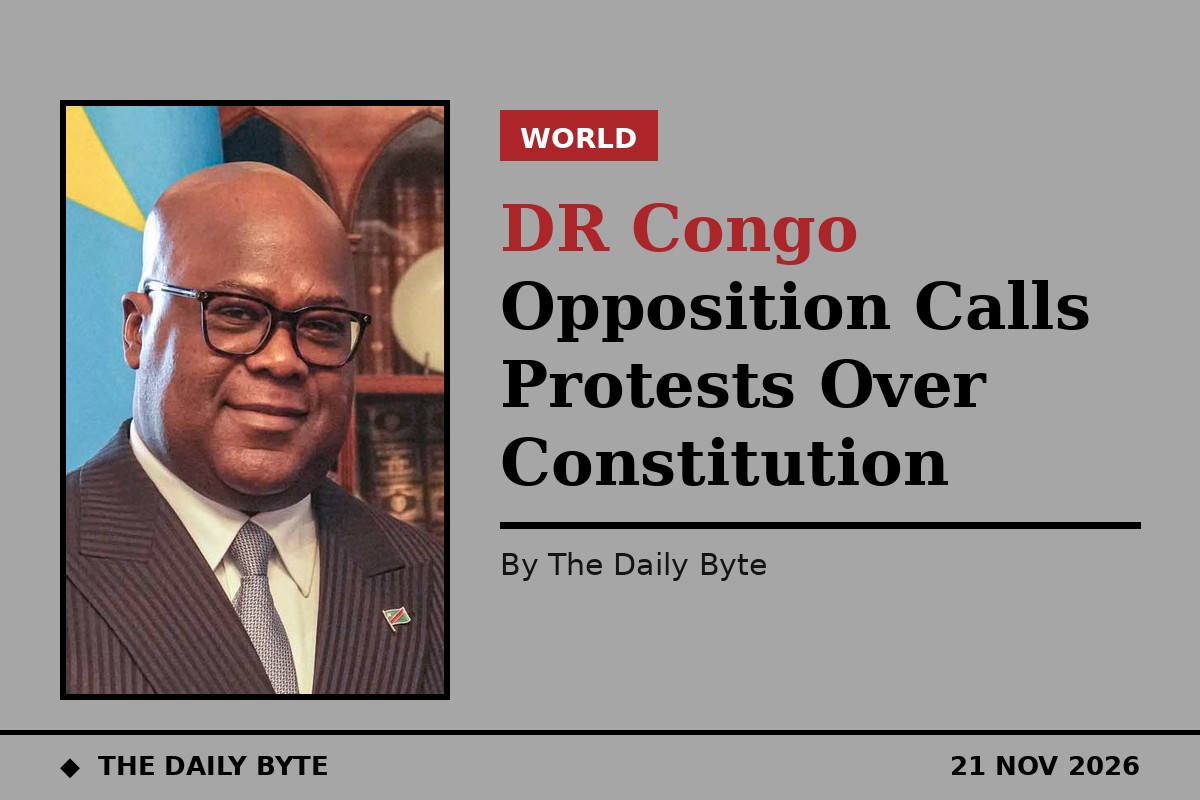
Opposition politicians in the Democratic Republic of Congo have called for nationwide protests against President Felix Tshisekedi's plans to revise the constitution, in a joint statement issued on Wednesday.
The signatories include former president Joseph Kabila and former presidential candidates Martin Fayulu and Moise Katumbi. They are urging Congolese citizens to take to the streets to oppose constitutional changes they describe as a constitutional coup designed to keep Mr Tshisekedi in power.
The call comes amid a slow-burning constitutional crisis in the vast central African country, where the opposition accuses the president of manoeuvring to stay in office beyond 2028, when his second and final term under the current constitution ends.
Referendum law promulgated this month
On 9 November, President Tshisekedi promulgated a law setting out the legal framework for a referendum, which was read on national television on 11 November. The law expands the conditions under which a referendum can be held, which could involve a revision of the current constitution or the adoption of an entirely new one.
The law itself makes no explicit mention of a third term. For the opposition, that is precisely the problem: they argue the framework is preparation for scrapping presidential term limits and allowing Mr Tshisekedi to run for a third consecutive term.
The process has already prompted demonstrations in Kinshasa and other major cities. The opposition has denounced the move as a constitutional coup, and protests have resulted in clashes with security forces, with reports of deaths and allegations of assassinations.
Opposition coalition rallies under Article 64
The opposition has rallied under the banner of Coalition Article 64, known as C64, named after the article of the constitution that gives citizens the right to resist an unconstitutional seizure of power. Formed in May, the coalition brings together figures representing much of the country's serious opposition, including Mr Fayulu of ECiDe, Mr Katumbi of Ensemble pour la Republique, Jean-Marc Kabund of Alliance pour le Changement, Augustin Matata Ponyo of LGD and Delly Sesanga of Envol.
The coalition's central demand has shifted from abandoning the reform to calls for Mr Tshisekedi to resign. It has repeatedly organised demonstrations, some postponed after regional leaders offered to mediate, while others went ahead despite bans and heavy security deployments.
The largest push so far came on 15 September, a coordinated day of action with demonstrations called in the capital Kinshasa, Lubumbashi in the south-east and Uvira in the east. In Kinshasa, protesters gathered at several locations before setting off from the Limete interchange, where police used tear gas and fired warning shots as tensions mounted.
Political tensions deepen
The constitutional dispute is unfolding against a backdrop of wider political tension. The People's Party for Reconstruction and Democracy, the political platform of former president Kabila, was permanently dissolved by the Council of State on 30 October 2026. Aubin Minaku, a former senior figure in the party, was released from detention on 10 November after being held since January.
Mr Tshisekedi has announced a national dialogue to foster political exchanges, but key opposition parties have so far refused to take part. The United States, France and other nations are watching the political landscape closely as the dispute over the country's institutional future continues.
With the opposition now calling for nationwide protests, the coming days will test whether the government allows the demonstrations to go ahead and whether the coalition can sustain street pressure against a constitutional process its leaders say is designed to extend the president's rule.


