Over-70s Face Eye Tests Every Three Years
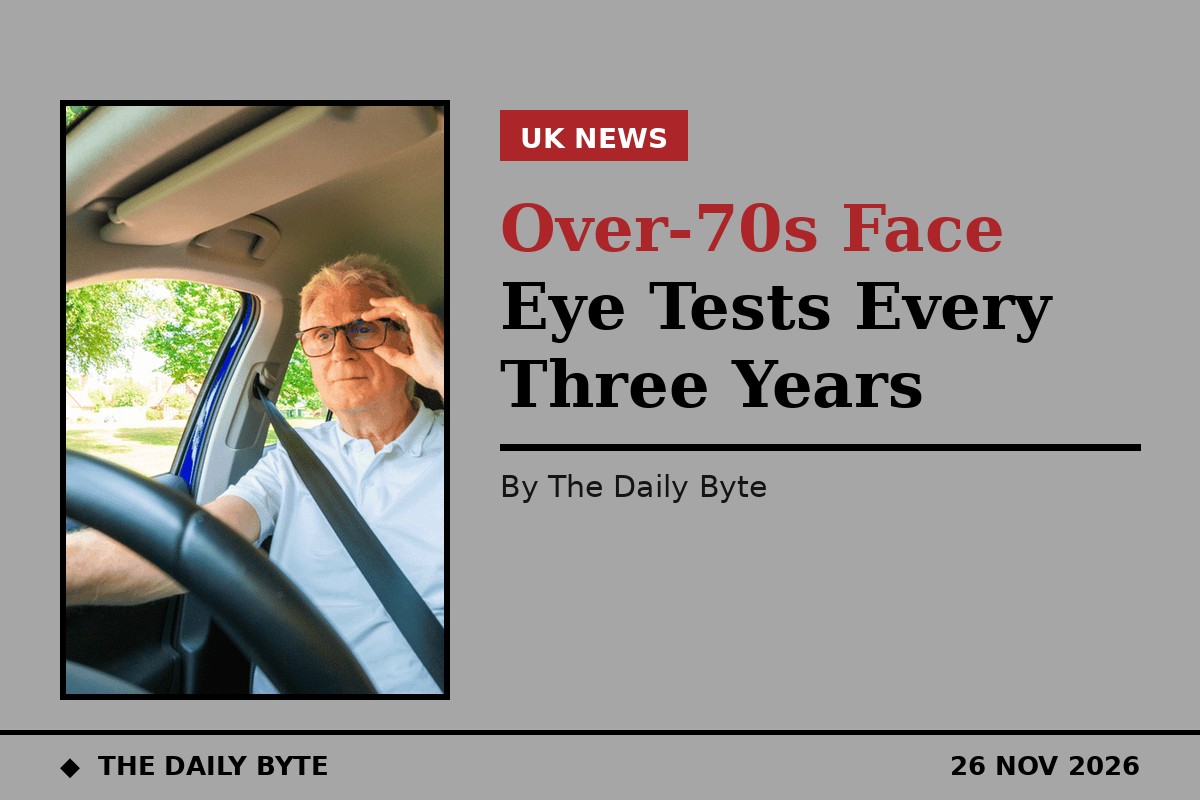
Millions of drivers aged 70 and over may soon have to pass an eyesight test every three years to keep their driving licence, under plans reported on Thursday, 26 November 2026. The change would end the current system in which older drivers simply declare for themselves that their eyesight is good enough, and would instead require them to prove it. The announcement is expected within weeks as part of the government's new Road Safety Strategy.
What would change for over-70s
Under the reported plans, the results of the eye tests would be shared with the Driver and Vehicle Licensing Agency, the DVLA, which could revoke the licence of any driver who did not meet the legal eyesight standard. The proposals were first reported by the Daily Mail, and the BBC understands ministers will recommend the step in the strategy. Motoring groups welcomed the idea on Wednesday, saying stricter checks could save lives.
No final decision yet, says the DfT
The Department for Transport has stressed, however, that no final decision has been made. A spokesperson told LADbible that the department recognised the importance of driving for older people's independence, but needed to balance that with its priority to keep everyone safe on the roads and avoid tragic accidents. The spokesperson said mandatory eye tests for drivers over 70 as part of the Road Safety Strategy were one way to do this, that consultation results were being carefully reviewed, and that next steps would be set out soon.
How the current rules work
The government launched a consultation in January 2026 on introducing mandatory eyesight testing for older drivers, alongside a new road safety strategy. Speaking in May, Minister for Local Transport Lilian Greenwood said the consultation was focused on the mandatory eyesight testing of drivers aged 70 and over, while recognising that more would need to be done about wider health conditions associated with an ageing population. She said consideration would be given in the future to other fitness-to-drive measures, such as cognitive assessments.
Under the current rules, once drivers turn 70 they must renew their licence every three years, but they only need to self-certify that their eyesight meets the legal standard. That standard requires motorists to be able to read a number plate from 20 metres away in good daylight. Official data shows there are around six million people aged 70 or over who hold valid driving licences in the UK, and more than one million are aged 80 or over.
Why ministers want tougher checks
The push for change follows a series of fatal crashes in which poor eyesight was a factor. According to government data, almost one in four car drivers killed in 2024 were aged 70 or older. A government source told the Daily Mail that there had been several arguably preventable fatalities on Britain's roads caused by drivers with failing eyesight in recent years, and that beefed-up measures were long overdue, something coroners and other public officials had long been calling for.
President of the AA Edmund King said he supported regular eye tests for all drivers, and that a move to make eye tests for older drivers mandatory was welcome, especially as the likelihood of crashes increases once someone is over the age of 70 and markedly shoots up over the age of 80, with eyesight often a factor. Steve Gooding, director of the RAC Foundation, said people who drove with impaired eyesight, unless corrected, were putting everyone at risk, and that it made sense for drivers to routinely check their eyesight was up to the mark.
What happens next
Ministers are also considering whether NHS eye tests, which are free for everyone aged 60 and over, need to be strengthened so they can properly assess whether someone is fit to drive, since the current tests are not designed to test for road safety standards. For now, the Department for Transport says older drivers who are fit to drive and have good enough vision have nothing to worry about, and the final shape of the plans will only be clear when the Road Safety Strategy is published.


