Drugmakers Leave Nigeria, Ethiopia, DRC Out of Plans
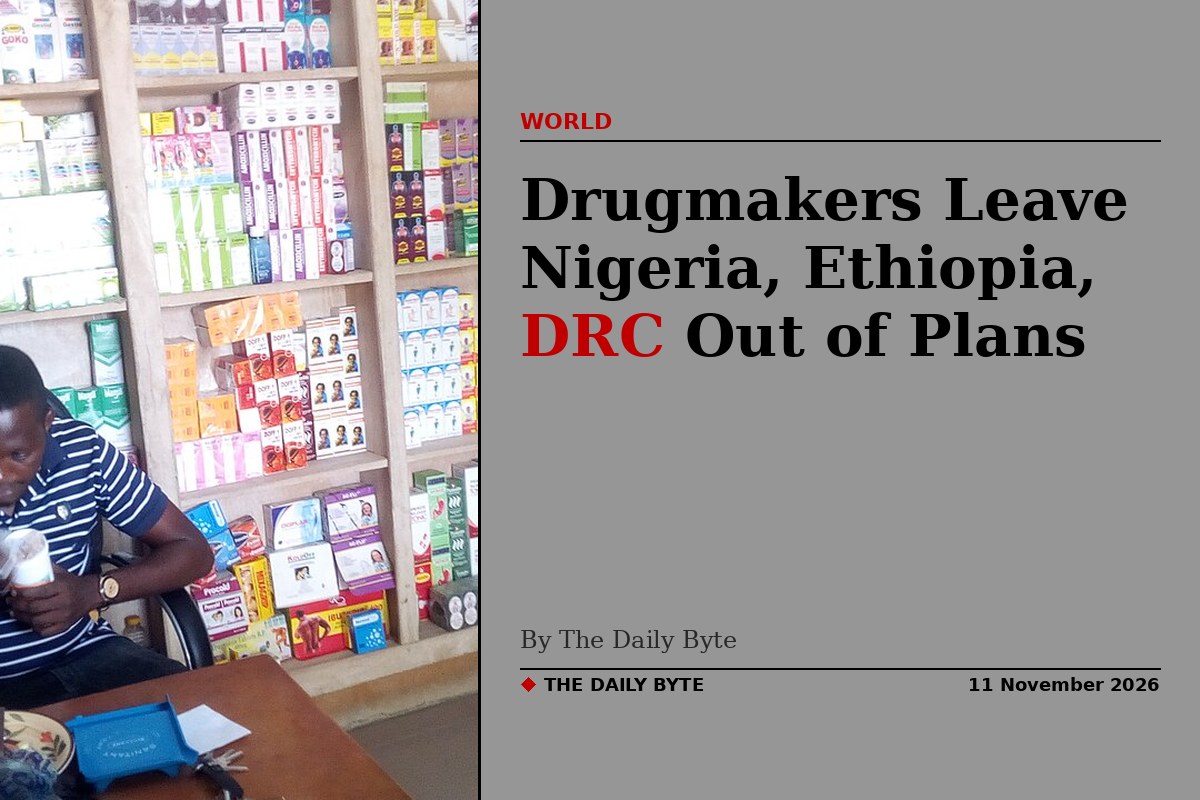
Nigeria, Ethiopia and the Democratic Republic of Congo (DRC), the three most populous countries in sub-Saharan Africa, are almost missing from the plans that the world's biggest drug companies draw up to bring new medicines to poorer markets, according to the 2026 Access to Medicine Index released on Tuesday.
The Netherlands-based Access to Medicine Foundation reviewed 245 access plans from 20 major research-based pharmaceutical companies. Each of the three countries appears in fewer than 10 of them, and more than half of all the plans do not include a single country in sub-Saharan Africa. By contrast, South Africa features much more often, followed at some distance by Kenya.
The findings point to a growing gap between drug innovation and the patients who need new treatments most. While companies are increasingly planning access earlier in drug development, those preparations are not translating into coverage of some of Africa's largest and most vulnerable markets.
Cancer access gap is sharpest
Cancer is where the shortfall is sharpest. Of 25 newer cancer products reviewed, 13 are not registered in any African country and 16 have no registration in sub-Saharan Africa. Cancer accounts for approximately half of all pharmaceutical clinical candidates assessed in the Index.
Although access plans now cover 65 per cent of oncology pipeline candidates, only 19 per cent of assessed cancer products have strategies covering low-income countries. The Index also found that 43 per cent of plans covering products for non-communicable illnesses stop at regulatory registration, without tackling price or supply.
That matters because registration alone does not put a medicine in a patient's hands. Even when a company intends to introduce a product into a developing market, patients may still face prohibitive prices, weak distribution networks and inadequate healthcare infrastructure.
Africa still imports most of its medicines
Africa imports at least 70 per cent of its pharmaceutical products, leaving countries exposed to supply disruption, currency pressure and shortages. Yet only four of the 20 companies assessed have technology-transfer agreements in sub-Saharan Africa, with three of the five identified agreements concentrated in South Africa.
The foundation also found weakness in research into diseases that disproportionately affect poorer populations. Only 14 of the 20 companies assessed engaged in research and development for priority diseases in 2026, the lowest number recorded since 2018.
Claudia Martinez, director of research at the Access to Medicine Foundation, said the industry was making progress through new product approvals, licensing agreements and more sustainable models for reaching patients, but these efforts remained concentrated among too few companies, products and diseases. "The challenge now is to take what works further and faster, and see these approaches adopted much more widely across the industry," she said.
Novartis tops the ranking again
There was progress as well. Access plans now cover 69 per cent of late-stage pharmaceutical pipeline candidates, more than three times the proportion recorded in 2018. Novartis ranked first in the 2026 Index for the second time, followed by GSK in second place and AstraZeneca in third, with Sanofi, Bayer, Boehringer Ingelheim, Roche and Pfizer next in that order.
Novartis was credited for a sickle cell programme in Ghana, Kenya, Tanzania and Uganda that has trained more than 8,000 health workers and screened over 200,000 newborns and infants. Bristol Myers Squibb supplies the cancer immunotherapy nivolumab in Nigeria through Lakeshore Cancer Centre and is trying to extend the scheme to public hospitals, with similar efforts in Uganda and Zambia. Roche signed a deal in the DRC in February 2025 that aims to check one million women for breast and cervical cancer within five years.
Nine of the 20 companies assessed have specific opportunities to improve access in Africa or sub-Saharan Africa over the next two years. The foundation's chief executive, Jayasree K. Iyer, said diabetes, cancer and heart disease are rising fast across Africa, yet access efforts for these illnesses still focus on wealthier countries. The ranking comes as the foundation marks 20 years of tracking pharmaceutical companies' efforts to improve access to medicines in underserved markets. Read the reports from BusinessDay and NewsLight Kenya.


