Meta Smart Glasses Face Dutch Court Sales Ban Bid
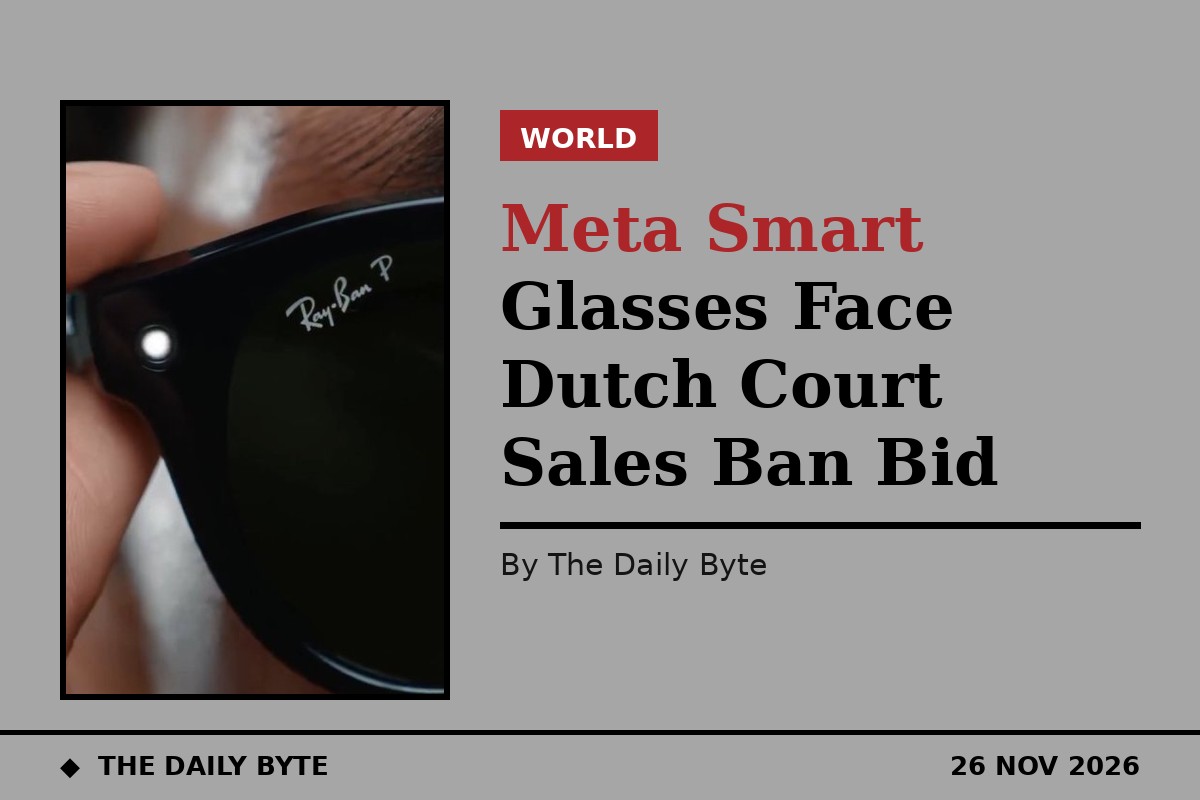
Dutch consumer and digital rights groups have asked a court in Amsterdam to halt sales of Meta's AI-powered smart glasses in the Netherlands, arguing that the devices break European privacy law by letting wearers film people without their knowledge.
The case, heard by the Amsterdam District Court on Thursday, was brought by groups including the Netherlands' main consumer association, Consumentenbond, and Offlimits, which campaigns against online sex abuse. The glasses are developed by Meta together with Ray-Ban owner EssilorLuxottica.
What the groups are asking for
The plaintiffs want Meta to stop the glasses being used to record people without their knowledge, to stop using recordings to train AI models, and to suspend sales until it does so. They are seeking penalties of 100,000 euros ($109,600) a day for each defendant that fails to comply, capped at 100 million euros.
In her opening remarks, Offlimits' lawyer Karlijn Han said the glasses were being used for what she called “creep shots”. “Covert recordings are undoubtedly also being made during exams, in changing rooms, at swimming pools, in hotel rooms and hospitals, but also in playgrounds and on beaches,” she told the court. “Each invasion of privacy is worse than the last.”
The groups argue the glasses both break privacy law and leave people in public places constantly unsure whether they are being recorded, with what they describe as a chilling effect on society.
Meta's defence
Meta's lawyer, Bastiaan Kemp, urged the court to reject the claim. He said the measures demanded would harm legitimate users, damage Meta's competitive position and amount to a product recall without resolving concerns about similar devices. “Providers of products cannot be held responsible for every instance of deliberate misuse,” he told the court.
Kemp said a recording light on the frame makes it obvious when the glasses are recording. He also denied the claim, made by Consumentenbond's lawyer in court, that Meta processes images recorded by the smart glasses in Europe or uses them to train AI models in breach of European law.
A lawyer for EssilorLuxottica argued that the company neither processes nor has access to footage from the glasses, and that a sales ban would be disproportionate and ineffective given that similar products are available from other makers.
Meta and EssilorLuxottica sold more than 7 million smart glasses in 2025, around 80 percent of the global market, according to Reuters.
A backlash beyond the Netherlands
The Dutch case is limited to the Netherlands, but a summary ruling from the Amsterdam court could set a precedent as governments and regulators around the world take a harder line on the devices. Proposed restrictions are under discussion in Australia and Norway, courts in England, Wales and New York state have imposed bans, and cinema operators in Britain are bringing in restrictions over privacy and film piracy concerns.
On Tuesday, Germany's national consumer federation announced legal action against Meta and Ray-Ban over alleged privacy violations, arguing that the glasses make it nearly impossible for consumers to follow European data protection rules when using them in public. In October, the European Data Protection Board warned that smart glasses raised serious privacy concerns and called for stronger safeguards.
In the Netherlands itself, the privacy regulator, known as AP, advised consumers this month not to buy smart glasses, saying they are unsafe for both users and bystanders. In October, the Dutch retail chain Hans Anders suspended sales of Meta's Ray-Ban smart glasses in the Netherlands and Belgium.
Meta also faces proposed class-action lawsuits in the United States over the alleged improper sharing of private images gathered by the glasses.
No date has been set for a decision in the Dutch case, but one is expected in mid-December.


