Dutch minority government survives crisis as Jetten says trust is restored
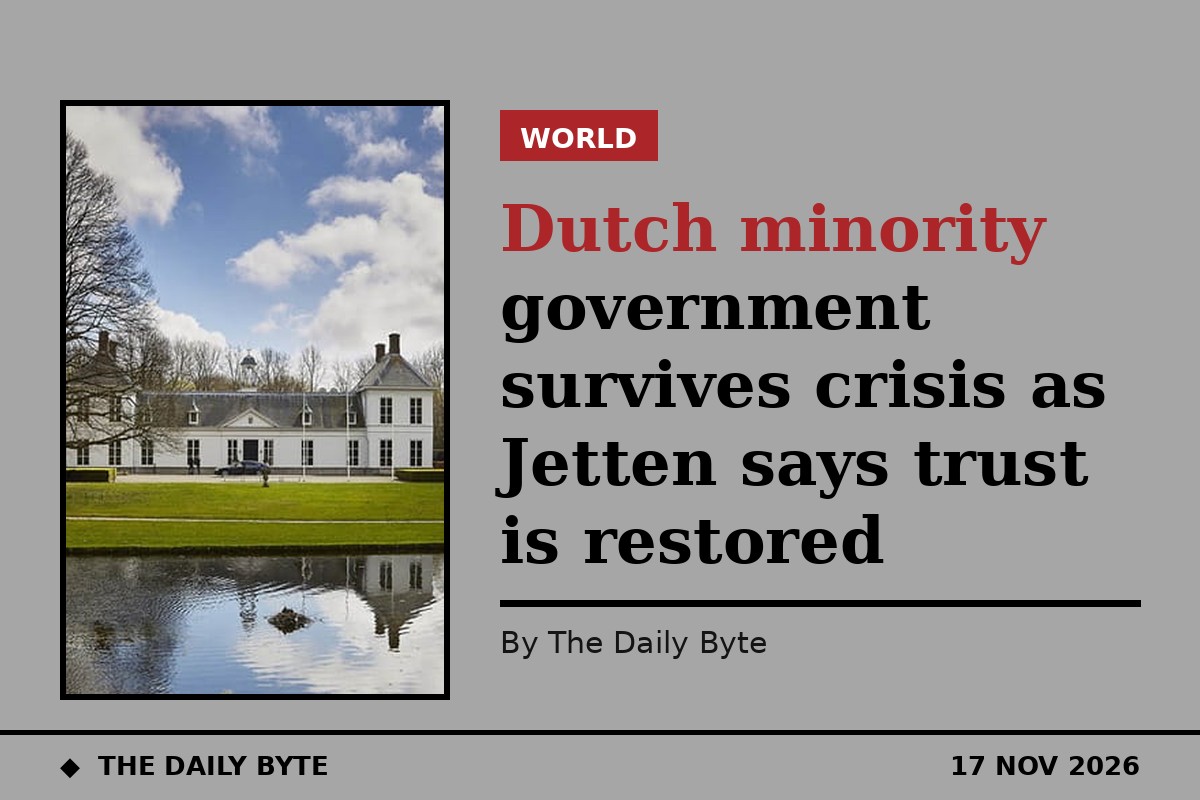
The Dutch minority government has survived its first major crisis after four days of talks, with Prime Minister Rob Jetten confirming on Tuesday, 17 November, that the three-party coalition had found a way to keep functioning.
"I am relieved that trust is restored," Mr Jetten told reporters in The Hague. "We have laid the foundation for a way forward, to change the way we work." The announcement followed an extra meeting of the Council of Ministers on Tuesday morning, at which Mr Jetten and his two deputy prime ministers set out the terms agreed by the coalition.
The coalition of the centrist Democrats 66 (D66), the Christian Democratic Appeal (CDA) and the People's Party for Freedom and Democracy (VVD) holds only 66 of the 150 seats in the House of Representatives and no majority in the Senate, so it needs opposition support for all of its proposals. It was sworn in on 23 February.
What triggered the crisis
The crisis began on 12 November during a heated parliamentary debate over the 2027 tax plan. D66 and the CDA reached a deal with left-wing opposition parties to change the plan so that wealthy people pay more, and the amended plan passed the lower house by a single vote. The VVD, which opposed the deal, said it had been left feeling ambushed.
On Friday, after the first day of crisis talks, Mr Jetten said he was hopeful the coalition would survive. The VVD leader, Dilan Yesilgoz, immediately cooled that optimism, describing the minority government as "a failed experiment" in a separate press conference. The leaders then met for more than 11 hours on Monday at the Catshuis, the prime minister's official residence in The Hague, before announcing that trust had been restored.
What the coalition agreed
Mr Jetten said the coalition had agreed stricter terms for the way it can reach agreements with opposition parties, especially on financial matters, in an effort to avoid new conflicts. No fourth party will join the cabinet for now.
To manage future budget negotiations, the coalition has recruited Sybrand Buma, a former CDA leader and vice-president of the Council of State since July, as an adviser. Mr Buma, who served as informateur in the 2025 talks that paved the way for the current coalition, will guide the cabinet in securing budget agreements with opposition factions in a transparent, structured manner. He will not negotiate directly on the cabinet's behalf, and he has been given a month, until mid-December, when it should become clear whether the cabinet can secure majorities for its budgets.
Why the government remains fragile
The deal ends a weekend of intense speculation about the immediate viability of the Jetten administration, but it leaves the underlying problem in place: a minority cabinet that must find a majority for every proposal in a fractured parliament. The vote on wealth taxes was the culmination of months of tense budget negotiations, and the tax plan now goes to the Senate, where the coalition also lacks a majority.
The Netherlands is usually led by coalitions with a parliamentary majority, but securing one has become increasingly difficult as centrist parties have steadily lost support in a fragmented political landscape.
Frequently asked questions
Has the Dutch government collapsed? No. Prime Minister Rob Jetten confirmed on 17 November that the minority coalition will continue after four days of crisis talks.
Who is Sybrand Buma? A former leader of the Christian Democratic Appeal and vice-president of the Council of State, asked to advise the cabinet on reaching budget agreements with opposition parties over the next month.
Sources: Reuters; Brussels Signal.


