Dutch MPs Approve Wealth Tax Amendment, Coalition at Risk
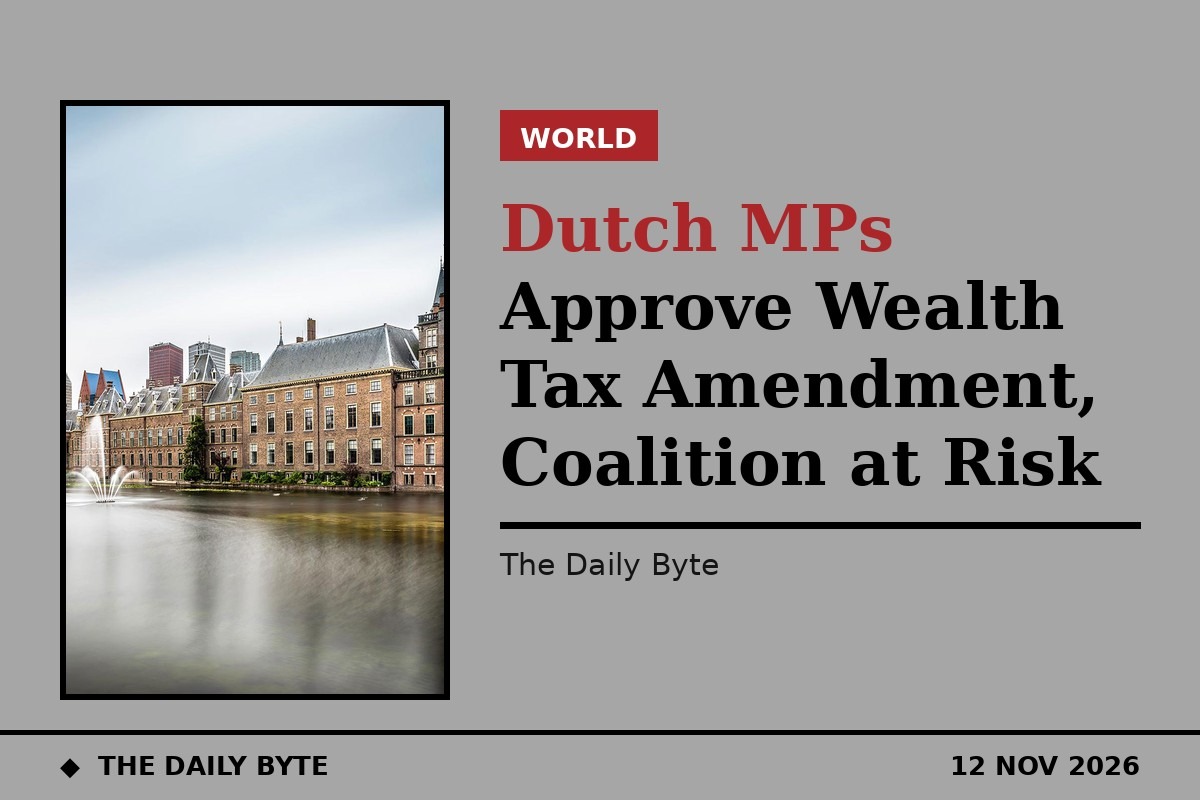
Dutch MPs have narrowly approved a controversial wealth-tax amendment, leaving Prime Minister Rob Jetten's minority coalition facing an uncertain future.
The House of Representatives approved the amendment from opposition parties PRO and Volt on Thursday, with 79 MPs voting in favour, according to the Dutch ANP news agency. The vote has not settled the fate of the government's wider tax plan, and the coalition's third party, the VVD, has said it will vote against the plan if the amendment is included.
Jetten, who leads the centrist D66 party, made a last-minute bid to keep his government from collapsing as the vote approached. It was not clear after the vote what the VVD's next steps would be.
What the amendment does
The amendment shifts about one billion euros in tax from work to wealth. It introduces a new 38.5 percent tax rate on returns above 60,000 euros a year under the Netherlands' box 3 system for taxing savings and investments, while the rate on returns below that threshold falls from 36 percent to 35.5 percent.
The package also raises taxes on inheritances and cash gifts, promises a crackdown on tax-avoidance schemes, and uses the money raised to cut taxes for people on lower and middle incomes.
The change reflects a key demand from PRO, the largest opposition party, and was negotiated as part of a deal to secure support for the government's 2027 tax plan.
A deal struck without the VVD
The deal was agreed late on Wednesday by D66 and the Christian Democratic Appeal (CDA) with PRO and Volt, without the VVD, the third party in the coalition.
VVD leader Dilan Yesilgoz said she was surprised by the agreement, calling it "bad for the Netherlands" and saying it went against the coalition agreement. VVD parliamentary leader Ruben Brekelmans called for a "fundamental reset" in how the coalition works, and said his party would vote against the tax plan if the amendment passed.
D66 and the CDA said late on Wednesday that they would stand by the deal and would not renegotiate, adding to the pressure on the already fragile coalition.
A minority government on the edge
Jetten's government is a minority coalition of D66, the VVD and the CDA, holding only 66 of the 150 seats in the lower house and 22 of the 75 seats in the Senate. It has been in office for about nine months and depends on opposition support to pass legislation.
The row was serious enough for Jetten to skip Thursday's European Political Community summit in Dublin, where more than 40 European leaders gathered, as well as an informal meeting of EU leaders on Friday, so that he could attend the debate and vote in The Hague.
The House was due to vote separately on the tax legislation itself after considering the amendments, leaving the overall plan's passage unresolved. If the VVD follows through on its threat to vote against the plan, the coalition could collapse. But rejecting the tax plan could also trigger a vote of no confidence, creating a separate crisis that could bring down the government.
For now, Jetten's nine-month-old government survives, but its future depends on whether the three coalition partners can find a way to keep working together after Thursday's vote.