DWP issues first bank eligibility check notice in fraud crackdown
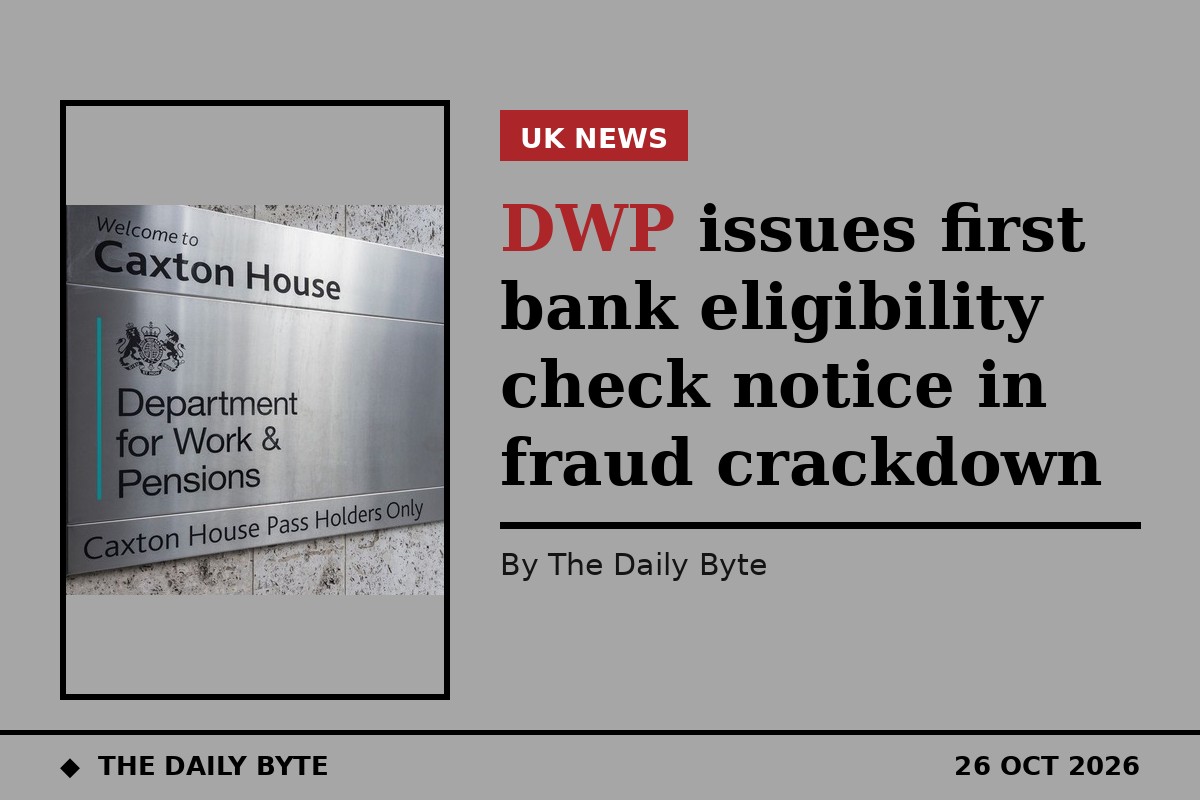
The Department for Work and Pensions (DWP) has issued its first Eligibility Verification Notice, the first use of new powers requiring banks to flag cases where benefit eligibility rules may no longer be met. The announcement, published on 26 October 2026, marks the start of a carefully managed test-and-learn phase before any wider rollout.
How the checks work
Under the Eligibility Verification Measure, banks will be asked to check relevant benefit accounts against set eligibility rules and flag cases where further enquiries may be needed. The focus is on undeclared savings and time spent abroad beyond what benefit rules allow, two drivers of fraud and error. The measure applies to Universal Credit, Pension Credit and Employment and Support Allowance.
The DWP says the powers do not give it access to bank accounts, transactions or spending habits. A flag does not indicate fraud or wrongdoing, and no decision about a person's benefit entitlement can be made on this information alone. The measure will remain subject to independent oversight, and a statutory Code of Practice sets out safeguards.
Expected savings and next steps
The Government expects the measure to save taxpayers £1.2 billion by 2030/31, as part of a wider plan to save £14.6 billion over five years by tackling fraud, error and debt. Anyone affected by a benefit check should check the official GOV.UK guidance and Code of Practice for the current rules and safeguards, rather than relying on summaries alone.
Source: GOV.UK