ECC Raises Wheat Import Ceiling to 2.5m Tonnes
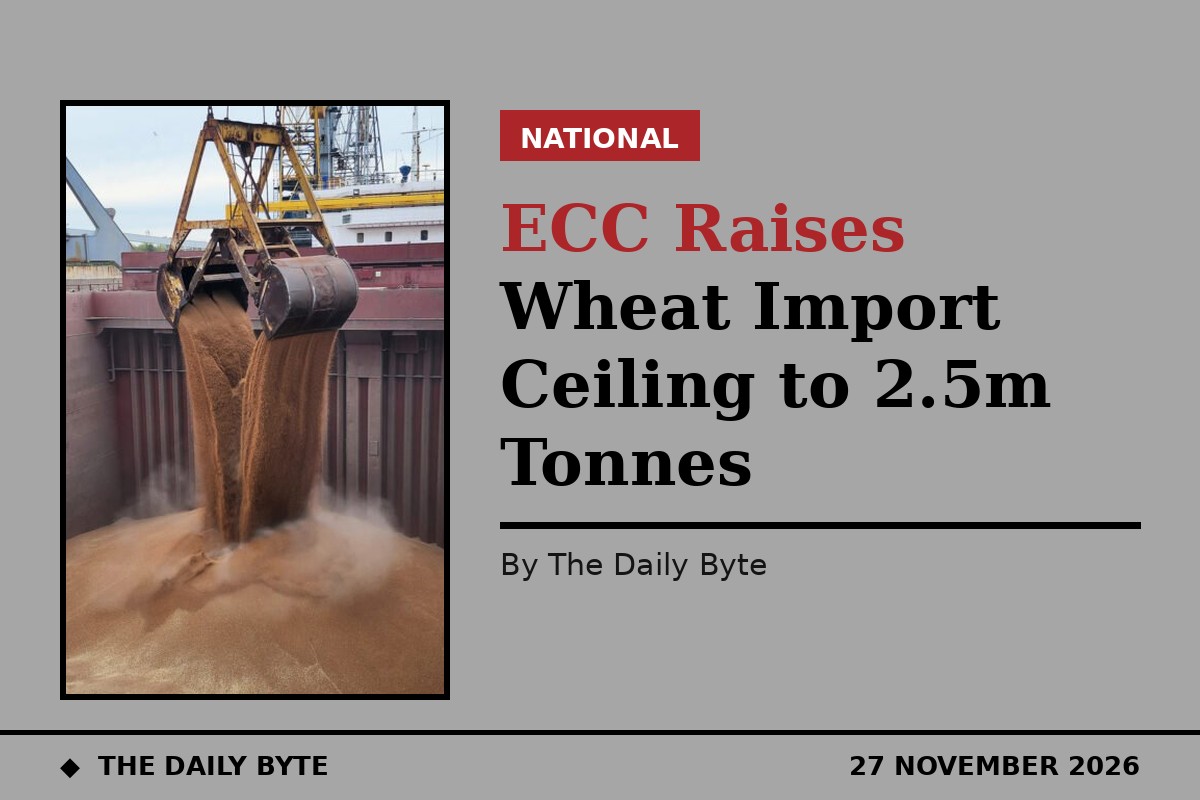
ISLAMABAD: The government has raised Pakistan's wheat import ceiling by 150 per cent to 2.5 million tonnes for the 2026-27 food year, as wheat and flour prices continue to rise across the country.
The Economic Coordination Committee (ECC), chaired by Finance Minister Muhammad Aurangzeb, approved the increase in principle on Friday. The ceiling rises from one million tonnes to 2.5 million tonnes, and the decision will now go to the federal cabinet for formal ratification.
According to the Finance Division, provincial governments have revised their combined wheat import requirements to about 1.7 million tonnes, up from an earlier estimate of 550,000 tonnes. Punjab has requested 950,000 tonnes, Sindh has sought 450,000 tonnes subject to confirmation, and Khyber Pakhtunkhwa requires 300,000 tonnes. Balochistan's needs will be met through available stocks held by the Pakistan Agricultural Storage and Services Corporation (PASSCO).
The higher ceiling does not mean the full quantity will be imported. The ECC approved the 2.5-million-tonne ceiling to give the government flexibility to meet provincial requirements and deal with possible shortages, while the actual quantity imported will depend on confirmed provincial demand and prevailing market conditions.
Under the approved arrangement, provincial governments will bear the entire cost of imported wheat, including procurement, freight, insurance, transportation, port charges, taxes and duties. The Ministry of National Food Security and Research will handle day-to-day implementation, while a steering committee led by the deputy prime minister will oversee the overall process.
Why the ceiling was raised
The decision follows weeks of rising wheat and flour prices. Short-term inflation was recorded at 9.49 per cent year-on-year in the week ending 26 November, driven largely by wheat flour prices, according to official data released by the Pakistan Bureau of Statistics on Friday.
A day earlier, a steering committee on wheat imports chaired by Deputy Prime Minister and Foreign Minister Ishaq Dar reviewed the overall stock position and deliberated on importing an additional 500,000 tonnes of wheat, on top of 800,000 tonnes already under process. The committee said its aim was to ensure uninterrupted availability of the staple across the country.
The government has been importing wheat through the Trading Corporation of Pakistan to steady the market. In October, Prime Minister Shehbaz Sharif set the illustrative price for wheat at Rs4,500 per maund for 2027, raising the procurement price set last year by Rs1,000.
What happens next
The ECC decision now goes to the federal cabinet for ratification. Once approved, imports will be arranged against confirmed provincial demand, with the provinces paying the cost before shipments are made.
Finance Minister Aurangzeb directed the relevant authorities to coordinate their efforts, manage available wheat stocks and ensure adequate supplies to control prices. The steering committee will continue to review stock levels and demand projections as the food year progresses, and further imports will be decided on the basis of confirmed provincial needs.